Mueller Report: Open Questions, Bad Decisions, Next Steps (Real Law Review)
TL;DR
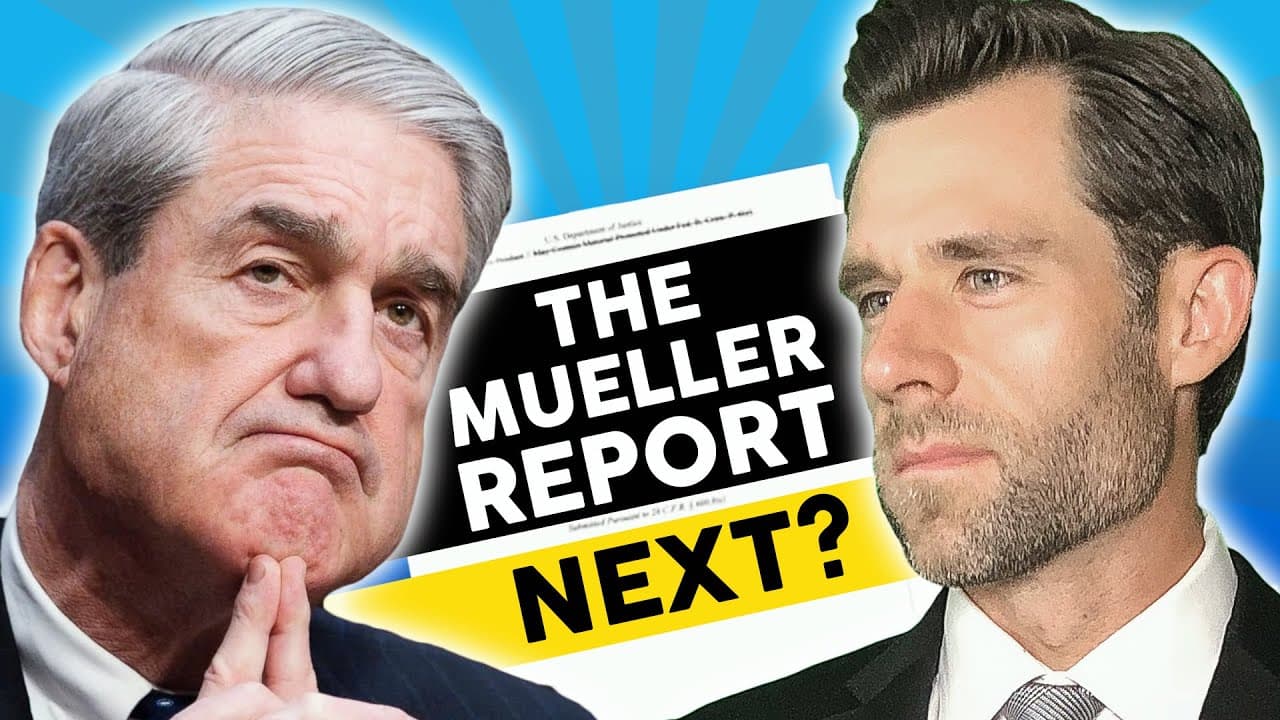
The redacted Mueller Report leaves several questions unanswered, including whether a sitting president can be indicted, the statute of limitations during a president's tenure, and the certainty of President Trump's alleged obstruction of justice.
Transcript
- This video was made possible by Tab for a Cause. Raise money for charity just by opening tabs in your browser. With the Mueller Report out, we finally have some answers about Russian efforts to interfere with the 2016 election and the administration's efforts to stymie that investigation. But some of our original questions remain unanswered. The ... Read More
Key Insights
- 🧘 The constitutionality of indicting a sitting president is uncertain, and the Supreme Court may be needed to settle the matter.
- 🧑💼 Crimes committed by a president before taking office may not have a statute of limitations, raising questions about potential charges after leaving office.
- 👨⚖️ The level of certainty regarding President Trump's obstruction of justice is unclear, making it difficult for Congress and the electorate to determine the appropriate next steps.
- 🤨 The determination of no obstruction by Attorney General Barr raises questions about the evidence considered and the impact of Barr's views on the decision.
- 💖 The redactions in the Mueller Report have sparked suspicion and uncertainty regarding the information being concealed.
- 🧑💼 The undisclosed referrals to other U.S. Attorney's offices suggest that further indictments may occur, but the details remain unknown.
- 🤨 Mueller's decision not to interview the president directly raises concerns about the effectiveness of the fact-gathering process and the reliance on written answers.
Install to Summarize YouTube Videos and Get Transcripts
Explore YouTube Video Summarizer or Get YouTube Transcript Extractor
Questions & Answers
Q: Can a sitting president be indicted?
It is uncertain whether a sitting president can be indicted due to the legal framework established by the Mueller Report. While there are OLC memos that discuss this, they are inconsistent, and the Supreme Court would be the final authority to settle this question.
Q: What happens to potential crimes committed before a president takes office?
The statute of limitations for crimes varies, and some offenses may not have a time limit. If a president committed a crime before taking office, it is unclear whether the statute of limitations would apply and if the president can be charged after leaving office.
Q: What is the level of certainty regarding President Trump's obstruction of justice?
The Mueller Report does not explicitly state the degree of certainty regarding obstruction of justice by President Trump, but Attorney General Barr claims that Mueller told him no crime was found. However, given the evidence presented, it is questionable if Mueller actually made that determination.
Q: How did Attorney General Barr come to the determination of no obstruction?
It is uncertain how Attorney General Barr and Deputy Attorney General Rosenstein came to the conclusion of no obstruction. It is unclear if it was based on the evidence and facts or Barr's view of the president's Article 2 power.
Q: What is behind the redactions in the Mueller Report?
The redactions in the report are based on harm to ongoing matters and the protection of grand jury testimony. While some may argue that the redactions are justified, the disparity between the Barr summary and the actual report raises doubts about the extent of the redactions.
Q: What are the referrals made by the Mueller investigation?
The 12 referrals made by the Mueller investigation to other U.S. Attorney's offices are undisclosed, and the subject matter of these referrals remains unknown. It is unclear what will come from these investigations.
Q: Why did Mueller choose not to interview the president directly?
Mueller's decision not to interview the president directly is unusual for a fact-gathering mission. The issuance of written questions allowed the president to provide safe answers, making it difficult to elicit valuable information. The decision might have been influenced by concerns of substantial delay through a subpoena.
Q: What are the next steps after the Mueller Report?
The courts will decide on the release of unredacted information, further indictments may result from the referrals, and elected representatives will have to decide on impeachment. The full extent of the redacted information and the outcomes of the ongoing investigations remain to be seen.
Summary & Key Takeaways
-
The Mueller Report created a legal framework that prevents the indictment of a sitting president, but it is unclear if this framework is constitutionally correct.
-
It is unknown what happens to potential crimes committed by a president before taking office due to the uncertainty of the legal framework.
-
There are questions about the statute of limitations for offenses committed by a president, especially if they are re-elected for a second term.
-
The level of certainty that Mueller has regarding President Trump's obstruction of justice is unclear, which makes it challenging to determine the next steps.
-
Questions surround Attorney General Barr's determination of no obstruction of justice and the reasons behind the redactions in the report.
-
The 12 referrals made by the Mueller investigation to other U.S. Attorney's offices remain unknown, leaving the outcome of these investigations uncertain.
-
Mueller's decision not to interview President Trump and rely on written answers raises concerns about the effectiveness of the fact-gathering process.
-
The next steps include court decisions on releasing unredacted information, further indictments from the referrals, and the decision to move forward with impeachment.
Read in Other Languages (beta)
Share This Summary 📚
Summarize YouTube Videos and Get Video Transcripts with 1-Click
Try YouTube Summary with ChatGPT & Claude or YouTube Transcript Generator
Explore More Summaries from LegalEagle 📚



Summarize YouTube Videos and Get Video Transcripts with 1-Click
Try YouTube Summary with ChatGPT & Claude or YouTube Transcript Generator