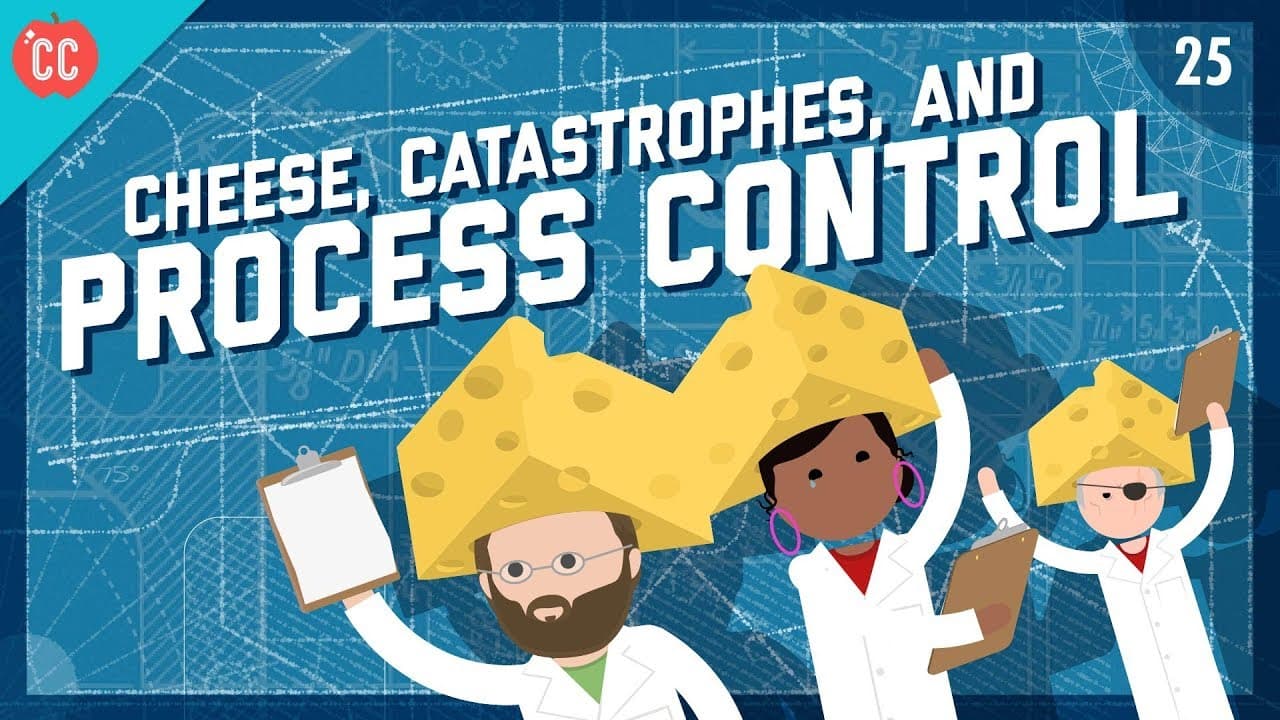
Cheese, Catastrophes, & Process Control: Crash Course Engineering #25
TL;DR
Process control systems avert engineering disasters using feedback and feedforward methods.
Transcript
Engineers often worry about laws. Not necessarily the legal system kind, although most engineers have to consider those as well! What I mean is laws, like the laws of physics. Those laws describe limits on the sorts of things that are possible; for example, there’s no way of getting around the conservation of momentum that we know of! But outside o... Read More
Key Insights
- Murphy's Law, while not literal, serves as a reminder for engineers to anticipate potential failures in systems and processes.
- Process control systems are essential in maintaining stability and preventing disasters in engineering by adjusting variables based on measured parameters.
- Feedback control systems rely on correcting errors after they occur, while feedforward systems anticipate errors by modeling inputs.
- Combining feedback and feedforward control with cascade control creates robust systems capable of handling unexpected disturbances.
- The cheese factory case study illustrates how improper sensor readings can disrupt process control, leading to potential environmental hazards.
- Modern process control systems utilize electronic sensors and computerized controllers to automate adjustments in industrial processes.
- Process control is integral across various engineering disciplines, ensuring high-quality, consistent product manufacturing.
- Efficient process control can lead to better resource utilization and energy efficiency, benefiting both production and the environment.
Install to Summarize YouTube Videos and Get Transcripts
Explore YouTube Video Summarizer or Get YouTube Transcript Extractor
Questions & Answers
Q: What is Murphy's Law and how does it relate to engineering?
Murphy's Law is a tongue-in-cheek proverb that states, 'Anything that can go wrong will go wrong.' In engineering, it serves as a reminder to anticipate and plan for potential failures in systems and processes. By considering the ways things might go wrong, engineers can design more robust systems that are less prone to failure.
Q: How do process control systems prevent engineering disasters?
Process control systems prevent engineering disasters by continuously monitoring and adjusting process variables to maintain stability and desired outcomes. They use feedback and feedforward methods to respond to changes and disturbances, ensuring that processes remain within safe and efficient operating conditions. This proactive approach helps avoid minor issues escalating into major problems.
Q: What are the differences between feedback and feedforward control systems?
Feedback control systems correct errors after they occur by measuring the output and making adjustments to minimize discrepancies from the setpoint. In contrast, feedforward control systems anticipate potential errors by modeling process inputs and predicting their effects on the output. While feedback systems react to issues, feedforward systems aim to prevent them by adjusting inputs proactively.
Q: How does cascade control enhance process control systems?
Cascade control enhances process control systems by adding an additional layer of monitoring and adjustment. It involves a secondary controller and sensor to ensure that changes in one part of the system, such as valve adjustments, lead to the expected effects, like steam flow rate changes. This extra check helps maintain precise control over the process, especially when dealing with complex or dynamic systems.
Q: What lessons can be learned from the cheese factory case study?
The cheese factory case study illustrates the importance of accurate sensor readings in process control. A misreading sensor can disrupt the entire system, leading to potential environmental hazards, such as contaminating wastewater treatment plants. Ensuring sensors are functioning correctly is crucial for maintaining process stability and preventing unintended consequences that could affect public health and safety.
Q: Why is process control important in various engineering fields?
Process control is important in various engineering fields because it ensures consistent product quality, efficient resource use, and safe operation of industrial processes. By automating adjustments based on real-time data, process control systems help maintain optimal conditions, reduce waste, and prevent accidents. This is essential in chemical, electrical, industrial, and mechanical engineering, among others.
Q: How do modern process control systems operate?
Modern process control systems operate using electronic sensors and computerized controllers. Sensors provide real-time measurements of process parameters, which are sent to the controller. The controller then adjusts the controlled variables, such as valves or switches, to maintain the desired setpoints. This automation allows for precise and efficient management of industrial processes, enhancing reliability and performance.
Q: What are the benefits of integrating feedback and feedforward control systems?
Integrating feedback and feedforward control systems provides a comprehensive approach to process control by combining the strengths of both methods. Feedback systems correct errors after they occur, while feedforward systems anticipate and prevent them. Together, they offer robust control by addressing both current and potential issues, ensuring processes remain stable and efficient even in the face of disturbances and uncertainties.
Summary & Key Takeaways
-
Murphy's Law highlights the inevitability of errors in engineering, but process control systems help mitigate these risks by adjusting variables based on real-time data. These systems are crucial in maintaining stability and preventing disasters, as demonstrated by the cheese factory case study, where sensor errors could have led to environmental hazards.
-
Feedback and feedforward control systems each have their strengths and weaknesses. Feedback systems correct errors after they occur, while feedforward systems anticipate errors by modeling inputs. Combining these approaches, along with cascade control, creates a comprehensive system capable of handling unexpected disturbances and maintaining desired process outcomes.
-
Process control systems are vital across various engineering fields, ensuring consistent product quality and efficient resource use. By utilizing electronic sensors and computerized controllers, modern process control automates adjustments in industrial processes, preventing minor issues from escalating into major problems and contributing to better environmental and economic outcomes.
Read in Other Languages (beta)
Share This Summary 📚
Summarize YouTube Videos and Get Video Transcripts with 1-Click
Try YouTube Summary with ChatGPT & Claude or YouTube Transcript Generator
Explore More Summaries from CrashCourse 📚





Summarize YouTube Videos and Get Video Transcripts with 1-Click
Try YouTube Summary with ChatGPT & Claude or YouTube Transcript Generator