Body Armor - Fortress Design - Belgian Armoured Car Division I OUT OF THE TRENCHES
TL;DR
Explores WWI fortress designs, body armor, and Belgian armored car division.
Transcript
I 'm Indy Neidell and this is another exciting episode of "Out of the Trenches", where I sit here, in the chair of wisdom, and answer your questions about the first world war. From Facebook, Chris Rhenius writes: Well, by 1914, the idea - the classical idea - of the fortress was outdated. Years before, the introductions of high-explosive shells mad... Read More
Key Insights
- The classical fortress design was outdated by 1914 due to advancements in artillery, rendering concrete walls nearly obsolete against high-explosive shells.
- Fortresses like those in Verdun and Belgium had to rely on underground structures to withstand bombardments, with Verdun's network of forts providing mutual support.
- The Austrian fortress of Przemyśl was besieged twice by Russians but eventually surrendered due to isolation and lack of relief.
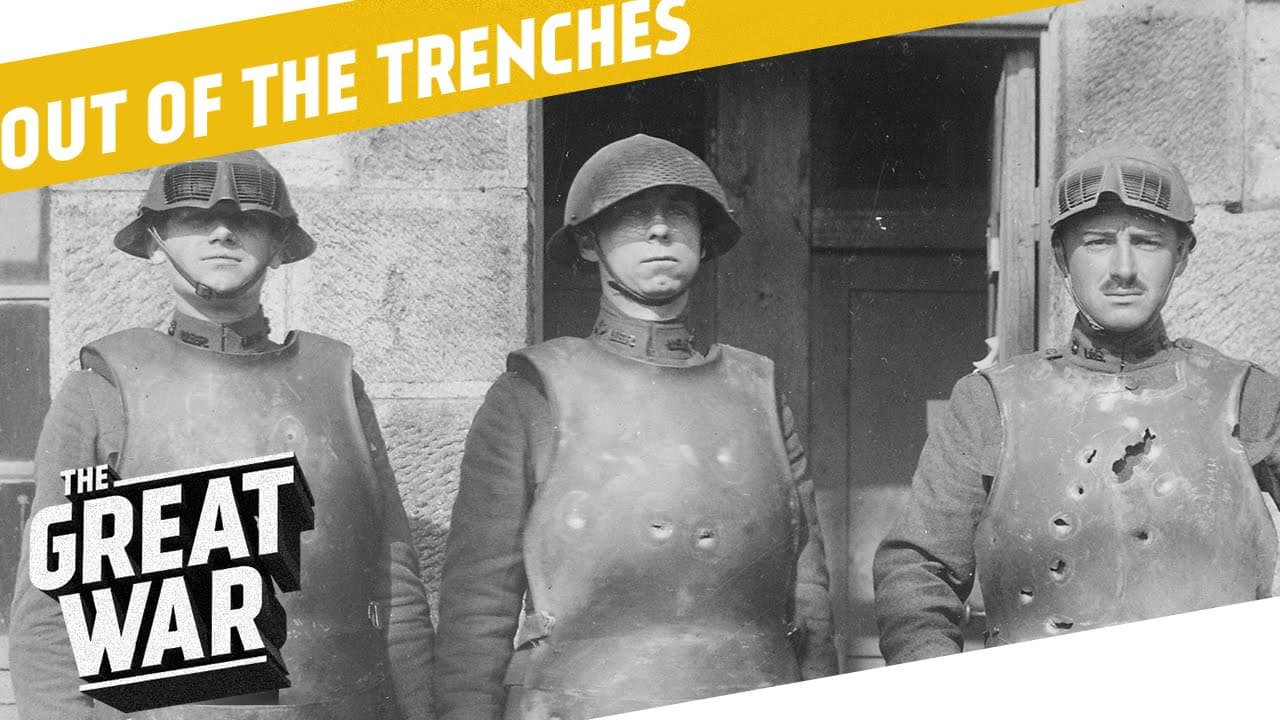
- Body armor in WWI saw a blend of old and new technologies, with helmets and body shields inspired by medieval designs.
- British and German armies experimented with body armor, with the British developing the Dayfield Body Shield and Germans using thicker nickel plate armor.
- Body armor was largely ineffective against high-velocity rifle bullets and was cumbersome, limiting soldiers' mobility in muddy terrains.
- The Belgian Expeditionary Corps in Russia, consisting of 444 volunteers with armored cars, aided the Imperial Army against Germany.
- After the Russian Revolution, the Belgian corps was stranded and had to destroy their equipment to prevent capture, eventually traveling east via the Trans-Siberian Railway.
Install to Summarize YouTube Videos and Get Transcripts
Explore YouTube Video Summarizer or Get YouTube Transcript Extractor
Questions & Answers
Q: How did modern artillery impact fortress designs during WWI?
Modern artillery, with its high-explosive shells, rendered traditional fortress designs obsolete by 1914. Concrete walls could no longer withstand bombardments, and only underground structures had a chance of surviving. This led to a shift in fortress design, focusing on mutual support and strategic positioning to withstand sieges.
Q: What role did Verdun's fortresses play during WWI?
Verdun's fortresses, with their network of four forts on hilltops, played a crucial role in mutual defense. Despite heavy German bombardment, the remnants of these forts supported each other and, along with external armies, prevented the Germans from advancing, showcasing the strategic importance of well-coordinated defensive structures.
Q: How did WWI body armor designs draw from medieval technology?
WWI body armor designs drew heavily from medieval technology, with helmets resembling Napoleonic and medieval headgear. Body shields and armor were inspired by medieval designs, with the British developing the Dayfield Body Shield and Germans using thicker nickel plate armor, although these were only partially effective against modern weaponry.
Q: What were the limitations of WWI body armor?
WWI body armor faced significant limitations, primarily its ineffectiveness against high-velocity rifle bullets. The armor was also heavy, restricting mobility, especially in muddy or flooded terrains, and was thus often reserved for static positions like sentries or machine gunners rather than advancing infantry.
Q: Who were the Belgian Expeditionary Corps in Russia?
The Belgian Expeditionary Corps in Russia was a group of 444 Belgian volunteers equipped with armored cars, sent to aid the Imperial Army against Germany. Despite Belgium's neutrality, these volunteers were integrated into the Russian military efforts, showcasing international collaboration during WWI.
Q: What challenges did the Belgian Expeditionary Corps face after the Russian Revolution?
After the Russian Revolution, the Belgian Expeditionary Corps found themselves surrounded by enemies. With routes west blocked and Murmansk inaccessible, they destroyed their equipment to prevent Bolshevik capture and traveled east via the Trans-Siberian Railway, eventually reaching safety in the US by June 1918.
Q: How did the Austrian fortress of Przemyśl fare during WWI?
The Austrian fortress of Przemyśl was besieged twice by Russian forces in 1914 and 1915. Despite holding out for a significant period, the fortress eventually surrendered due to isolation, lack of relief, and the inability to break the siege, highlighting the challenges of static defense against sustained assaults.
Q: What were some experimental body armor designs used in WWI?
WWI saw several experimental body armor designs, including the British Dayfield Body Shield, a canvas jacket with layered metal plates, and German nickel plate armor. Other innovations included chain screens for helmets and complete battle harnesses, though these were largely ineffective against modern weaponry and cumbersome for soldiers.
Summary & Key Takeaways
-
The episode discusses the outdated nature of fortress designs by 1914 due to the effectiveness of modern artillery. Fortresses like those in Verdun and Przemyśl faced challenges in withstanding prolonged sieges, with Verdun's network providing mutual support.
-
WWI saw a mix of old and new technologies in body armor, with various armies experimenting with designs inspired by medieval armor. These included helmets and body shields, but they proved ineffective against high-velocity rifle bullets.
-
The Belgian Expeditionary Corps in Russia, a volunteer group equipped with armored cars, played a significant role in aiding the Imperial Army. After the Russian Revolution, they were forced to find an alternative route home, traveling east through China.
Read in Other Languages (beta)
Share This Summary 📚
Summarize YouTube Videos and Get Video Transcripts with 1-Click
Try YouTube Summary with ChatGPT & Claude or YouTube Transcript Generator
Explore More Summaries from The Great War 📚


Summarize YouTube Videos and Get Video Transcripts with 1-Click
Try YouTube Summary with ChatGPT & Claude or YouTube Transcript Generator