Do Soda Taxes Improve Public Health Outcomes?
TL;DR
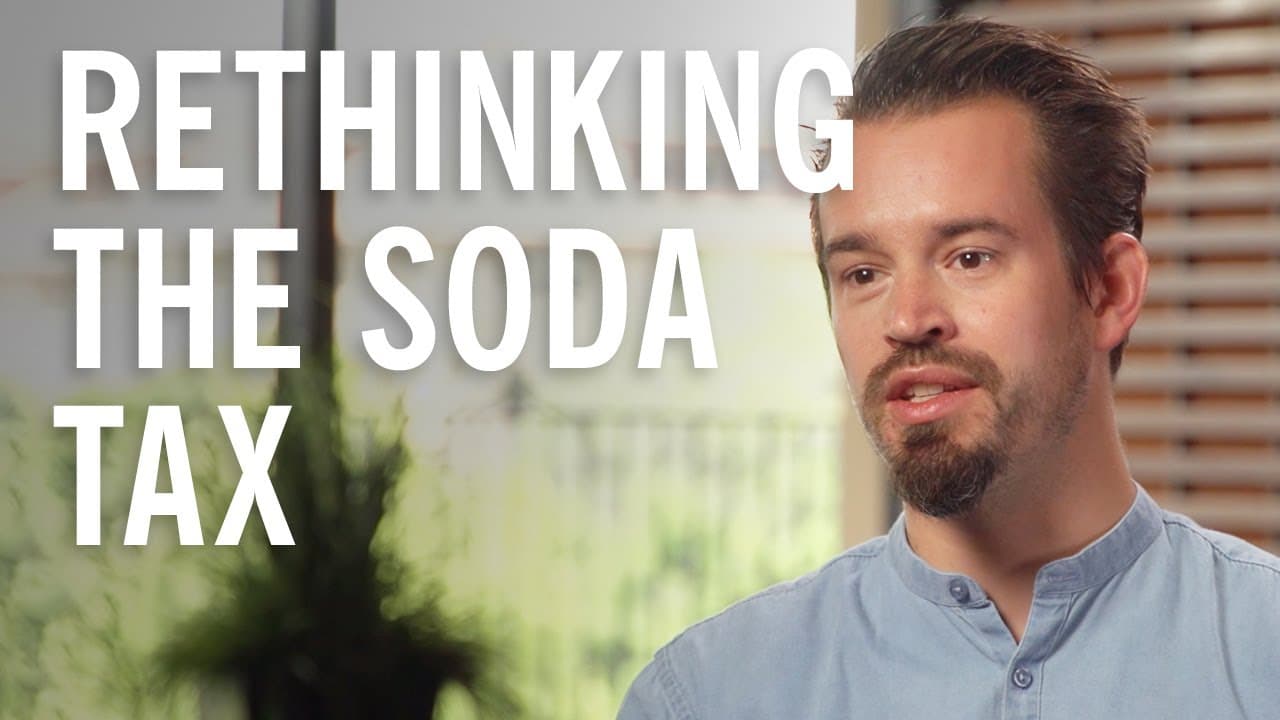
Soda taxes can lead to substantial decreases in beverage consumption, as evidenced by a 46% drop in Philadelphia after such a tax was implemented. However, many consumers resorted to purchasing sodas outside the taxed area, resulting in limited improvements in nutritional intake and reduced tax revenues. Effective policy design must consider geographic coverage and product variety to achieve desired health outcomes.
Transcript
[MUSIC] Recently there's been a lot of policy interest in so-called soda taxes, and in the US several cities have started implementing such taxes. And quite a few other cities are thinking whether to pass such taxes, and if they pass them, how to exactly implement them. How to set the tax rate? Over which geographic area to levy the tax? And which ... Read More
Key Insights
- 🛟 Philadelphia served as an ideal testbed for studying the effects of soda taxes due to its diverse demographic profile and proximity to the U.S. average.
- ☠️ The tax resulted in a significant price increase, with a 100% passthrough rate to consumers.
- 🏪 Quantity purchased decreased by 46% on average, with larger decreases in supermarkets and smaller decreases in convenience stores.
- 🚕 Cross-shopping outside of the taxed area was a common response, leading to limited improvements in nutritional intake and lower tax revenue.
- 😘 Lower-income areas displayed less response to the tax, possibly due to transportation limitations.
- 🚕 To maximize tax revenue, broad geographic coverage and a wide range of taxed products are recommended.
Install to Summarize YouTube Videos and Get Transcripts
Explore YouTube Video Summarizer or Get YouTube Transcript Extractor
Questions & Answers
Q: Did the soda tax in Philadelphia lead to a decrease in consumption?
Yes, after the tax was implemented, quantity purchased dropped by 46% on average, indicating a significant decrease in soda consumption.
Q: Did consumers switch to healthier alternatives after the tax?
While there was a modest increase in the demand for natural juices, there was almost no change in demand for bottled water. Therefore, the tax did not have a significant impact on improving nutritional intake.
Q: Did consumers engage in cross-shopping to avoid the tax?
Yes, a large number of consumers drove outside of Philadelphia to buy untaxed beverages, compensating for the decrease in stores within the city. This cross-shopping behavior undermines the aims of the tax.
Q: Did the effectiveness of the tax vary based on income levels?
Yes, lower-income areas displayed less of a response to the price increase, possibly due to limited access to transportation and fewer opportunities for cross-shopping.
Summary & Key Takeaways
-
Philadelphia implemented a soda tax, and researchers analyzed the effects on consumers' behavior and outcomes.
-
The tax resulted in a 100% price passthrough, with a substantial increase in soda prices.
-
Quantity purchased dropped by 46% on average, with some variation across store types.
Read in Other Languages (beta)
Share This Summary 📚
Summarize YouTube Videos and Get Video Transcripts with 1-Click
Try YouTube Summary with ChatGPT & Claude or YouTube Transcript Generator
Explore More Summaries from Stanford Graduate School of Business 📚





Summarize YouTube Videos and Get Video Transcripts with 1-Click
Try YouTube Summary with ChatGPT & Claude or YouTube Transcript Generator