Assassination Attempt on Lenin - Chaos in Romania I THE GREAT WAR Week 182
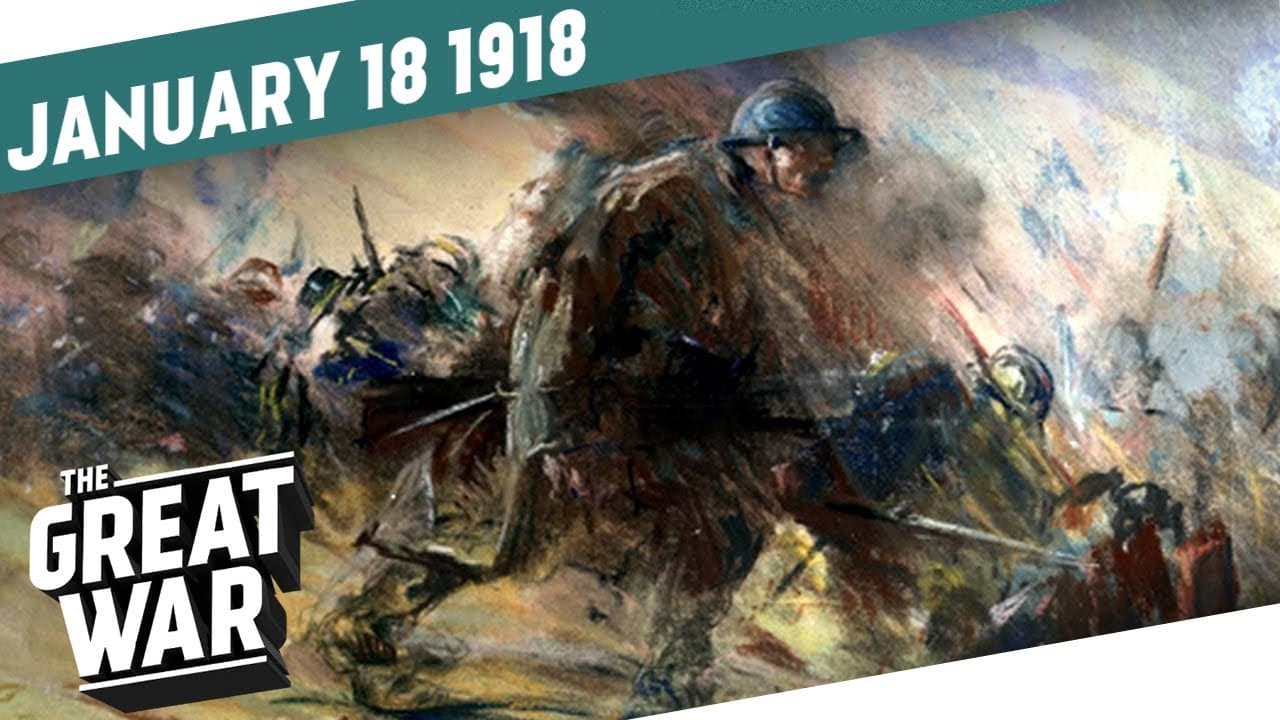
TL;DR
Lenin survives assassination attempt amid Russian political chaos.
Transcript
He is the leader of the new Russian government, which is just over two months old since the October Revolution, but this week Lenin very nearly dies. I’m Indy Neidell; welcome to the Great War. Last week US President Woodrow Wilson outlined his 14 points, which he hoped would be the basis for postwar peace negotiations. The Germans and Ottomans wer... Read More
Key Insights
- Lenin survived an assassination attempt in Petrograd, which could have drastically altered Russian history if successful.
- The Russian Constituent Assembly was dissolved by the Bolsheviks, marking the end of representative government in Russia.
- Tensions between Russia and Romania escalated with Russia issuing an ultimatum for the arrest of the Romanian king.
- The Finnish Parliament was divided, leading to local conflicts between the Red left and White right factions.
- The Russian army's disorder led to pillaging in Romania, with soldiers selling equipment for food and alcohol.
- The Third Congress of Soviets was convened, leading to the establishment of the Soviet Russian Republic.
- Political instability in Russia was mirrored by military actions on the Western Front, with British bombings and American troop deployments.
- The dissolution of the Constituent Assembly did not provoke significant popular reaction, highlighting the Bolsheviks' control.
Install to Summarize YouTube Videos and Get Transcripts
Explore YouTube Video Summarizer or Get YouTube Transcript Extractor
Questions & Answers
Q: What happened during the assassination attempt on Lenin?
During the assassination attempt on Lenin in Petrograd, sharpshooters ambushed his car, shattering the windshield with bullets. Lenin was unharmed thanks to Fritz Platten, a Swiss communist who shielded him. Platten's finger was grazed by a bullet, and the attackers were never caught, though later identified as White Russians.
Q: What was the significance of the Constituent Assembly's dissolution?
The dissolution of the Constituent Assembly by the Bolsheviks marked the end of representative government in Russia and the beginning of Soviet rule. It demonstrated the Bolsheviks' consolidation of power and their ability to suppress opposition, paving the way for the establishment of the Soviet Russian Republic.
Q: How did the Bolsheviks' actions affect Romania?
The Bolsheviks issued an ultimatum to Romania, demanding the arrest of the Romanian king and accusing Romania of hostile acts against Russian soldiers. This increased tensions and highlighted the chaotic state of Russian foreign relations post-revolution, as Russian troops also engaged in pillaging during their retreat from Romania.
Q: What were the internal conflicts in Finland about?
Finland faced internal conflicts due to political divisions between the left and right. The right, pro-German faction supported a German alliance, while the left formed a workers' militia. This led to local battles, with the appointment of Carl Gustaf Emil Mannerheim as the commander of the White Guards, escalating tensions.
Q: What was the impact of Russian soldiers' actions in Romania?
The disorder among Russian soldiers retreating from Romania led to widespread pillaging of the Romanian population. Soldiers sold their equipment for food and alcohol, and the Romanian army had to redeploy to cover gaps left by the retreating Russians, highlighting the breakdown of military discipline and control.
Q: What changes did the Third Congress of Soviets bring?
The Third Congress of Soviets convened following the dissolution of the Constituent Assembly, leading to the establishment of the Soviet Russian Republic. It marked a significant shift in Russian governance, with new laws and decrees expunging references to the Constituent Assembly and solidifying Bolshevik control.
Q: What military actions occurred on the Western Front this week?
On the Western Front, the British conducted bombings in Karlsruhe, Thienville, and Metz, while a full American division entered the front line on the St. Mihiel salient. These actions were part of the Allied efforts to gain experience and hold the line, despite taking no offensive actions at the time.
Q: Why was there little popular reaction to the Constituent Assembly's dissolution?
The lack of popular reaction to the Constituent Assembly's dissolution can be attributed to the Bolsheviks' control and the alienation of the peasantry by the Right Social Revolutionaries. The outdated ballots and lack of support for the Right SRs diminished their influence, allowing the Bolsheviks to suppress opposition effectively.
Summary & Key Takeaways
-
This week, an assassination attempt on Lenin in Petrograd highlighted the fragile state of the new Russian government. Despite the attack, Lenin was unharmed, and the event underscored the political tensions in post-revolution Russia.
-
The dissolution of the Russian Constituent Assembly by the Bolsheviks marked a significant shift towards Soviet power, ending representative government and leading to the establishment of the Soviet Russian Republic.
-
Amidst these political upheavals, Russia issued an ultimatum to Romania, further straining relations, while Finland faced internal divisions, with local conflicts erupting between left and right factions.
Read in Other Languages (beta)
Share This Summary 📚
Summarize YouTube Videos and Get Video Transcripts with 1-Click
Try YouTube Summary with ChatGPT & Claude or YouTube Transcript Generator
Explore More Summaries from The Great War 📚

Summarize YouTube Videos and Get Video Transcripts with 1-Click
Try YouTube Summary with ChatGPT & Claude or YouTube Transcript Generator