The Power of Political Recognition
TL;DR
Recognition impacts global conflicts and individual identity profoundly.
Transcript
In May of 2024, Spain, Norway, and Ireland formally recognized the existence of a Palestinian state. They became the latest of around 140 countries to make this proclamation. This recognition came with no additional concrete action on the part of these countries. And yet, Israel’s then Foreign Minister declared that the Spanish government was, qu... Read More
Key Insights
- The recognition of a Palestinian state by Spain, Norway, and Ireland in 2024 exemplifies how symbolic acts can generate significant political reactions, highlighting the weight such gestures carry in international relations.
- Hegel's master-servant dialectic illustrates the fundamental human need for recognition, suggesting that conflicts often arise from struggles for acknowledgment rather than tangible resources.
- Frantz Fanon emphasized that colonized peoples must actively struggle for recognition to overcome the psychological and societal impacts of being treated as inferior, suggesting that recognition can be a crucial step in decolonization.
- Axel Honneth's theory posits that recognition is essential in three spheres: love, rights, and solidarity, each contributing to an individual's sense of self and societal integration.
- Charles Taylor argues that recognition is a vital human need that shapes identity through social interactions, and political systems should acknowledge differences rather than ignore them.
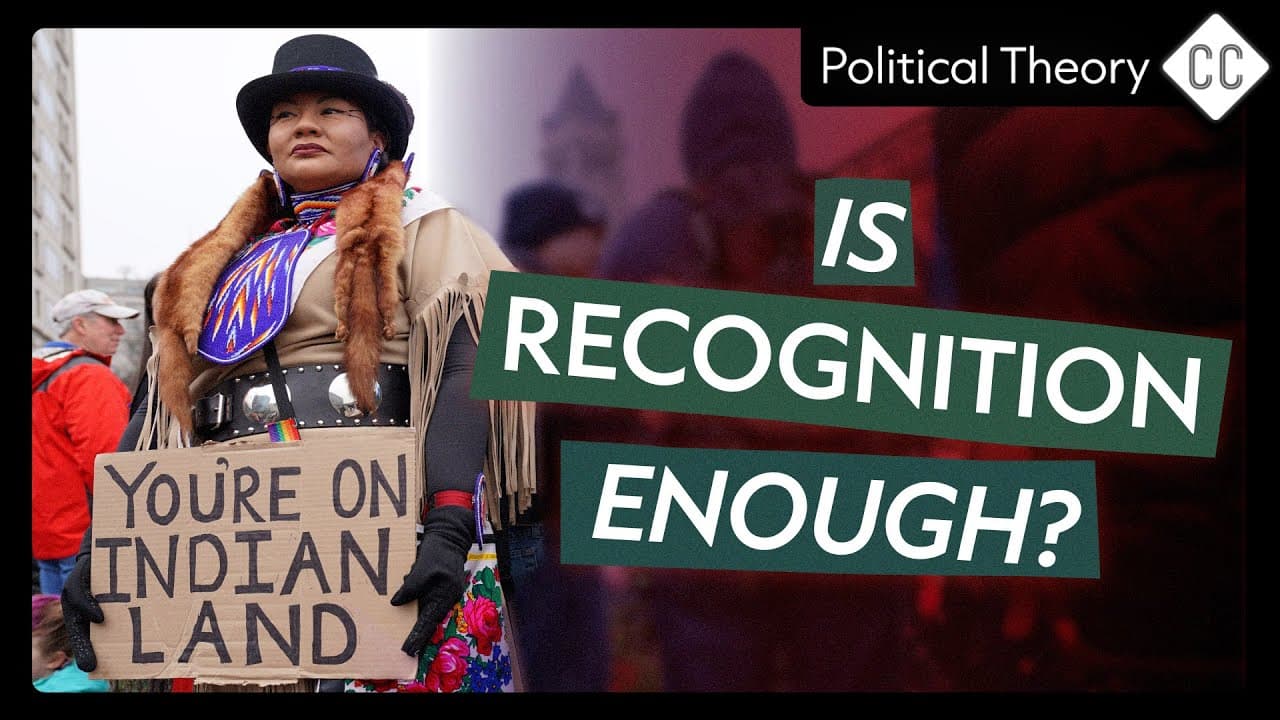
- The Land Back Movement highlights the need for both recognition and redistribution, as Indigenous groups seek to reclaim ancestral lands, illustrating a practical application of political recognition and reparations.
- Nancy Fraser advocates for combining recognition and redistribution to address injustices, suggesting that both are necessary for meaningful societal change.
- Critics argue that symbolic gestures like land acknowledgments may fall short without accompanying actions, pointing to the complexity of achieving genuine recognition and change.
Install to Summarize YouTube Videos and Get Transcripts
Explore YouTube Video Summarizer or Get YouTube Transcript Extractor
Questions & Answers
Q: Why did Spain, Norway, and Ireland recognize Palestine in 2024?
Spain, Norway, and Ireland recognized Palestine in 2024 as part of a broader movement involving approximately 140 countries acknowledging Palestinian statehood. This recognition was intended to be a positive contribution towards promoting peace in the region, despite not being accompanied by concrete actions. The recognition reflects the symbolic power of political gestures in international relations.
Q: What is the master-servant dialectic by Hegel?
Hegel's master-servant dialectic is a philosophical concept that illustrates the fundamental human need for recognition. It describes a scenario where two individuals struggle for dominance, resulting in one becoming the master and the other the servant. The master receives recognition from the servant, but the servant gains a sense of power through their work, highlighting the complex dynamics of recognition and dependence in human interactions.
Q: How did Frantz Fanon view the struggle for recognition?
Frantz Fanon viewed the struggle for recognition as essential for colonized peoples to overcome the psychological and societal impacts of being treated as inferior. He argued that recognition, both psychologically and through active struggle, including violence if necessary, was crucial for healing from the trauma of colonization. Fanon's perspective emphasizes the importance of recognition in decolonial theory and the fight for equality.
Q: What are the three spheres of recognition according to Axel Honneth?
Axel Honneth identified three spheres of recognition: the sphere of love, where personal relationships build self-confidence; the sphere of rights, where political recognition affirms essential sameness; and the sphere of solidarity, where communal recognition acknowledges differences. Honneth argues that recognition in all these spheres is necessary for individuals to become whole, self-actualized persons.
Q: Why is recognition considered a 'vital human need' by Charles Taylor?
Charles Taylor considers recognition a 'vital human need' because it shapes identity through social interactions. He argues that political conditions should allow for the recognition of differences, rather than treating them as nonexistent. Recognition helps mold identity, influencing self-perception and social acceptance, making it a fundamental aspect of human existence and societal integration.
Q: What is the Land Back Movement?
The Land Back Movement is an initiative led by Indigenous groups seeking to reclaim ancestral lands, particularly federal lands and sacred sites. It involves various methods, including government intervention and land purchases, to return land to its original Indigenous owners. The movement exemplifies the practical application of recognition and redistribution, aiming to address historical injustices and promote Indigenous sovereignty.
Q: How does Nancy Fraser view the relationship between recognition and redistribution?
Nancy Fraser views recognition and redistribution as equally important components of addressing injustices. She argues that both are necessary to resolve societal inequalities, as recognition alone may not suffice without tangible redistribution of resources. Fraser's perspective suggests that a combined approach is essential for meaningful change, addressing both symbolic and material aspects of injustice.
Q: What criticisms exist regarding land acknowledgments?
Critics argue that land acknowledgments can be hollow gestures if not accompanied by concrete actions addressing ongoing inequities. While they aim to recognize Indigenous peoples' historical ties to the land, without a call to action or acknowledgment of current injustices, these gestures may fall short. The criticism highlights the complexity of achieving genuine recognition and the need for substantive change alongside symbolic acts.
Summary & Key Takeaways
-
Political recognition is a powerful tool that influences global conflicts and individual identities. The recognition of a Palestinian state by several countries in 2024 showcases the impact of such gestures. Philosophers like Hegel, Fanon, and Honneth explore the significance of recognition in human interactions and societal structures.
-
Recognition is essential in various spheres of life, including personal, political, and communal interactions. Theories by Honneth and Taylor highlight the need for acknowledgment of differences and sameness. However, critics argue that recognition must be paired with tangible actions, such as redistribution, to effect real change.
-
The Land Back Movement exemplifies the practical application of recognition and redistribution, aiming to return land to Indigenous peoples. Nancy Fraser suggests that both recognition and redistribution are crucial for addressing injustices. Symbolic gestures, while important, must be accompanied by concrete actions to achieve meaningful progress.
Read in Other Languages (beta)
Share This Summary 📚
Summarize YouTube Videos and Get Video Transcripts with 1-Click
Try YouTube Summary with ChatGPT & Claude or YouTube Transcript Generator
Explore More Summaries from CrashCourse 📚



Summarize YouTube Videos and Get Video Transcripts with 1-Click
Try YouTube Summary with ChatGPT & Claude or YouTube Transcript Generator