Fundamental Analysis
TL;DR
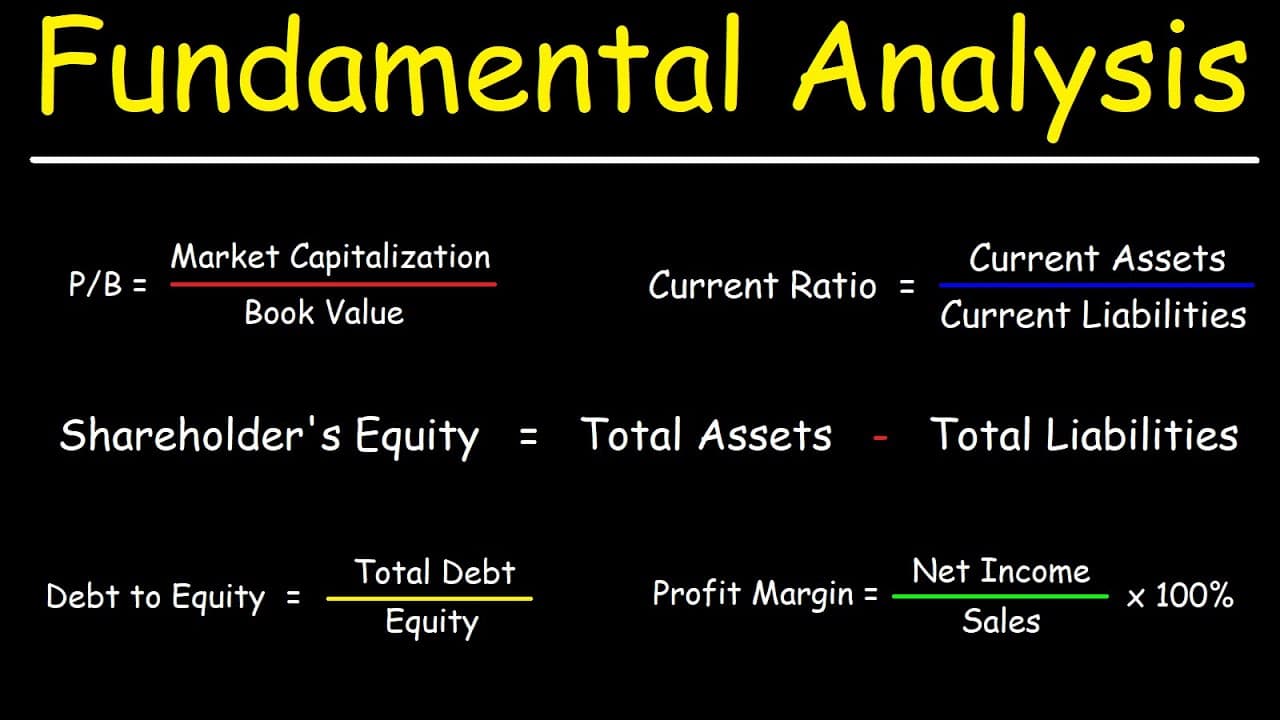
This video explains how to determine if a company is undervalued or overvalued by analyzing various valuation ratios such as price to sales, price to earnings, and price to book ratios, along with liquidity ratios and profitability metrics.
Transcript
in this video we're going to focus on fundamental analysis how to determine if a company is undervalued or if it's overvalued what we're going to do today is we're going to take a look at a lot of different valuation ratios that you could use to determine if a company is undervalued or overvalued valuation ratios such as the price to sales ratio pr... Read More
Key Insights
- ⚾ Market capitalization determines a company's value based on share price and shares outstanding.
- 🥳 The price to sales ratio compares market cap to sales, indicating undervaluation (low ratio) or potential overvaluation (high ratio).
- 🥳 The price to earnings ratio reflects investor sentiment and compares market cap to earnings per share.
- 🥳 The price to book ratio compares market cap or share price to book value, indicating undervaluation (low ratio) or potential overvaluation (high ratio).
- 🥳 Liquidity ratios like current ratio and quick ratio assess a company's ability to pay off short-term debts.
- 🥳 The debt to equity ratio evaluates a company's financial risk and potential for bankruptcy.
- ✋ Profit margin reflects a company's efficiency in converting sales into net income, with higher margins indicating better profitability.
Install to Summarize YouTube Videos and Get Transcripts
Explore YouTube Video Summarizer or Get YouTube Transcript Extractor
Questions & Answers
Q: What is market capitalization, and how is it calculated?
Market capitalization is the value of a company, calculated by multiplying the number of shares outstanding by the share price.
Q: How can the price to sales ratio indicate whether a company is undervalued or overvalued?
A low price to sales ratio suggests undervaluation, while a high ratio indicates potential overvaluation. This ratio is derived by dividing the market cap by the sales.
Q: How is the price to earnings ratio useful for valuation analysis?
The price to earnings ratio compares a company's market cap to its earnings per share. A low ratio suggests undervaluation, while a high ratio may indicate overvaluation or strong investor demand.
Q: What is the importance of the debt to equity ratio?
The debt to equity ratio measures a company's proportion of debt to shareholder's equity. A high ratio suggests a higher risk of bankruptcy, while a low ratio indicates a healthier financial position.
Q: How can the current ratio and quick ratio help in assessing a company's liquidity?
The current ratio compares a company's current assets to its current liabilities, while the quick ratio considers only liquid assets. Higher ratios indicate better liquidity and the ability to cover short-term debt obligations.
Q: How does the profit margin reflect a company's profitability?
The profit margin measures how efficiently a company converts sales into net income. A higher profit margin signifies better profitability and cost management.
Summary & Key Takeaways
-
Fundamental analysis focuses on determining whether a company is undervalued or overvalued.
-
Valuation ratios such as price to sales, price to earnings, and price to book ratios help in this analysis.
-
Liquidity ratios like current ratio and quick ratio indicate a company's ability to pay off short-term debts.
-
Profitability metrics such as profit margin measure a company's efficiency in generating net income.
Read in Other Languages (beta)
Share This Summary 📚
Summarize YouTube Videos and Get Video Transcripts with 1-Click
Try YouTube Summary with ChatGPT & Claude or YouTube Transcript Generator
Explore More Summaries from The Organic Chemistry Tutor 📚





Summarize YouTube Videos and Get Video Transcripts with 1-Click
Try YouTube Summary with ChatGPT & Claude or YouTube Transcript Generator