How to Find the Power Series for ln(1 - x^2)
TL;DR
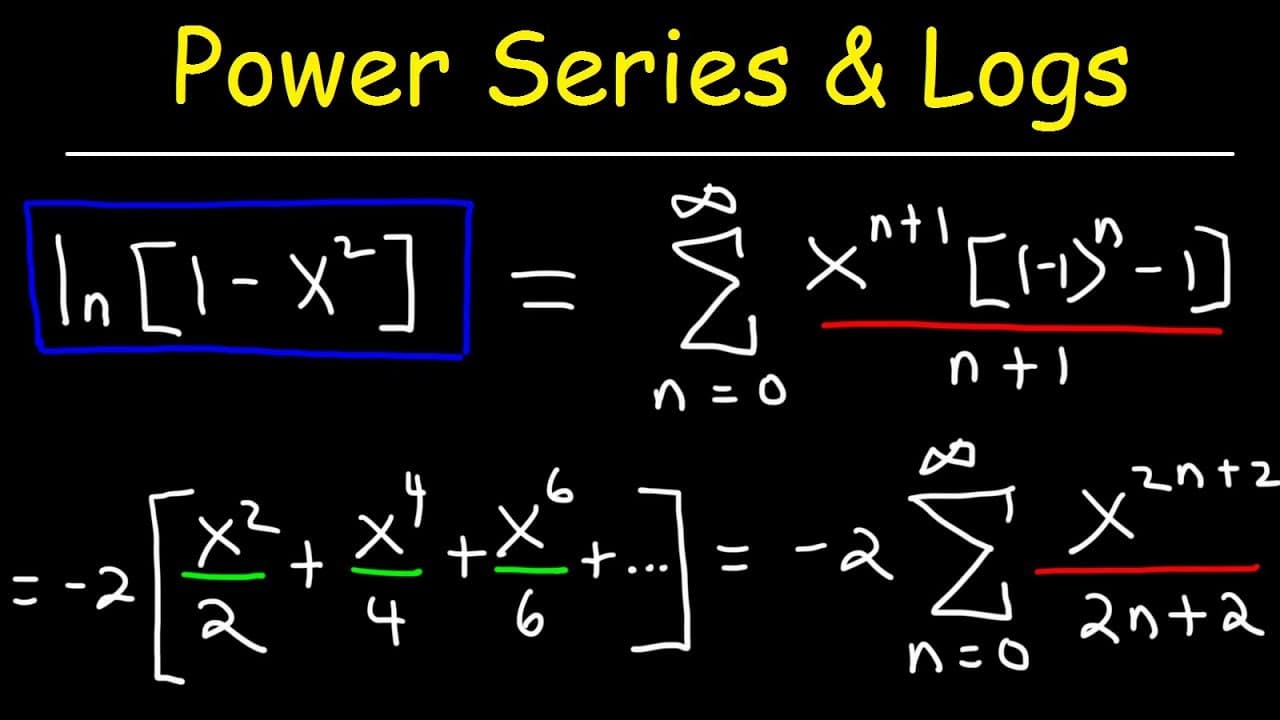
To find the power series representation of ln(1 - x^2), factor it as ln(1 - x) + ln(1 + x) and derive the series for each term. The power series converges for x in the interval (-1, 1), with accuracy improving as x approaches the center of convergence at 0.
Transcript
let's say if we have the function ln 1 minus x squared how can we write a power series representation of that function the first thing we need to do is factor one minus x squared and so we can write that as one minus x times one plus x now a property of natural logs allows us to take a single log and express it as a sum of two logs so ln a times b ... Read More
Key Insights
- ☺️ ln(1 - x^2) can be factored as ln(1 - x) + ln(1 + x) using the property of natural logarithms.
- ☺️ The derivatives of ln(1 - x) and ln(1 + x) are -1/(1 - x) and 1/(1 + x), respectively.
- ☺️ The power series representation of ln(1 - x^2) can be obtained by combining the series for ln(1 - x) and ln(1 + x).
- ☺️ The interval of convergence for ln(1 - x^2) is (-1, 1), which means the series converges for values of x between -1 and 1.
- ☺️ As the value of x approaches the center of convergence (0), fewer terms are needed to get an accurate approximation.
Install to Summarize YouTube Videos and Get Transcripts
Explore YouTube Video Summarizer or Get YouTube Transcript Extractor
Questions & Answers
Q: How do you factor 1 - x^2 to find the power series representation of ln(1 - x^2)?
To factor 1 - x^2, we can write it as (1 - x)(1 + x). This allows us to express ln(1 - x^2) as ln(1 - x) + ln(1 + x).
Q: What is the derivative of ln(1 - x)?
The derivative of ln(1 - x) is calculated using the chain rule, which gives us -1/(1 - x).
Q: What is the integral of ln(1 + x)?
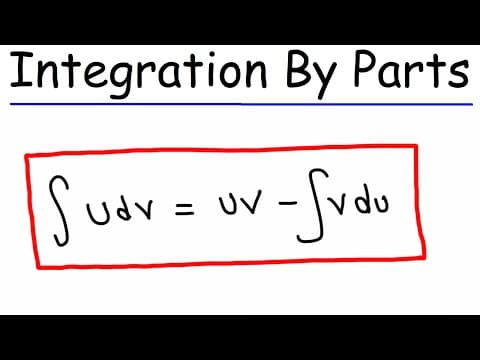
The integral of ln(1 + x) is determined by substituting u = 1 + x, which transforms it into ln(u). The integral of ln(u) is u(ln(u) - 1) + C.
Q: How is the power series representation of ln(1 - x^2) derived?
By combining the power series representation of ln(1 - x) and ln(1 + x), we obtain the series representation of ln(1 - x^2).
Summary & Key Takeaways
-
The video demonstrates how to factor 1 - x^2 and rewrite ln(1 - x^2) as ln(1 - x) + ln(1 + x).
-
The derivative of ln(1 - x) is -1/(1 - x), and the derivative of ln(1 + x) is 1/(1 + x).
-
The video shows the integral of the series representation of ln(1 - x) and ln(1 + x).
-
The power series representation of ln(1 - x^2) is derived by combining the series for ln(1 - x) and ln(1 + x).
-
The final representation of ln(1 - x^2) is given as a series using the coefficients of x^2n/(2n+2).
Read in Other Languages (beta)
Share This Summary 📚
Summarize YouTube Videos and Get Video Transcripts with 1-Click
Try YouTube Summary with ChatGPT & Claude or YouTube Transcript Generator
Explore More Summaries from The Organic Chemistry Tutor 📚


Summarize YouTube Videos and Get Video Transcripts with 1-Click
Try YouTube Summary with ChatGPT & Claude or YouTube Transcript Generator