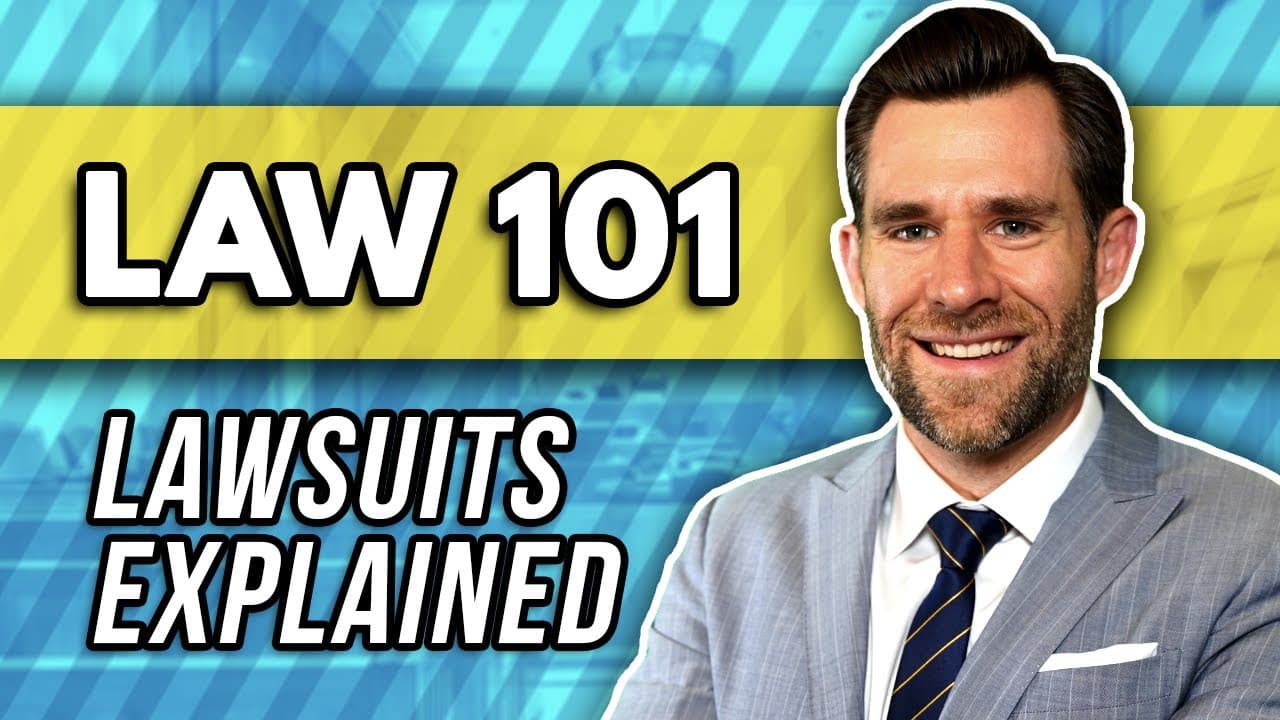
How Does a Civil Lawsuit Work Step by Step?
TL;DR
A civil lawsuit begins with a complaint filed by the plaintiff, outlining allegations for compensation. The defendant responds with an answer or a motion to dismiss. The process includes discovery, where both parties exchange relevant information, followed by potential pretrial motions. Most lawsuits settle before trial, and appeals focus on legal issues rather than facts.
Transcript
- Thanks to Dashlane for keeping Legal Eagle in the air. Have you ever wanted to know how a lawsuit works? Most people think of lawsuits as being these big scary animals that are completely opaque and esoteric. But the truth is, they are vital to the functioning of our society and can right wrongs where they occur. But today I wanna demystify the p... Read More
Key Insights
- 💼 Civil lawsuits differ from criminal cases by focusing on obtaining compensation for damages caused by another individual's actions.
- 📜 The complaint is the initiating document that outlines the factual and legal basis for the plaintiff's claim.
- 📁 Defendants can respond to a complaint by filing an answer or a motion to dismiss.
- 🥳 Discovery is a crucial phase in which both parties exchange information relevant to the lawsuit.
- ❤️🩹 The motion for summary judgment can be filed to end the lawsuit before trial, but it requires agreement on undisputed facts.
- 🤝 Pretrial motions and motions in limine deal with evidentiary issues before the trial begins.
- 🧑🏭 Appeals focus on reviewing legal issues rather than reestablishing the facts of the case.
Install to Summarize YouTube Videos and Get Transcripts
Explore YouTube Video Summarizer or Get YouTube Transcript Extractor
Questions & Answers
Q: What is the difference between a criminal case and a civil lawsuit?
In a criminal case, the state prosecutes individuals who have committed crimes against society, with the potential for jail time. In a civil lawsuit, individuals seek compensation for damages caused by another person's actions, with the goal of receiving monetary compensation.
Q: What is the purpose of a complaint in a civil lawsuit?
A complaint initiates a civil suit by outlining the factual allegations of the plaintiff's claim, along with the jurisdiction and venue information. It also includes legal statements explaining the causes of action that give rise to the claim.
Q: What are the options for a defendant after receiving a complaint?
The defendant can either file an answer, admitting or denying the factual allegations, or file a motion to dismiss, arguing that even if the facts are true, they do not give rise to a legal remedy.
Q: What is the purpose of the discovery phase in a lawsuit?
The discovery phase allows both parties to exchange relevant information, such as answers to interrogatories, document requests, and depositions. It ensures that all necessary information is available before proceeding to trial.
Summary & Key Takeaways
-
Lawsuits are an essential aspect of society, allowing individuals to seek compensation for damages caused by someone else's actions.
-
Civil lawsuits focus on obtaining monetary compensation for harm caused by breach of contract or civil wrongs.
-
The process starts with the filing of a complaint, followed by an answer or motion to dismiss, and then proceeds to the discovery phase, where both parties exchange relevant information.
-
After discovery, a motion for summary judgment may be filed to end the lawsuit before trial, and if unsuccessful, pretrial motions and motions in limine are dealt with before the trial begins.
-
Less than 2% of lawsuits go to trial, as most cases are resolved through settlement or dismissal before reaching that point.
-
Appeals are possible after a trial, but it is important to note that the Supreme Court only reviews cases involving constitutional or federal law issues.
Read in Other Languages (beta)
Share This Summary 📚
Summarize YouTube Videos and Get Video Transcripts with 1-Click
Try YouTube Summary with ChatGPT & Claude or YouTube Transcript Generator
Explore More Summaries from LegalEagle 📚





Summarize YouTube Videos and Get Video Transcripts with 1-Click
Try YouTube Summary with ChatGPT & Claude or YouTube Transcript Generator