Battle of Cambrai 1917: The Dawn of Tank Warfare (WW1 Documentary)
TL;DR
Cambrai 1917 revolutionized warfare with tanks and combined arms.
Transcript
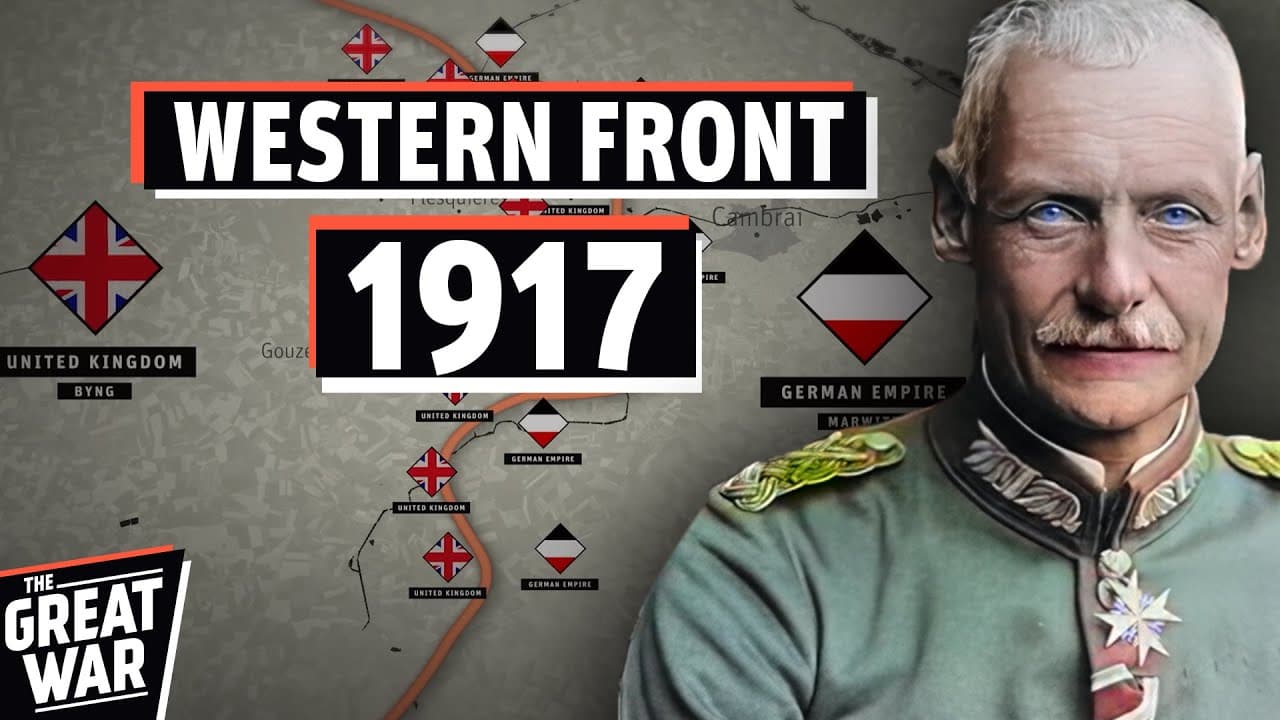
the Battle of kombre in late 1917 marked the first time in the first world war that church bells rang out across Great Britain to celebrate a victory in the first successful use of mass tanks British troops broke through German lines and forced the Germans back but despite the celebrations the war would rage for almost another year after kombre but... Read More
Key Insights
- The Battle of Cambrai in 1917 marked the first successful large-scale use of tanks in warfare, demonstrating their potential in breaking through entrenched positions.
- Despite initial breakthroughs, the British could not sustain their advance due to coordination issues, tank losses, and strong German counterattacks.
- The battle highlighted the importance of combined arms warfare, involving coordinated use of tanks, infantry, artillery, and air support.
- Both British and German forces learned significant lessons from Cambrai, influencing tactics and strategies for the remainder of World War I.
- The Germans developed specialized anti-tank tactics and artillery units, although they underestimated the tank's potential as a decisive weapon.
- The British used innovative logistics and deception tactics to maintain the element of surprise and support their tank operations.
- Cambrai demonstrated the limitations of tanks in 1917, as they were still vulnerable to artillery and mechanical failures.
- The battle's mixed outcomes and lessons learned contributed to the evolution of modern warfare, setting the stage for future conflicts.
Install to Summarize YouTube Videos and Get Transcripts
Explore YouTube Video Summarizer or Get YouTube Transcript Extractor
Questions & Answers
Q: What was the significance of the Battle of Cambrai in World War I?
The Battle of Cambrai in 1917 was significant as it marked the first successful large-scale use of tanks in warfare. It demonstrated the potential of tanks to break through entrenched positions, revolutionizing military tactics. The battle highlighted the importance of combined arms warfare, involving coordinated use of tanks, infantry, artillery, and air support, influencing tactics for the remainder of World War I.
Q: How did the British and Germans learn from the Battle of Cambrai?
The British learned the importance of coordination in combined arms warfare, integrating tanks with infantry, artillery, and air support. They refined logistics and deception tactics to maintain surprise. The Germans developed specialized anti-tank tactics and artillery units, although they underestimated the tank's potential as a decisive weapon. Both sides' lessons influenced their strategies in subsequent battles.
Q: What were the main challenges faced by the British during the Battle of Cambrai?
The British faced several challenges during the Battle of Cambrai, including coordination issues between tanks and infantry, resulting in breakdowns in communication and strategy. They also suffered significant tank losses due to mechanical failures and effective German counterattacks. Additionally, the British lacked sufficient reserves to exploit their initial breakthroughs, limiting their ability to sustain the advance.
Q: How did the Germans respond to the threat of British tanks at Cambrai?
The Germans responded to the threat of British tanks by developing specialized anti-tank tactics and artillery units. They trained units in anti-tank combat and concealed artillery close to the front to target tanks as they advanced. They also used wider trenches and tank traps to hinder tank movement. Despite these efforts, they underestimated the tank's potential as a decisive weapon.
Q: What role did logistics and deception play in the British strategy at Cambrai?
Logistics and deception played crucial roles in the British strategy at Cambrai. They used innovative logistics to support tank operations, including extensive fuel supplies and camouflaging tank movements. Deception tactics, such as creating dummy tank activity in other areas, helped maintain the element of surprise. These efforts were essential in enabling the initial British breakthroughs during the battle.
Q: What were the limitations of tanks during the Battle of Cambrai?
During the Battle of Cambrai, tanks faced several limitations. They were vulnerable to artillery fire and mechanical failures, with many tanks breaking down or being destroyed early in the battle. Coordination with infantry was challenging, and tanks were not always effective against well-prepared defenses. These limitations highlighted the need for further development and integration of tanks into combined arms tactics.
Q: How did the Battle of Cambrai influence future military strategies?
The Battle of Cambrai influenced future military strategies by demonstrating the potential of tanks as part of combined arms warfare. The battle highlighted the importance of coordination between different military branches, leading to refined tactics integrating tanks, infantry, artillery, and air support. These lessons contributed to the evolution of modern warfare and influenced strategies in subsequent conflicts, including World War II.
Q: What were the outcomes of the Battle of Cambrai for both sides?
The Battle of Cambrai resulted in mixed outcomes for both sides. The British initially achieved breakthroughs but failed to sustain their advance due to coordination issues and German counterattacks. The Germans successfully halted the British advance and retook lost ground. Both sides learned valuable lessons about tank warfare and combined arms tactics, influencing their strategies for the remainder of World War I.
Summary & Key Takeaways
-
The Battle of Cambrai in 1917 was a pivotal moment in military history, showcasing the first successful mass use of tanks. The British initially achieved breakthroughs but faced setbacks due to coordination issues and German counterattacks.
-
Both sides learned crucial lessons, with the British refining combined arms tactics and the Germans developing anti-tank strategies. The battle underscored the evolving nature of warfare, integrating tanks, artillery, infantry, and air support.
-
Cambrai's outcomes influenced subsequent military strategies, highlighting the potential and limitations of tanks. The battle set the stage for future innovations in warfare, contributing to the eventual Allied victory in World War I.
Read in Other Languages (beta)
Share This Summary 📚
Summarize YouTube Videos and Get Video Transcripts with 1-Click
Try YouTube Summary with ChatGPT & Claude or YouTube Transcript Generator
Explore More Summaries from The Great War 📚

Summarize YouTube Videos and Get Video Transcripts with 1-Click
Try YouTube Summary with ChatGPT & Claude or YouTube Transcript Generator