How to Prevent AI from Displacing Workers
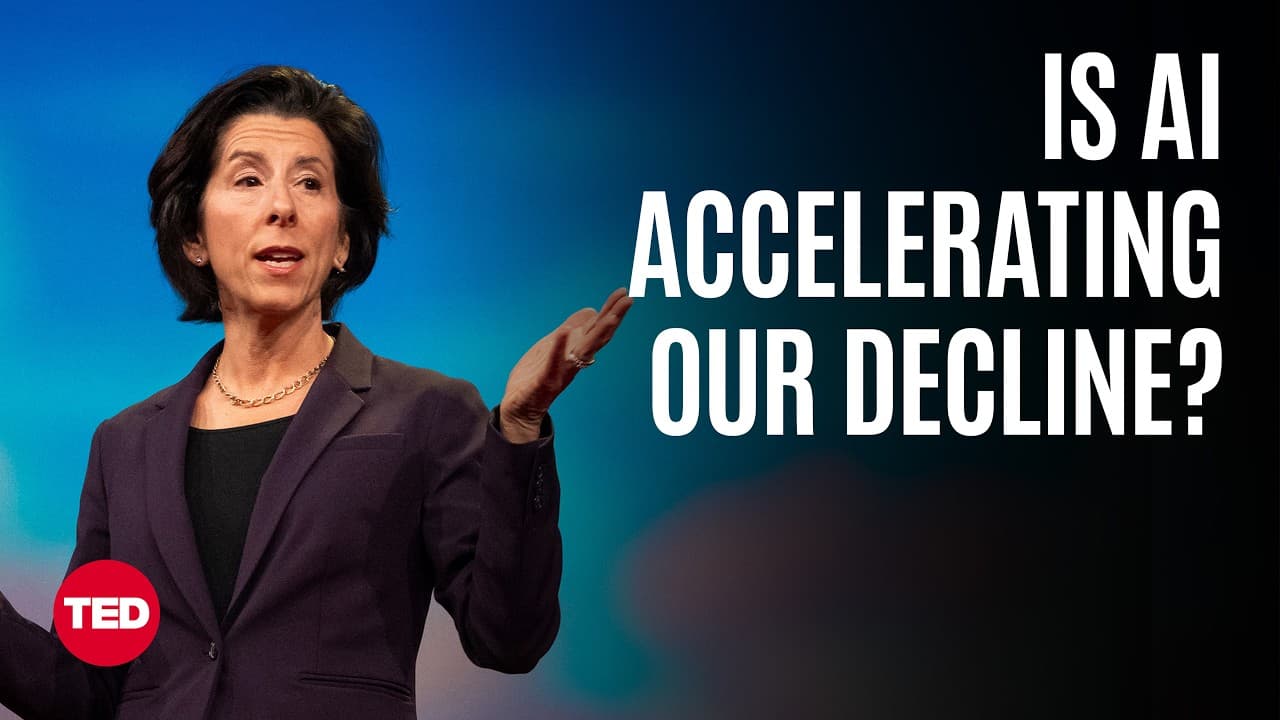
TL;DR
To prevent AI from displacing workers, the U.S. must develop a technology and human capital strategy that includes workforce training and career transition systems. This approach should involve collaboration between government, businesses, and educational institutions to prepare workers for the AI economy while ensuring economic stability and growth.
Transcript
What will it take for America to lead the global AI competition? Now, we all know we'll need plentiful energy, the best chips, the most innovative AI companies, the best models. But I argue that's not nearly enough. Cuz if we're the best in the world at those things, but we've displaced millions of American workers, then we're going to lose the glo... Read More
Key Insights
- The U.S. needs both a technology strategy and a human capital strategy to win the AI race.
- Displacing millions of workers could lead to recession, social unrest, and political upheaval.
- A new grand bargain between government and business is essential for effective transition.
- Current workforce training systems are inadequate for the AI economy.
- Employers should define skill needs and collaborate with educational institutions for training.
- Continuous learning and flexible education options are crucial for adapting to job changes.
- Temporary wage support and self-employment assistance can help workers transition.
- Incentives should encourage businesses to invest in worker retraining rather than layoffs.
Install to Summarize YouTube Videos and Get Transcripts
Explore YouTube Video Summarizer or Get YouTube Transcript Extractor
Questions & Answers
Q: How can the U.S. prevent AI from displacing workers?
The U.S. can prevent AI from displacing workers by developing a comprehensive strategy that includes both technology and human capital components. This involves collaboration between government, businesses, and educational institutions to ensure workforce readiness through effective training programs, continuous learning opportunities, and economic incentives that prioritize worker retraining over layoffs.
Q: What are the risks of displacing workers with AI?
Displacing workers with AI poses risks such as recession, social unrest, and political upheaval. These issues can weaken the country's economy and lead to excessive regulation of AI, hindering innovation. Ensuring a smooth transition to an AI economy is critical to maintaining economic stability and growth.
Q: What role do employers play in workforce training for AI?
Employers play a crucial role in workforce training for AI by defining current and future skill needs. They should collaborate with educational institutions and government programs to design training programs that prepare workers for the evolving job market. This partnership ensures that training aligns with industry demands and enhances workforce readiness.
Q: Why is continuous learning important in an AI economy?
Continuous learning is important in an AI economy because job requirements are constantly evolving due to technological advancements. Workers need to acquire new skills throughout their careers to remain competitive and adapt to changes. Flexible and affordable education options enable lifelong learning, ensuring individuals can transition smoothly between roles.
Q: How can economic incentives support worker retraining?
Economic incentives can support worker retraining by encouraging businesses to invest in employee development rather than opting for layoffs. Tax credits or other financial benefits can reward companies for redeploying workers, hiring entry-level employees, and reinvesting AI productivity gains into job creation, fostering a more resilient workforce.
Q: What support systems are needed for displaced workers?
Displaced workers need support systems that go beyond traditional unemployment insurance, which is outdated for the current job market. Temporary wage support can help workers transition to new fields by supplementing income during pay cuts. Additionally, self-employment assistance programs can aid those starting new businesses, facilitating smoother career transitions.
Q: How can historical lessons guide the AI transition?
Historical lessons, such as the outsourcing of manufacturing jobs, highlight the importance of planning for economic transitions. Poorly managed transitions can lead to long-term economic and political consequences. Learning from past mistakes, the U.S. can ensure a more strategic approach to integrating AI, avoiding negative impacts on the workforce and society.
Q: What is the potential impact of AI on job creation?
AI has the potential to create new jobs, industries, and services over time, similar to past technological advancements. While there may be short-term disruptions, history shows that new technologies often lead to increased productivity and economic growth. A well-prepared workforce can capitalize on these opportunities, driving innovation and prosperity.
Summary & Key Takeaways
-
To lead in AI, the U.S. must integrate technology and human capital strategies, ensuring workforce readiness and economic stability. A collaborative approach involving government, businesses, and educational institutions is necessary to prepare workers for the AI economy and prevent economic decline.
-
Current workforce training systems are insufficient for the AI-driven future. Employers, schools, and government programs must work together to define skill needs and provide continuous learning opportunities, enabling workers to adapt to rapidly changing job requirements.
-
Economic incentives should prioritize worker retraining over layoffs, supporting a smooth transition to an AI economy. Temporary wage support and self-employment assistance can help displaced workers, preventing social unrest and fostering economic resilience.
Read in Other Languages (beta)
Share This Summary 📚
Summarize YouTube Videos and Get Video Transcripts with 1-Click
Try YouTube Summary with ChatGPT & Claude or YouTube Transcript Generator
Explore More Summaries from TED 📚




Summarize YouTube Videos and Get Video Transcripts with 1-Click
Try YouTube Summary with ChatGPT & Claude or YouTube Transcript Generator