Could President Trump Legally Bomb Iran Without Congress?
TL;DR
President Trump could order limited strikes on Iran under his claimed commander-in-chief authority, but Congress holds the constitutional powers to declare war and control military funding, leaving the action’s legality contested. Operation Midnight Hammer targeted three Iranian nuclear facilities on June 22, 2025, without congressional permission or consultation. Read on to understand the legal arguments, operational scale, and risk of escalation.
Transcript
Welcome Zoomers to your generation's Middle Eastern quagmire. America just bombed Iran. Mr. Vice President, is the United States now at war with Iran? No, Kristen, we're not at war with Iran. We're at war with Iran's nuclear program. President Trump announced that US war plananes obliterated Iran's nuclear sites. Are those sites really obliterated?... Read More
Key Insights
- The US President ordered airstrikes on Iran's nuclear sites without consulting Congress.
- The Constitution grants Congress the power to declare war and control military funding.
- Operation Midnight Hammer involved a joint US-Israeli effort to neutralize Iran's nuclear capabilities.
- The War Powers Resolution limits presidential military actions without Congress's consent.
- The Office of Legal Counsel often supports presidential military actions under certain conditions.
- Historical precedents show presidents using military force without formal declarations of war.
- The legality of military actions often hinges on whether they serve national interests and are limited in scope.
- The recent airstrikes raise questions about potential escalation and regional stability.
Install to Summarize YouTube Videos and Get Transcripts
Explore YouTube Video Summarizer or Get YouTube Transcript Extractor
Questions & Answers
Q: Can the US president legally bomb Iran without Congress?
The transcript does not give an unqualified yes or no. The White House relied on President Trump’s commander-in-chief authority, while Article 1, Section 8 gives Congress the power to declare war and control military funding; the legal answer depends partly on whether the strikes constitute war in the constitutional sense.
Q: Did President Trump ask Congress before bombing Iran?
No. The transcript says Trump neither asked Congress for permission nor consulted lawmakers before ordering the strikes on Iran’s nuclear facilities.
Q: What was Operation Midnight Hammer?
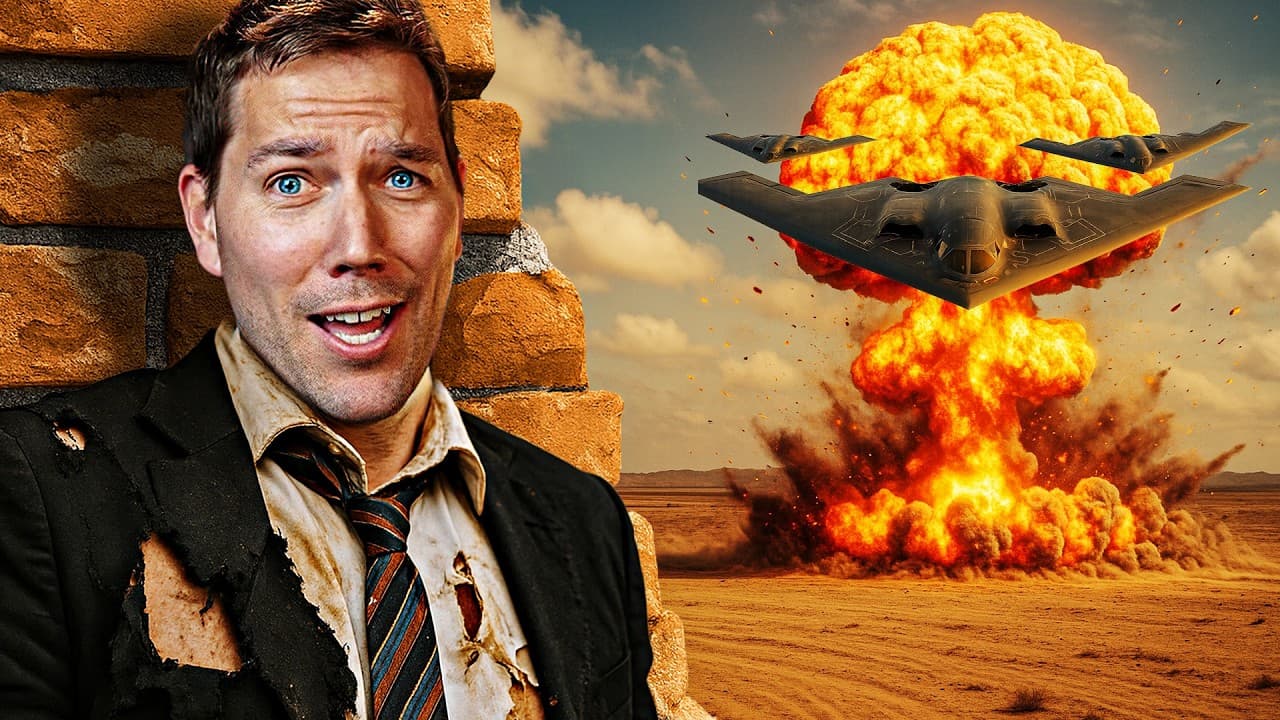
Operation Midnight Hammer was the US operation that launched precise airstrikes against three fortified Iranian nuclear facilities on June 22, 2025. It used B-2 stealth bombers, bunker-buster bombs, and Tomahawk missiles in close coordination with Israel.
Q: Why did the US strike Iran’s nuclear facilities?
Trump officials said the attack was intended to pressure Iran back toward diplomacy and restore peace in the region. The joint US-Israeli effort was presented as an attempt to neutralize Iran’s nuclear capabilities and address a shared threat.
Q: How large was the US military operation against Iran?
The operation involved 125 aircraft, an Ohio-class nuclear submarine, and nearly the entire US fleet of B-2 strategic bombers. Fourteen of the fleet’s 20 B-2 bombers left Whiteman Air Force Base and entered Iranian airspace about 18 hours later.
Q: What role did Israel play in Operation Midnight Hammer?
Israel coordinated closely with the United States and took steps to clear Iranian air defenses so US aircraft could reach their targets safely. Prime Minister Netanyahu and other Israeli leaders publicly praised the joint operation as a defense against a shared threat.
Q: Were Iran’s nuclear sites destroyed by the US strikes?
The transcript says the full aftermath was still uncertain. It cites a senior US official reported by The New York Times who said the Fordo facility was badly damaged but not destroyed, despite Trump’s announcement that the nuclear sites had been obliterated.
Q: Could the Iran strikes escalate into a wider war?
Yes, the transcript identifies escalation as a serious possibility if the mission failed to satisfy Trump or Israel or if Iran launched counterstrikes. It argues that unilateral executive military action can grow through retaliatory exchanges into all-out war without a formal congressional declaration.
Summary & Key Takeaways
-
The US President launched airstrikes on Iran's nuclear facilities, bypassing Congress, which holds the constitutional power to declare war. This action was justified under the President's authority as commander-in-chief, sparking debate over executive military powers and potential escalation in the Middle East.
-
Operation Midnight Hammer was a joint US-Israeli mission targeting Iranian nuclear sites, involving significant military resources. The strikes aimed to pressure Iran back to diplomacy, yet raised concerns about the legality and implications of unilateral presidential military actions.
-
The War Powers Resolution requires congressional approval for military actions unless under specific conditions. The President's actions highlight ongoing tensions between executive power and congressional authority, with historical precedents of presidents acting without formal war declarations.
Read in Other Languages (beta)
Share This Summary 📚
Summarize YouTube Videos and Get Video Transcripts with 1-Click
Try YouTube Summary with ChatGPT & Claude or YouTube Transcript Generator
Explore More Summaries from LegalEagle 📚





Summarize YouTube Videos and Get Video Transcripts with 1-Click
Try YouTube Summary with ChatGPT & Claude or YouTube Transcript Generator