Boost Converters - DC to DC Step Up Voltage Circuits
TL;DR
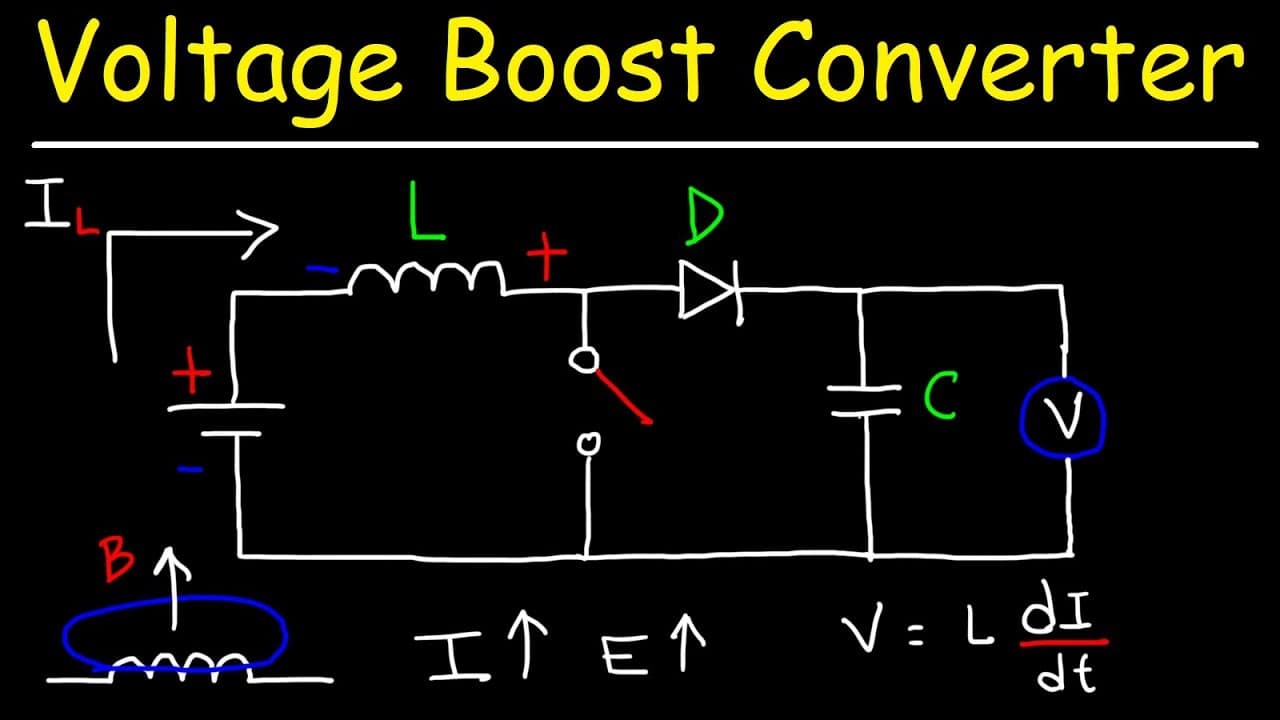
Boost converters circuits raise the voltage of a DC source by utilizing an inductor, creating a trade-off between voltage and current.
Transcript
in this video we're going to focus on boost converters circuits that can raise the voltage of a dc source such as batteries or solar cells as the output voltage increases the current decreases so there's going to be a trade-off at 100 efficiency the power will be maintained now let's talk about how it works the key player here is the inductor now w... Read More
Key Insights
- ✊ Boost converter circuits raise the voltage of a DC source while decreasing the current, maintaining power at 100% efficiency.
- ⚡ The inductor is the key component in a boost converter circuit, storing energy and inducing a higher voltage when the current decreases.
- 👻 The switching of the circuit controls the flow of current, allowing energy transfer from the inductor to the capacitor.
- 💐 The diode in a boost converter circuit prevents the capacitor from discharging and ensures current flows in the desired direction.
- ⚡ Increasing the inductance or the switching frequency can result in a higher output voltage across the capacitor.
- 👻 Using a MOSFET or transistor as a fast-acting switch in a boost converter circuit allows control over the switching frequency.
- ⚡ Handling inductors in a boost converter circuit requires caution, as they can generate high voltages.
Install to Summarize YouTube Videos and Get Transcripts
Explore YouTube Video Summarizer or Get YouTube Transcript Extractor
Questions & Answers
Q: How does a boost converter circuit work?
A boost converter circuit utilizes an inductor to store energy and induce a higher voltage when the current decreases. This increased voltage charges a capacitor, resulting in a higher output voltage than the input voltage.
Q: What is the purpose of the diode in a boost converter circuit?
The diode in a boost converter circuit prevents the capacitor from discharging through the battery and maintains the higher voltage across the capacitor. It allows current to flow in one direction only, ensuring the capacitor continues to charge.
Q: How does the inductor in a boost converter circuit affect the output voltage?
The inductance and the rate of change of current through the inductor determine the induced voltage. Increasing the inductance or the switching frequency can result in a higher output voltage across the capacitor.
Q: What precautions should be taken when working with inductors in a boost converter circuit?
Inductors can generate high voltages, so it is important to handle them with caution. Practicing safe techniques, such as using proper insulation and following safety guidelines, is crucial in preventing potential safety issues.
Summary & Key Takeaways
-
Boost converter circuits increase the voltage of a DC source while decreasing the current, maintaining power at 100% efficiency.
-
The key component in a boost converter circuit is the inductor, which stores energy and induces a higher voltage across the circuit.
-
The switching of the circuit controls the flow of current and allows for the transfer of energy from the inductor to the capacitor, increasing the output voltage.
Read in Other Languages (beta)
Share This Summary 📚
Summarize YouTube Videos and Get Video Transcripts with 1-Click
Try YouTube Summary with ChatGPT & Claude or YouTube Transcript Generator
Explore More Summaries from The Organic Chemistry Tutor 📚



Summarize YouTube Videos and Get Video Transcripts with 1-Click
Try YouTube Summary with ChatGPT & Claude or YouTube Transcript Generator