How to Predict Future Trends with AI
TL;DR
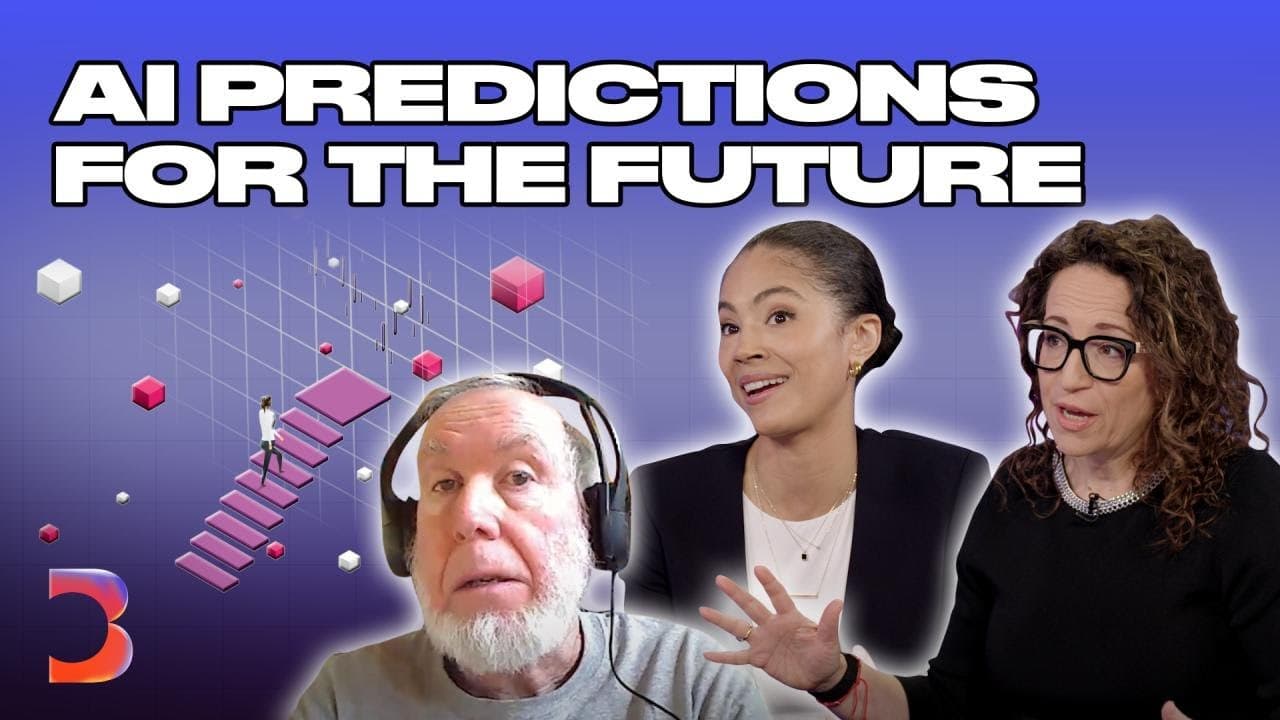
Predicting the future is challenging, especially with the rapid pace of AI development. Futurists use data and analysis to forecast potential outcomes, emphasizing preparation over prediction. The impact of AI on jobs and industries is uncertain but expected to be significant in the coming years, requiring adaptation and innovation.
Transcript
foreign young did you have like Smiles in your eyes and and hope dreams in your heart or were you like me I wasn't a Pollyanna or a Doomer I was pretty pragmatic as a kid what do you want to put her and you've ended up doing this with me I didn't see a cat with a rocket on its back in my future no I did see jet packs in my future as a child where's... Read More
Key Insights
- Predicting the future is inherently uncertain, especially with rapid technological advancements.
- Futurists use both qualitative and quantitative data to build forecasts about future trends.
- AI is expected to disrupt a quarter of the workforce in the next five years, impacting tasks rather than entire jobs.
- The emergence of new jobs and industries is a constant, with many current roles not existing 15 years ago.
- Adaptation to technological changes is a historical constant, and humans have always adjusted to new innovations.
- AI is not a monolithic entity; there will be many varieties and applications, each with specific functions.
- The development of AI is a long-term journey, akin to the impact of electricity or the printing press.
- Regulation and societal conversations are crucial in shaping the future of AI and its applications.
Install to Summarize YouTube Videos and Get Transcripts
Explore YouTube Video Summarizer or Get YouTube Transcript Extractor
Questions & Answers
Q: How do futurists predict future trends?
Futurists predict future trends by analyzing both qualitative and quantitative data, such as patents, job postings, and geopolitical relationships. They use this information to build forecasts about where the future might be headed, focusing on preparation rather than precise predictions.
Q: What impact will AI have on the workforce in the next five years?
AI is expected to impact a quarter of the workforce in the next five years, primarily through task automation rather than job elimination. While some roles may become obsolete, new opportunities and industries will emerge, requiring workers to adapt and learn to use AI tools effectively.
Q: Why is adaptation important in the face of technological change?
Adaptation is crucial because technological advancements have historically transformed societies and economies. Humans have always adjusted to new innovations, and as AI continues to develop, being adaptable will help individuals and industries thrive in a rapidly changing environment.
Q: How diverse will AI applications be in the future?
AI applications will be diverse, with many varieties and specific functions. Different types of AI will be developed for various tasks, such as driving, language translation, and image creation. This diversity allows for tailored solutions to specific problems, enhancing efficiency and effectiveness.
Q: What is the long-term outlook for AI development?
The long-term outlook for AI development is optimistic, with its impact likened to transformative technologies like electricity and the printing press. The journey is expected to span centuries, allowing society time to adjust and integrate AI into various aspects of life while addressing challenges and ethical concerns.
Q: Why is regulation important in the development of AI?
Regulation is important to ensure that AI development aligns with societal values and minimizes potential risks. It helps create a framework for ethical use, addressing concerns such as bias, privacy, and security. Involving diverse voices in these discussions is crucial for shaping AI's future responsibly.
Q: How do futurists view the role of technology in society?
Futurists view technology as a powerful force that shapes culture and society. They emphasize the feedback loop between technological change and societal adaptation, highlighting the need for critical thinking and preparation to harness technology's benefits while mitigating potential downsides.
Q: What are the challenges in predicting AI's future impact?
Predicting AI's future impact is challenging due to the rapid pace of development and the complexity of its applications. While it's difficult to pinpoint exact outcomes, futurists focus on identifying signals and trends to prepare for potential scenarios, emphasizing the importance of flexibility and adaptability.
Summary & Key Takeaways
-
Predicting the future is a complex task, especially with the rapid pace of AI development. Futurists analyze data to forecast potential outcomes, focusing on preparation over prediction. The impact of AI on jobs and industries is expected to be significant, requiring adaptation and innovation.
-
AI's impact on the workforce will be substantial, with a quarter of jobs potentially affected in the next five years. However, this disruption is more about task automation than job elimination, and new roles will emerge as technology evolves.
-
The development of AI is a long-term journey, with multiple varieties and applications expected to emerge. Regulation and societal conversations are crucial in shaping AI's future, ensuring that its benefits outweigh potential risks.
Read in Other Languages (beta)
Share This Summary 📚
Summarize YouTube Videos and Get Video Transcripts with 1-Click
Try YouTube Summary with ChatGPT & Claude or YouTube Transcript Generator
Explore More Summaries from Bloomberg Originals 📚






Summarize YouTube Videos and Get Video Transcripts with 1-Click
Try YouTube Summary with ChatGPT & Claude or YouTube Transcript Generator