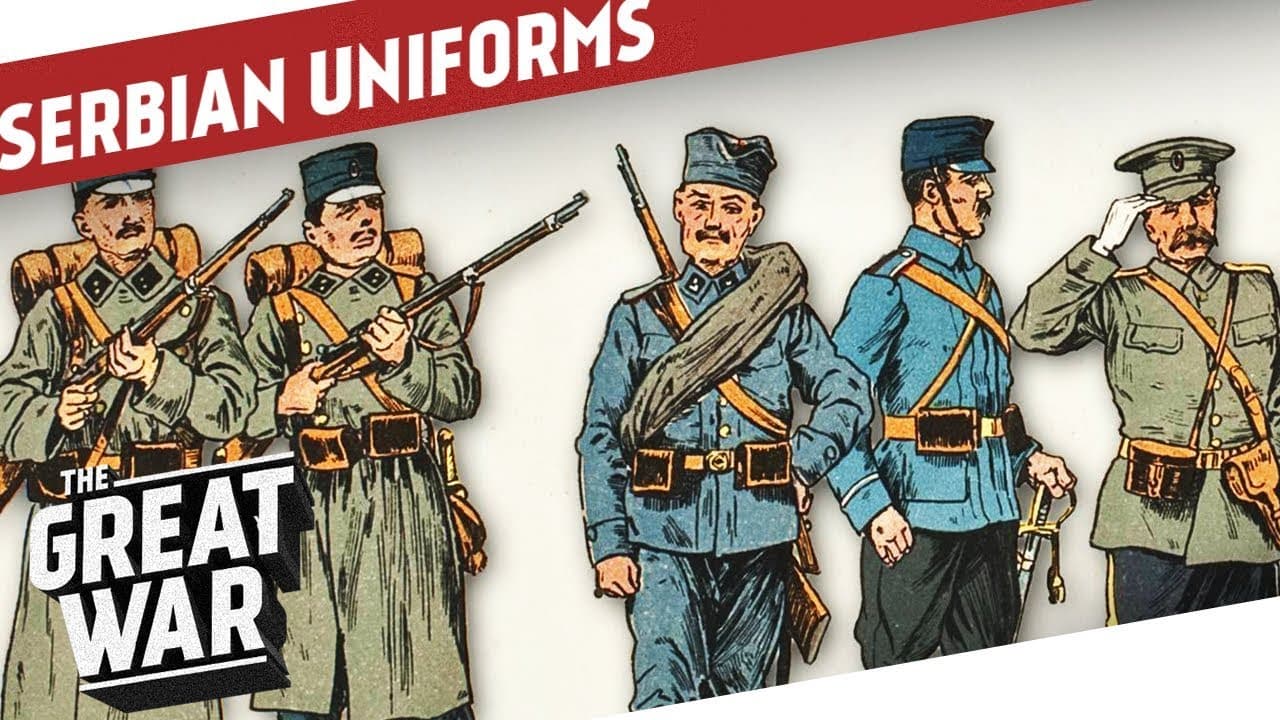
Serbian Uniforms of World War 1 I THE GREAT WAR Special
TL;DR
Serbian uniforms evolved during WWI influenced by various European styles.
Transcript
We’ve talked a lot about Serbia during our regular episodes. From the war’s beginnings and the repeated failures of the Austro-Hungarian Empire to conquer Serbia, to its invasion at the hands of the combined Central Powers, then to the exodus to Corfu where the remnants of the Serbian army were reconstituted to carry on the fight. And today I’m not... Read More
Key Insights
- Serbian uniforms in WWI were influenced by Russian, French, and German styles, reflecting shifting political alliances.
- The 1870 Regulation of Military Clothing marked the beginning of standardized Serbian military uniforms, emphasizing practicality.
- By 1896, Serbian uniforms showed strong Russian influences, aiming to secure Russian support against Austro-Hungarian influences.
- The 1908 olive green uniform became the standard field service pattern, focusing on functionality for all ranks.
- Serbia's economic constraints during WWI led to a mix of old and new uniforms, with many soldiers wearing outdated or civilian clothing.
- The retreat through Albania and regrouping on Corfu resulted in the loss of many original uniforms, leading to French re-equipment.
- The Serbian army's uniforms were simple and practical, with the olive green color providing effective camouflage in the Balkan terrain.
- Despite logistical challenges, Serbian soldiers were known for their resilience and combat effectiveness during the war.
Install to Summarize YouTube Videos and Get Transcripts
Explore YouTube Video Summarizer or Get YouTube Transcript Extractor
Questions & Answers
Q: What were the influences on Serbian military uniforms before WWI?
Before WWI, Serbian military uniforms were influenced by Russian, French, and German styles. Initially, Russian influence was predominant, with Serbian insignia added to Russian uniforms. French-style Kepis and German pickelhaube were also present. These influences reflected Serbia's shifting political alliances and aspirations to modernize its military.
Q: How did the 1908 uniform pattern differ from previous designs?
The 1908 uniform pattern introduced a standardized olive green field service design for all ranks, emphasizing simplicity and functionality. It featured a single-breasted wool tunic with hidden buttons, suitable for various duty occasions. This pattern replaced the more colorful and varied uniforms influenced by Russian and Austrian styles, focusing on practicality for the battlefield.
Q: What challenges did Serbia face in equipping its army during WWI?
Serbia faced significant challenges in equipping its army during WWI due to economic constraints and the aftermath of the Balkan Wars. The country struggled to produce enough modern uniforms, resulting in a mix of outdated uniforms and civilian clothes. The retreat through Albania further depleted their resources, necessitating French re-equipment for the reconstituted army.
Q: How did the retreat through Albania affect Serbian uniforms?
The retreat through Albania was a turning point for Serbian uniforms, as many were lost or destroyed during the arduous journey. This necessitated a re-equipment of the Serbian army on Corfu, where they were supplied with French uniforms and gear. This change marked a shift in the appearance and equipment of Serbian soldiers for the remainder of the war.
Q: What role did French support play in Serbian military uniforms?
French support played a crucial role in re-equipping the Serbian army after the retreat through Albania. The French provided uniforms and gear, including 150,000 Adrian helmets with the Serbian crest. This assistance was vital in maintaining the operational capability of the Serbian army, which had been severely depleted during the retreat.
Q: What were the practical features of the 1908 Serbian uniforms?
The 1908 Serbian uniforms were designed for practicality, featuring olive green wool tunics with hidden buttons, suitable for various field conditions. The uniforms included functional elements like adjustable trousers, a greatcoat with a slit for horseback riding, and a shajkacha cap with foldable flaps for weather protection. These features enhanced the soldiers' effectiveness in the Balkan terrain.
Q: How did Serbian soldiers adapt to the lack of uniformity in their attire?
Serbian soldiers adapted to the lack of uniformity by leveraging their combat experience and resourcefulness. Despite wearing a mix of outdated uniforms and civilian clothes, they maintained high morale and effectiveness in battle. Their resilience and determination compensated for the logistical challenges, earning them a reputation as formidable fighters.
Q: What was the significance of the olive green color in Serbian uniforms?
The olive green color of Serbian uniforms was significant for its practicality, providing effective camouflage in the Balkan terrain. This color choice helped soldiers blend into the natural environment, enhancing their ability to conduct operations discreetly. The relatively low weight of the uniforms also contributed to their suitability for the hilly and challenging landscapes of the region.
Summary & Key Takeaways
-
Serbian military uniforms during WWI were a blend of various European influences, reflecting Serbia's political alliances and strategic needs. The uniforms evolved from Russian-inspired designs to more practical and functional patterns, like the 1908 olive green field service uniform, which became the standard for all ranks.
-
Economic hardships and previous conflicts limited Serbia's ability to equip its army uniformly. As a result, soldiers wore a mix of old uniforms, civilian clothes, and eventually, French-supplied gear after the retreat through Albania. This diversity led to challenges in maintaining uniformity and identifying soldiers.
-
Despite the challenges in equipping their army, Serbian soldiers demonstrated remarkable resilience and adaptability. Their uniforms, though varied, were practical and suited for the Balkan terrain. The Serbian army's effective combat performance was attributed to their determination and resourcefulness, rather than uniformity in appearance.
Read in Other Languages (beta)
Share This Summary 📚
Summarize YouTube Videos and Get Video Transcripts with 1-Click
Try YouTube Summary with ChatGPT & Claude or YouTube Transcript Generator
Explore More Summaries from The Great War 📚

Summarize YouTube Videos and Get Video Transcripts with 1-Click
Try YouTube Summary with ChatGPT & Claude or YouTube Transcript Generator