What Led to the Collapse of Central Powers in WWI?
TL;DR
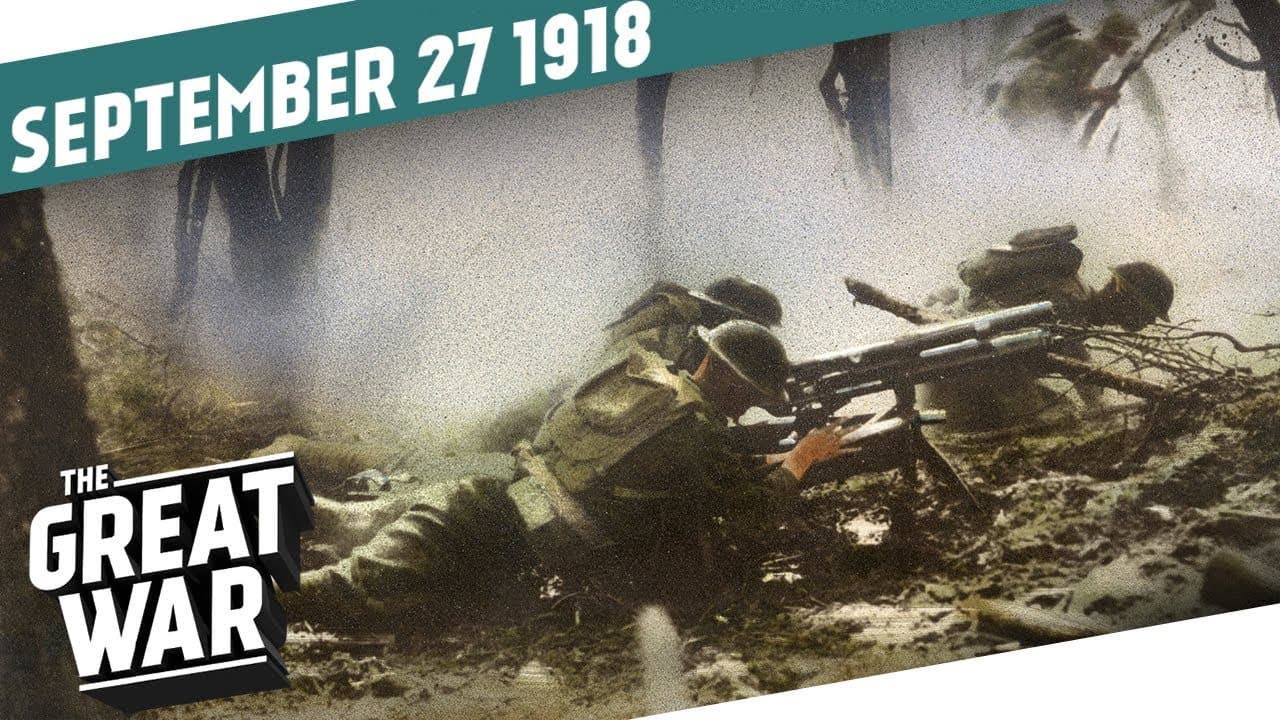
The Meuse-Argonne Offensive marked a significant turning point in World War I, with the collapse of Central Powers' defenses. The Franco-American attack from Champagne to the Meuse River achieved significant advances despite challenges. Concurrently, the Bulgarian and Ottoman fronts saw dramatic Allied breakthroughs, leading to the Bulgarian proposal for an armistice and the Ottoman armies' collapse in Palestine.
Transcript
this week is a remarkable week of the war for this week seiz the defenses of not one but two of the Central Powers completely collapse I'm Indie Nell welcome to the Great War last week the oil city of Baku fell to the Ottomans but things went far worse for them on the Palestine front after cutting off ottoman Communications the British broke throug... Read More
Key Insights
- The Meuse-Argonne Offensive was a major Franco-American operation against German defenses.
- Allied forces had a significant manpower advantage, with nine full US divisions against five understrength German divisions.
- The German defenses were well-prepared with barbed wire, bunkers, and an efficient local rail system.
- The British launched a successful surprise attack on the Hindenburg Line, capturing 16,000 prisoners.
- The Ottoman 7th and 8th armies collapsed in Palestine, with significant Allied advances and thousands of prisoners taken.
- Bulgarian forces faced mutiny and defeat, leading to a proposed armistice and unrest in Sofia.
- The Allies captured over 345,000 prisoners across various fronts in 75 days.
- Mutinies became common, with notable instances among Bulgarian and Australian troops.
Install to Summarize YouTube Videos and Get Transcripts
Explore YouTube Video Summarizer or Get YouTube Transcript Extractor
Questions & Answers
Q: How did the Meuse-Argonne Offensive impact World War I?
The Meuse-Argonne Offensive was a decisive operation that significantly weakened German defenses on the Western Front. It was part of a larger series of Allied offensives that pressured the Central Powers into retreat and contributed to the eventual armistice. The offensive demonstrated the effectiveness of coordinated Franco-American military efforts and highlighted the logistical challenges faced by both sides.
Q: What challenges did Allied forces face during the Meuse-Argonne Offensive?
Allied forces faced several challenges during the Meuse-Argonne Offensive, including well-prepared German defenses with barbed wire, bunkers, and machine gun posts. The terrain was difficult, with streams and high ground providing the Germans with advantageous positions for flanking fire. Additionally, logistical issues limited the availability of tanks and planes, complicating the advance.
Q: Why did the Bulgarian forces propose an armistice in 1918?
Bulgarian forces proposed an armistice in 1918 due to a series of military defeats and internal unrest. Allied forces made significant advances on the Macedonian front, capturing key positions and cutting off retreat routes. Additionally, mutinies among Bulgarian troops and widespread unrest in Sofia and other cities weakened the government's ability to continue the war effort, prompting the proposal for an armistice.
Q: What was the significance of the British attack on the Hindenburg Line?
The British attack on the Hindenburg Line was significant as it breached a critical part of the German defensive system on the Western Front. The surprise assault, spearheaded by the Canadian Corps, captured 16,000 prisoners and created a substantial gap in the German lines. This success demonstrated the effectiveness of Allied coordination and contributed to the overall weakening of German military capabilities.
Q: How did the Ottoman armies collapse in Palestine?
The Ottoman armies in Palestine collapsed due to a series of coordinated Allied offensives that overwhelmed their defenses. British forces advanced rapidly, capturing key positions and cutting off Ottoman retreat routes. The Arab Revolt further disrupted Ottoman communications and logistics. A devastating aerial attack on retreating Turkish columns compounded their losses, leading to the collapse of the 7th and 8th Ottoman armies.
Q: What role did mutinies play in the events of September 1918?
Mutinies played a significant role in the events of September 1918, reflecting the declining morale and discipline among Central Powers' troops. Notable instances included Bulgarian troops mutinying and establishing a new republic, and Australian troops refusing to attack due to exhaustion. These mutinies weakened the Central Powers' military effectiveness and contributed to their eventual defeat.
Q: What were the outcomes of the Allied offensives in September 1918?
The Allied offensives in September 1918 resulted in significant territorial gains and the capture of over 345,000 Central Powers' prisoners across various fronts. These operations pressured the Central Powers into retreat and contributed to the eventual armistice proposals. The offensives demonstrated the effectiveness of Allied coordination and highlighted the logistical and strategic challenges faced by the Central Powers.
Q: How did the Allies achieve surprise in their attacks during this period?
The Allies achieved surprise in their attacks through careful planning and coordination, often launching offensives at unexpected times or locations. The British attack on the Hindenburg Line, for example, caught the Germans off guard, leading to a successful breach. Additionally, the use of creeping barrages and coordinated infantry advances helped maintain momentum and exploit weaknesses in enemy defenses.
Summary & Key Takeaways
-
The Meuse-Argonne Offensive was a significant World War I operation, marking a turning point with the collapse of Central Powers' defenses. Allied forces, particularly the Franco-American troops, made substantial advances despite facing well-prepared German defenses. The offensive was part of a broader series of Allied attacks across multiple fronts, leading to the eventual armistice proposals from Bulgaria and significant Ottoman losses in Palestine.
-
On the Western Front, the British successfully breached the Hindenburg Line, capturing thousands of German prisoners. Meanwhile, the Ottoman armies in Palestine faced a devastating collapse, with Allied forces advancing rapidly and capturing tens of thousands of prisoners. The Bulgarian front saw mutinies and a rapid Allied advance, leading to the proposal of an armistice by the Bulgarian government.
-
Throughout September 1918, Allied forces achieved significant territorial gains and captured over 345,000 prisoners across various fronts. The scale of these operations and the number of prisoners captured highlight the immense pressure on the Central Powers, contributing to their eventual defeat. Despite initial successes, the offensives often slowed due to logistical challenges and well-prepared enemy defenses.
Read in Other Languages (beta)
Share This Summary 📚
Summarize YouTube Videos and Get Video Transcripts with 1-Click
Try YouTube Summary with ChatGPT & Claude or YouTube Transcript Generator
Explore More Summaries from The Great War 📚




Summarize YouTube Videos and Get Video Transcripts with 1-Click
Try YouTube Summary with ChatGPT & Claude or YouTube Transcript Generator