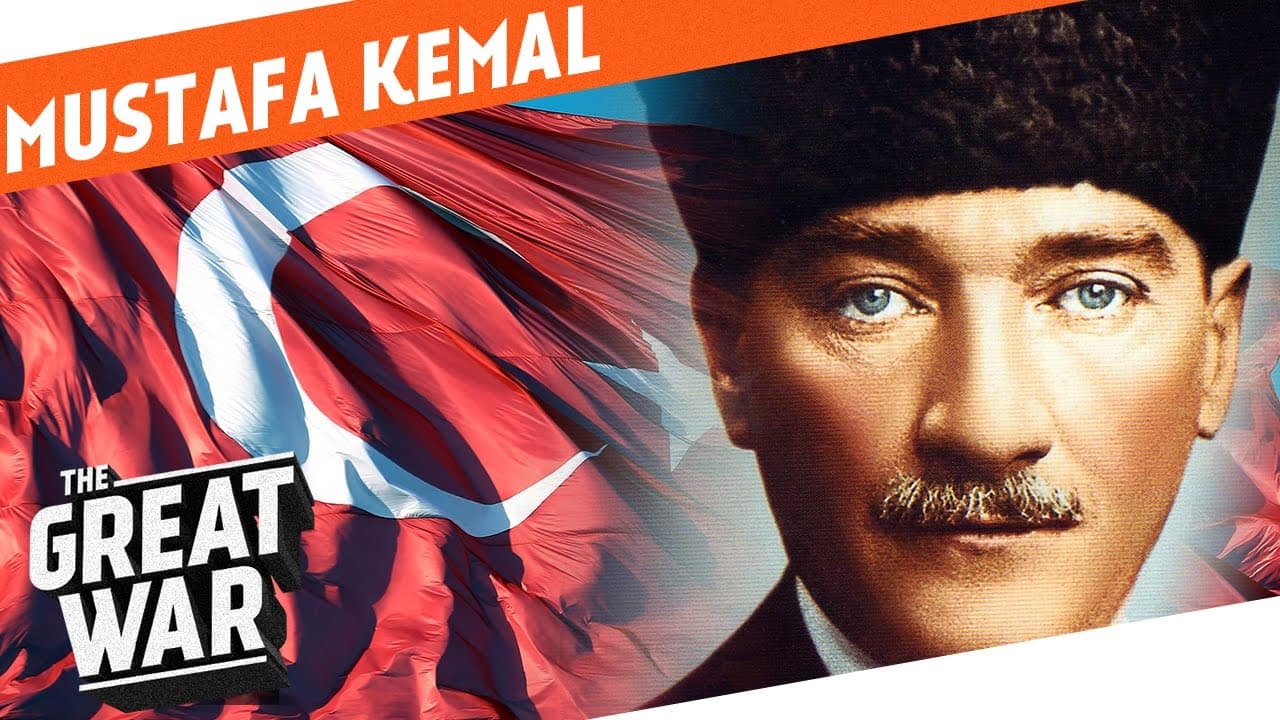
Defender of Gallipoli - Mustafa Kemal Atatürk I WHO DID WHAT IN WORLD WAR 1?
TL;DR
Mustafa Kemal Atatürk led Turkey's transformation post-WWI.
Transcript
The “Father of the Turks”. That’s what Ataturk means, and it was the title and surname given to Mustafa Kemal to honor him as the leader and driving force behind the creation of modern Turkey. His exploits in the First World War are legend, and it was his tactical skills that were the real secret in both his military and political career. So… Musta... Read More
Key Insights
- Mustafa Kemal Atatürk, known as 'Father of the Turks', played a pivotal role in the creation of modern Turkey through his leadership and tactical prowess during and after World War I.
- Born in 1881 in Saloniki, Atatürk's early life was marked by modest circumstances and the loss of his father at a young age, shaping his resilient character.
- Atatürk's military career began with his education at a military academy, where he joined the opposition party advocating for reform and was briefly imprisoned for his political activities.
- His strategic brilliance was demonstrated during the Gallipoli Campaign in World War I, where he successfully defended against Allied forces, gaining international recognition.
- Post-World War I, Atatürk led the Turkish War of Independence, resisting foreign partitioning of the Ottoman Empire, and emerged as the leader of the newly founded Republic of Turkey.
- Atatürk was instrumental in modernizing Turkey, implementing secular reforms, and establishing a national identity, earning him a revered status among Turkish citizens.
- His presidency, lasting 15 years, saw significant political and social changes, setting the foundation for Turkey's future development and international standing.
- Atatürk's legacy is celebrated globally, with UNESCO declaring 1981 as the 'Year of Atatürk', and his influence remains deeply ingrained in Turkish culture and identity.
Install to Summarize YouTube Videos and Get Transcripts
Explore YouTube Video Summarizer or Get YouTube Transcript Extractor
Questions & Answers
Q: What was Mustafa Kemal Atatürk's role during World War I?
During World War I, Mustafa Kemal Atatürk served as a commander in the Ottoman army, most notably during the Gallipoli Campaign. His strategic leadership and tactical acumen were instrumental in defending the Gallipoli Peninsula against the Allied forces, earning him international fame and recognition for his military prowess.
Q: How did Mustafa Kemal Atatürk contribute to the founding of modern Turkey?
Atatürk played a crucial role in the founding of modern Turkey by leading the Turkish War of Independence following the collapse of the Ottoman Empire. He resisted foreign partitioning, established the Republic of Turkey in 1923, and implemented extensive reforms to modernize the country, creating a secular and national identity.
Q: What reforms did Atatürk implement during his presidency?
During his presidency, Atatürk implemented a series of reforms aimed at modernizing Turkey. These included secularizing the government, adopting Western legal codes, reforming education by introducing a new alphabet and curriculum, and promoting industrialization and economic development. His reforms laid the foundation for Turkey's transformation into a modern nation-state.
Q: Why is Atatürk a revered figure in Turkish history?
Atatürk is revered in Turkish history for his role in establishing the Republic of Turkey and his vision of a modern, secular, and progressive nation. His leadership during the War of Independence and his transformative reforms earned him the title 'Father of the Turks', and his legacy continues to influence Turkey's national identity and political landscape.
Q: What was the significance of Atatürk's military tactics at Gallipoli?
Atatürk's military tactics at Gallipoli were significant because they demonstrated his exceptional strategic skills, which led to the successful defense of the peninsula against a larger and better-equipped Allied force. This victory not only boosted Ottoman morale but also elevated Atatürk's status as a national hero and a skilled military leader on the world stage.
Q: How did Atatürk's early life influence his later achievements?
Atatürk's early life, marked by the loss of his father and modest living conditions, instilled in him a sense of resilience and determination. His education at a military academy and involvement in opposition politics shaped his reformist ideals, which later influenced his leadership style and his commitment to modernizing Turkey and establishing a secular, democratic state.
Q: What impact did Atatürk's reforms have on Turkish society?
Atatürk's reforms had a profound impact on Turkish society by transforming it into a secular, modern nation. His changes in education, law, and governance promoted equality, national unity, and economic development. These reforms not only improved the quality of life for Turkish citizens but also positioned Turkey as a progressive state in the international community.
Q: How is Atatürk's legacy perceived internationally?
Internationally, Atatürk's legacy is perceived as that of a visionary leader who successfully transformed a declining empire into a modern, secular nation-state. His efforts in promoting peace, modernization, and national sovereignty are recognized and respected worldwide, with UNESCO declaring 1981 as the 'Year of Atatürk' in honor of his contributions to global history.
Summary & Key Takeaways
-
Mustafa Kemal Atatürk, born in 1881, rose from modest beginnings to become a significant military and political leader, known for founding modern Turkey. His strategic military skills were pivotal during World War I, especially in the Gallipoli Campaign, where he defended against Allied forces.
-
Following the collapse of the Ottoman Empire after World War I, Atatürk led the Turkish War of Independence, resisting foreign control and establishing the Republic of Turkey. As its first president, he implemented reforms that modernized Turkey and created a secular, national identity.
-
Atatürk's presidency spanned 15 transformative years, during which he introduced sweeping reforms in education, law, and governance, fostering a progressive Turkish society. His legacy as a reformer and nation-builder is celebrated worldwide, with his influence enduring in Turkey's cultural and political landscape.
Read in Other Languages (beta)
Share This Summary 📚
Summarize YouTube Videos and Get Video Transcripts with 1-Click
Try YouTube Summary with ChatGPT & Claude or YouTube Transcript Generator
Explore More Summaries from The Great War 📚
Summarize YouTube Videos and Get Video Transcripts with 1-Click
Try YouTube Summary with ChatGPT & Claude or YouTube Transcript Generator