How Did Austria-Hungary Win the Battle of Caporetto?
TL;DR
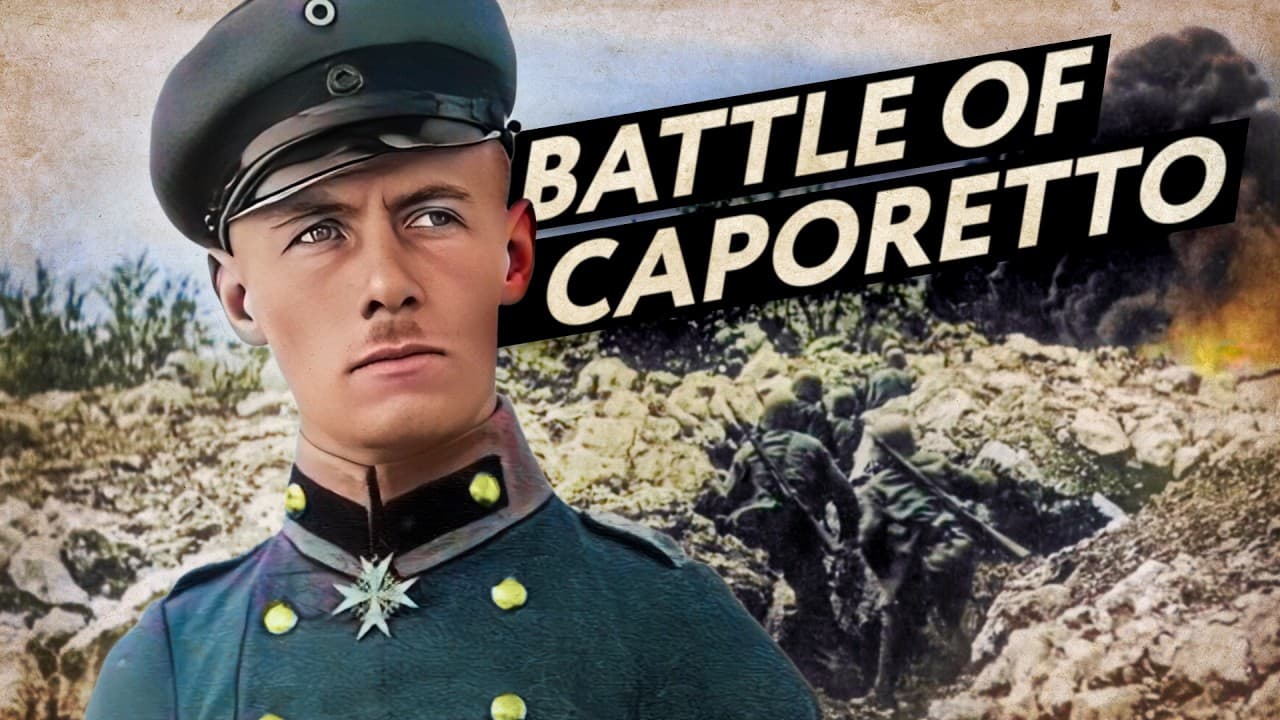
In October 1917, the Central Powers, led by Germany and Austria-Hungary, launched a surprise attack on the Italian Front at Caporetto, breaking the trench deadlock and nearly destroying the Italian army within two weeks. This victory, however, was costly for Austria-Hungary, pushing its society closer to collapse due to resource depletion and internal tensions.
Transcript
HOOK In October 1917, German and Austro-Hungarian troops went over the top into the rain and fog to attack the Italian trenches opposite them. They would go on to break the trench deadlock on the Italian Front, and nearly destroy the Italian army in just two weeks. The Battle of Caporetto was Austria-Hungary’s greatest victory of WW1 – and where... Read More
Key Insights
- The Battle of Caporetto was a major WW1 victory for Austria-Hungary and Germany, occurring in October 1917.
- The Central Powers used a surprise attack strategy with poison gas and stormtrooper tactics to break Italian defenses.
- Despite initial success, Austria-Hungary's victory strained its resources and exacerbated internal societal tensions.
- The Italian army suffered massive losses, with 40,000 killed or wounded and 290,000 captured.
- Erwin Rommel gained significant experience at Caporetto, influencing his later military strategies.
- The battle led to political upheaval in Italy, resulting in a change of government and increased Allied support.
- The Austro-Hungarian victory was marred by logistical issues and distrust between German and Austrian forces.
- Caporetto's aftermath included a large refugee crisis and worsened conditions in Austria-Hungary due to resource shortages.
Install to Summarize YouTube Videos and Get Transcripts
Explore YouTube Video Summarizer or Get YouTube Transcript Extractor
Questions & Answers
Q: How did the Central Powers achieve victory at the Battle of Caporetto?
The Central Powers achieved victory at the Battle of Caporetto through a surprise attack strategy that included the use of poison gas and stormtrooper tactics. They infiltrated the Italian lines, exploiting weak spots and causing confusion among Italian troops. This approach allowed them to break the trench deadlock and advance rapidly, capturing key positions and forcing a massive Italian retreat.
Q: What were the consequences of the Battle of Caporetto for Italy?
The consequences of the Battle of Caporetto for Italy were severe, resulting in massive military losses, political upheaval, and increased Allied intervention. The Italian army lost 40,000 men killed or wounded and 290,000 captured, leading to a government change and the appointment of Vittorio Orlando as Prime Minister. The defeat also prompted Britain and France to send reinforcements to stabilize the front and prevent Italy's collapse.
Q: Why is the Battle of Caporetto considered a Pyrrhic victory for Austria-Hungary?
The Battle of Caporetto is considered a Pyrrhic victory for Austria-Hungary because, despite the military success, the victory strained the country's resources and exacerbated internal societal tensions. The offensive required extensive use of trains and railways, diverting resources from civilian needs and worsening hunger and discontent. This contributed to Austria-Hungary's eventual collapse, highlighting the high cost of the victory.
Q: How did Erwin Rommel's experience at Caporetto influence his later military strategies?
Erwin Rommel's experience at Caporetto influenced his later military strategies by emphasizing speed, risk, and deception. During the battle, Rommel led successful assaults that capitalized on surprise and tactical ingenuity. These principles became central to his military philosophy, as detailed in his book 'Infantry Attacks,' and were evident in his campaigns during World War II, particularly in North Africa.
Q: What impact did the Battle of Caporetto have on the Austro-Hungarian home front?
The impact of the Battle of Caporetto on the Austro-Hungarian home front was significant, leading to resource shortages and increased societal tensions. The offensive's demands on the railway system delayed vital food supplies, worsening hunger and discontent among the population. Despite the initial euphoria of victory, the home front's conditions deteriorated, contributing to the empire's eventual collapse.
Q: What role did poison gas play in the Battle of Caporetto?
Poison gas played a crucial role in the Battle of Caporetto by facilitating the Central Powers' initial breakthrough. The Germans and Austro-Hungarians used a mix of gases to disorient and incapacitate Italian troops, who were caught off guard. The gas attack forced Italian soldiers to remove their masks, exposing them to more lethal chemicals, which contributed to the rapid collapse of Italian defenses.
Q: How did the Battle of Caporetto affect the Italian political landscape?
The Battle of Caporetto significantly affected the Italian political landscape by precipitating a government change and increasing Allied involvement. The military disaster led to the fall of the Italian government, with Vittorio Orlando replacing the previous leadership. The defeat also heightened fears of Italy's potential withdrawal from the war, prompting Britain and France to send reinforcements to stabilize the situation.
Q: What logistical challenges did the Central Powers face during the Battle of Caporetto?
During the Battle of Caporetto, the Central Powers faced several logistical challenges, including narrow mountain roads, insufficient locomotives and railway cars, and shortages of food and supplies for their troops. These logistical constraints complicated the coordination and supply of their forces, although they managed to overcome these difficulties to achieve a significant military victory over the Italian army.
Summary & Key Takeaways
-
The Battle of Caporetto in October 1917 marked a significant victory for Austria-Hungary and Germany, breaking the Italian Front's trench deadlock. The Central Powers employed surprise tactics, including poison gas, to outmaneuver the Italians. Despite the victory, Austria-Hungary faced severe resource depletion and societal strain, highlighting the Pyrrhic nature of the win.
-
The Italian army experienced catastrophic losses at Caporetto, with tens of thousands captured or killed. The battle's outcome led to political instability in Italy, prompting government changes and increased Allied intervention to prevent further collapse. Erwin Rommel's tactics during the battle later influenced his military strategies in World War II.
-
Although the Central Powers advanced significantly, the victory strained Austria-Hungary's resources and exacerbated internal tensions. The battle also resulted in a significant refugee crisis and highlighted the logistical challenges faced by the Austro-Hungarian and German forces. The victory did not prevent Austria-Hungary's eventual collapse, underscoring the battle's high cost.
Read in Other Languages (beta)
Share This Summary 📚
Summarize YouTube Videos and Get Video Transcripts with 1-Click
Try YouTube Summary with ChatGPT & Claude or YouTube Transcript Generator
Explore More Summaries from The Great War 📚

Summarize YouTube Videos and Get Video Transcripts with 1-Click
Try YouTube Summary with ChatGPT & Claude or YouTube Transcript Generator