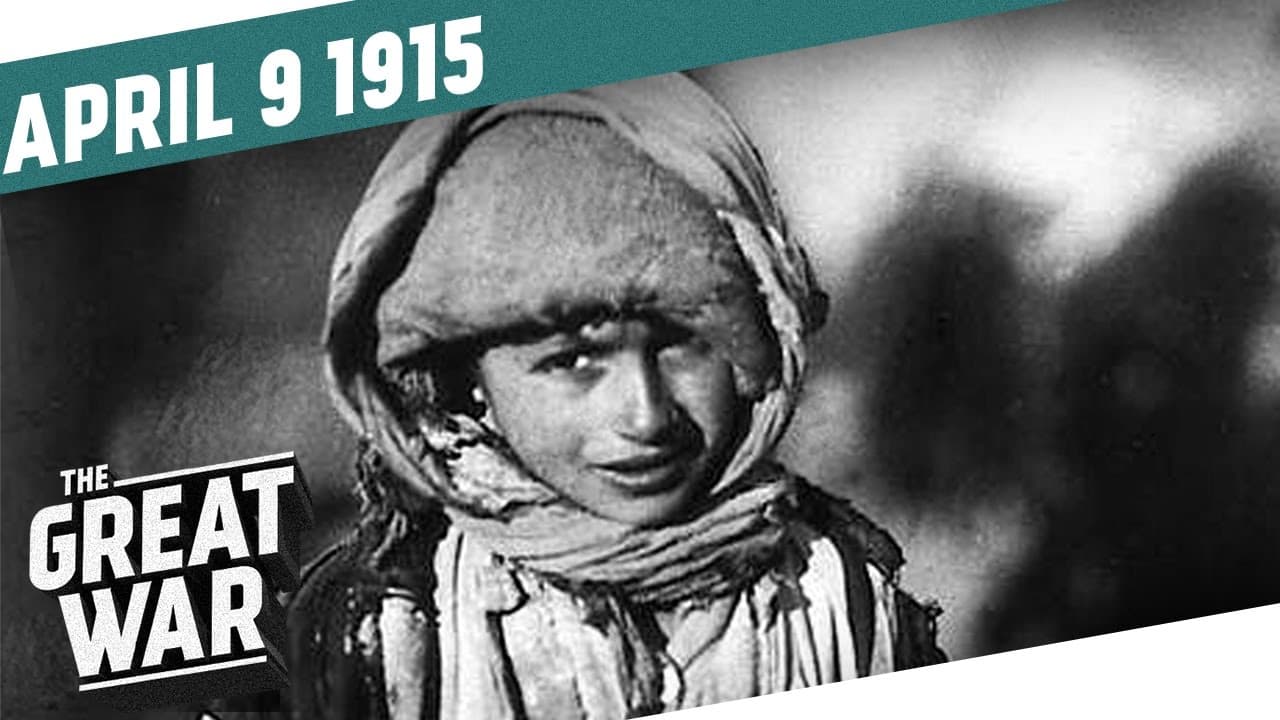
The Armenian Genocide I THE GREAT WAR - Week 37
TL;DR
The Ottoman Empire begins the Armenian Genocide amid World War I turmoil.
Transcript
How much worse could the war get? In just eight months we’d seen the frightening destructive power of new artillery and modern machine guns, we’d seen the war in the skies and beneath the seas develop, we’d seen gas and flamethrowers make their appearance, we’d seen epidemic disease, and millions of refugees on the move. How much worse could it get... Read More
Key Insights
- The Armenian Genocide began amid the chaos of World War I, initiated by the Ottoman Empire as a response to military failures and ethnic tensions.
- Germany had to continually support Austria-Hungary against Russian advances, highlighting the latter's military struggles and reliance on German reinforcements.
- The Ottoman Empire's defeat in the Caucasus led to blaming and targeting Armenians, culminating in deportations and massacres starting in April 1915.
- Austrian negotiations with Italy included territorial offers to maintain neutrality, reflecting the strategic concerns and pressures faced by Austria-Hungary.
- The Russian military made significant advances in the Caucasus and other fronts, adding pressure on the Central Powers during early 1915.
- The Ottoman Empire, under the leadership of the Three Pashas, systematically disarmed and relocated Armenians, marking the start of the genocide.
- Despite the ongoing war, moments of humanity emerged, such as the Easter Sunday truce attempts by Russian and German troops, though not reciprocated on the Western Front.
- The war saw battles across multiple continents, with the Germans facing defeats in East Africa and South Africa, illustrating its global reach.
Install to Summarize YouTube Videos and Get Transcripts
Explore YouTube Video Summarizer or Get YouTube Transcript Extractor
Questions & Answers
Q: What triggered the start of the Armenian Genocide?
The Armenian Genocide was triggered by the Ottoman Empire's military failures, particularly in the Caucasus against Russia. The Ottoman leadership blamed Armenians, many of whom were serving in the Russian army, branding them as traitors. This led to systematic deportations and massacres beginning in April 1915.
Q: How did Germany assist Austria-Hungary during this period?
Germany provided crucial military support to Austria-Hungary, which was struggling against Russian advances. German reinforcements, such as the newly formed Beskidenkorps, were sent to bolster Austrian defenses, particularly in the Carpathian Mountains, highlighting the reliance of Austria-Hungary on German military aid.
Q: What were the strategic negotiations between Austria-Hungary and Italy?
Austria-Hungary attempted to keep Italy neutral by offering territorial concessions, including parts of the Trentino and Dalmatian Islands. This was part of a broader strategy to prevent Italy from joining the Allies, as the Austro-Hungarian military was already stretched thin on other fronts.
Q: What was the significance of Russian advances during this time?
Russian advances in the Caucasus and other fronts put significant pressure on the Central Powers, particularly Austria-Hungary and the Ottoman Empire. These advances not only threatened territorial integrity but also contributed to internal crises, such as the Armenian Genocide, as the Ottomans sought scapegoats for their military failures.
Q: How did the Ottoman Empire justify the Armenian deportations?
The Ottoman Empire justified the Armenian deportations by claiming it was necessary to prevent Armenians from undertaking initiatives against the government. They portrayed the Armenians as a threat to national security, especially since many Armenians were perceived as supporting Russian forces.
Q: What role did ethnic tensions play in the Ottoman Empire's actions?
Ethnic tensions played a significant role, as the Ottoman Empire had lost much of its European territory, leading to an influx of Muslim refugees into Armenian Christian regions. This fostered resentment and was compounded by the rise of Turkish nationalism, which excluded minorities like Armenians from the envisioned modern Turkish nation.
Q: Were there any attempts at truces during this period?
Yes, there were attempts at truces, such as on Easter Sunday when unarmed Russian troops and some German troops sought to exchange gifts with their opponents. However, these attempts were not reciprocated on the Western Front, where British forces warned against fraternization.
Q: What was the impact of the war on different continents?
The war had a global impact, with battles occurring in Europe, Africa, and Asia. In Africa, German forces faced defeats in East Africa and Southwest Africa, while in Asia, the Ottoman Empire faced bombardments in locations like Smyrna, illustrating the widespread reach and impact of World War I.
Summary & Key Takeaways
-
Amid World War I, the Ottoman Empire initiated the Armenian Genocide, targeting Armenians following military defeats and internal ethnic tensions. The Ottoman leadership, particularly the Three Pashas, sought to eliminate perceived threats to their rule.
-
The Austro-Hungarian military struggled against Russian forces, relying heavily on German reinforcements. Concurrently, Austria-Hungary attempted to negotiate with Italy to maintain its neutrality, offering territorial concessions.
-
The war continued to spread globally, with battles occurring in Africa and significant Russian advances in the Caucasus. Despite the brutality, there were attempts at truces, such as on Easter Sunday, though not all were successful.
Read in Other Languages (beta)
Share This Summary 📚
Summarize YouTube Videos and Get Video Transcripts with 1-Click
Try YouTube Summary with ChatGPT & Claude or YouTube Transcript Generator
Explore More Summaries from The Great War 📚

Summarize YouTube Videos and Get Video Transcripts with 1-Click
Try YouTube Summary with ChatGPT & Claude or YouTube Transcript Generator