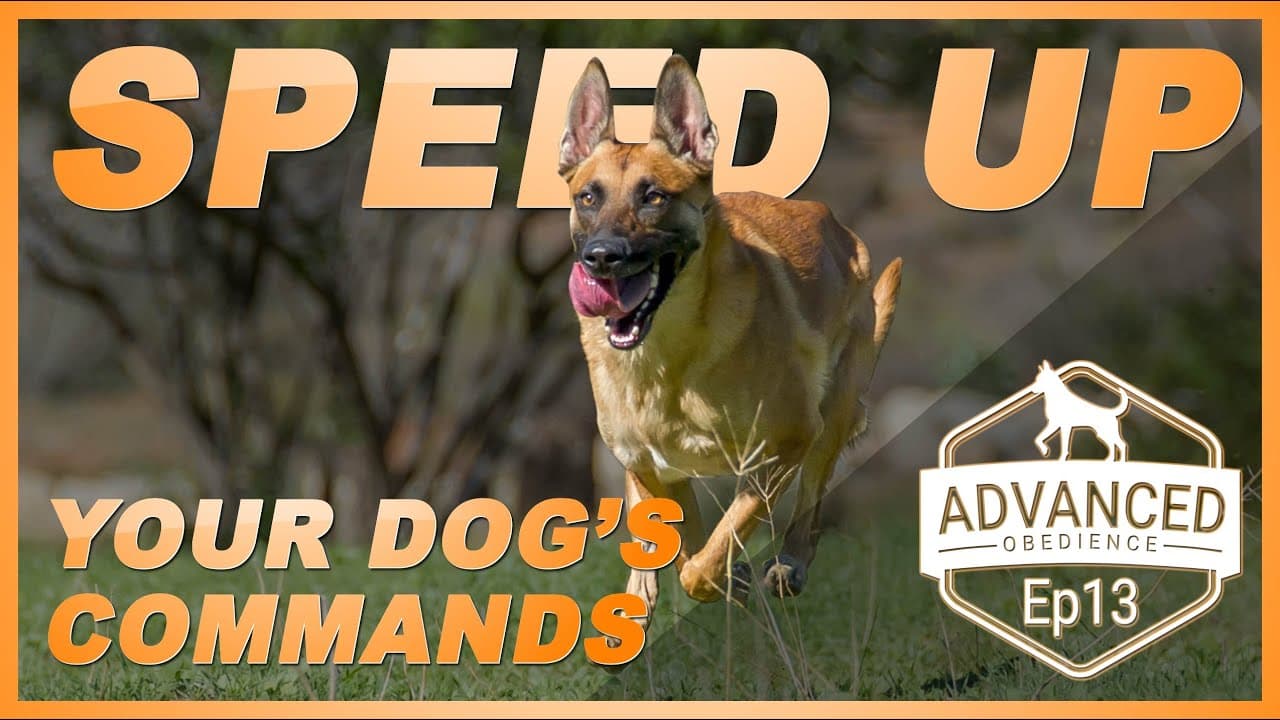
How to Speed Up Your Dogs Commands. Advanced Obedience Ep13
TL;DR
Increase dog command speed by boosting motivation.
Transcript
in today's video we're going to be teach our dogs how to speed up their commands now speed is based on motivation the more motivated our dogs are the faster they're going to perform the behavior maura dogs could be motivated to access something pleasant or they can be motivated to prevent something unpleasant we can also increase our dog's speed th... Read More
Key Insights
- Dog command speed is directly linked to the motivation level of the dog. Increasing motivation can enhance performance.
- Physical cues should be perfected before naming a command to ensure the dog performs the behavior correctly and swiftly.
- Using a terminal marker can help dogs understand they are correct and done, encouraging faster performance for rewards.
- Dogs often mirror the speed of their trainer's physical cues, so trainers should use quick movements to encourage speed.
- Patience is crucial, as ingraining habits in dogs can take six to nine months of consistent training.
- Frustration and excitement can be used as tools to increase the speed of recall commands by creating a sense of urgency.
- Training sessions should be varied and engaging, mixing different commands to keep the dog interested and motivated.
- Recognizing a dog's physical limitations and breed traits is important for setting realistic expectations for speed and performance.
Install to Summarize YouTube Videos and Get Transcripts
Explore YouTube Video Summarizer or Get YouTube Transcript Extractor
Questions & Answers
Q: How can motivation affect a dog's command speed?
Motivation significantly impacts a dog's command speed. A motivated dog is more likely to perform commands quickly because they are eager to receive a reward or avoid something unpleasant. By increasing motivation through rewards, excitement, or frustration, dogs can be trained to execute commands faster.
Q: What is the role of a terminal marker in dog training?
A terminal marker is used to signal to the dog that they have performed the correct behavior and can now expect a reward. This encourages the dog to complete commands quickly, as they learn that speed leads to quicker access to rewards, making training sessions more effective.
Q: Why is it important to use physical cues before naming a command?
Using physical cues before naming a command ensures that the dog performs the behavior correctly and consistently. Once the dog reliably executes the behavior as desired, the command can be named, ensuring that the dog associates the correct action with the verbal command, including the desired speed.
Q: How can frustration be used to increase a dog's speed?
Frustration can be used strategically to increase a dog's speed by creating a sense of urgency. For example, having a training partner hold the dog back while the trainer moves away and calls the dog can build excitement and eagerness, leading to a faster recall once released.
Q: What should trainers consider regarding a dog's breed and speed?
Trainers should be aware that different breeds have varying natural speeds and physical capabilities. Breeds like Malinois, German Shepherds, and Labs may perform commands faster due to their high drive and energy levels. Trainers should set realistic speed expectations based on the dog's breed and individual capabilities.
Q: Why is it important to end training sessions on a high note?
Ending training sessions on a high note ensures that the dog remains eager and positive about training. If a session ends with a successful command and reward, the dog is more likely to look forward to future sessions, maintaining high motivation and engagement.
Q: How can trainers maintain a dog's interest during training?
Trainers can maintain a dog's interest by mixing up commands and making sessions engaging and fun. Instead of repeating the same command multiple times, incorporating different commands and rewards keeps the dog mentally stimulated and motivated, leading to better learning outcomes.
Q: What is the significance of patience in dog training?
Patience is crucial in dog training as ingraining habits and behaviors can take anywhere from six to nine months. Consistent and patient training allows the dog to learn and perfect commands at their own pace, ensuring long-term success and a strong bond between the dog and trainer.
Summary & Key Takeaways
-
The video discusses techniques to increase a dog's command execution speed by enhancing their motivation. It emphasizes using physical cues and terminal markers.
-
Training sessions should be varied and engaging to maintain the dog's interest. Speed is increased through motivation, frustration, and excitement.
-
Understanding a dog's breed and physical limitations is crucial for setting realistic training goals. Patience is key as ingraining habits takes time.
Read in Other Languages (beta)
Share This Summary 📚
Summarize YouTube Videos and Get Video Transcripts with 1-Click
Try YouTube Summary with ChatGPT & Claude or YouTube Transcript Generator
Explore More Summaries from Nate Schoemer 📚





Summarize YouTube Videos and Get Video Transcripts with 1-Click
Try YouTube Summary with ChatGPT & Claude or YouTube Transcript Generator