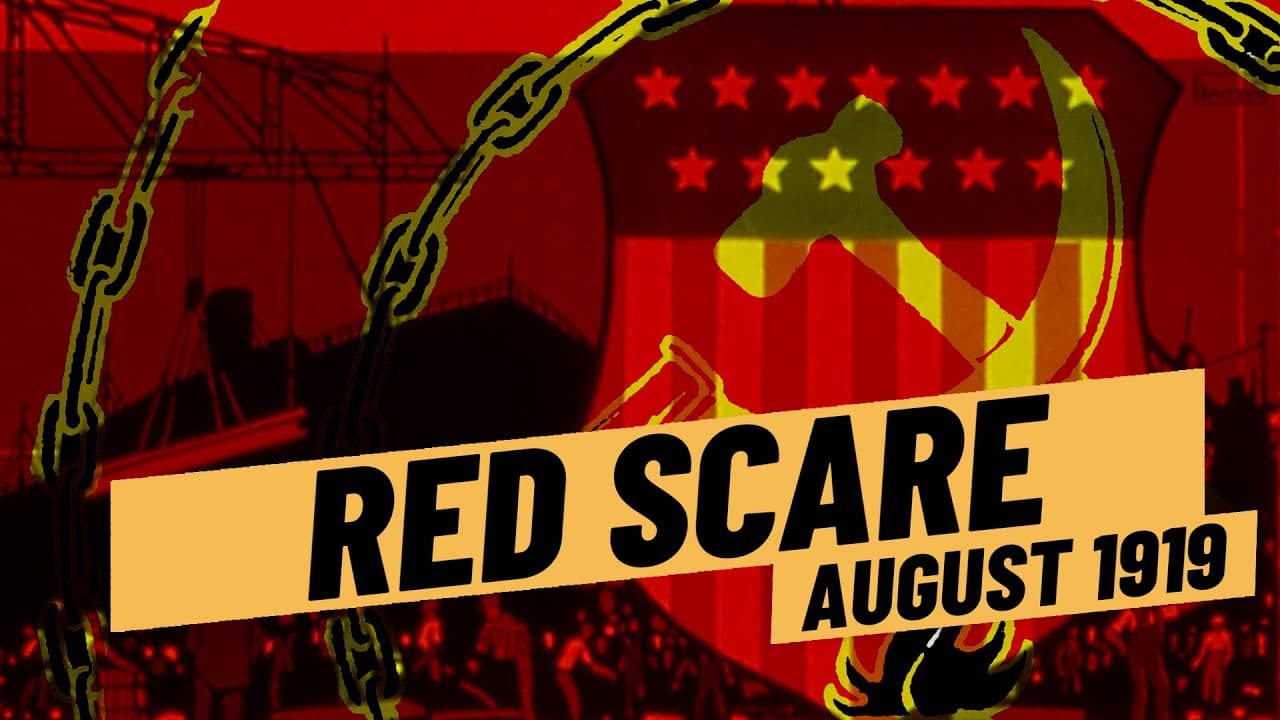
Communist Revolution in America? - The Red Scare 1919 I THE GREAT WAR 1919
TL;DR
The Red Scare of 1919 fueled fears of a Bolshevik revolution in America.
Transcript
this episode of the great war is sponsored by audible now our team travels a lot for the show so when we're waiting around at the airport or walking to the studio audible audiobooks let us take our history along with us audibles wide selection includes some of the best non-fiction history books out there and we've used many of them for our own rese... Read More
Key Insights
- The Red Scare was driven by fears of a Bolshevik revolution in the US, fueled by strikes, bombings, and economic hardships.
- US intervention in the Russian Civil War contributed to the perception of Bolsheviks as a domestic threat, intensifying anti-Bolshevik sentiment.
- Labor unrest in 1919 saw 3,600 strikes, with fears that organized labor could be infiltrated by Bolshevik sympathizers.
- The Seattle General Strike, though nonviolent, was portrayed by the media as a Bolshevik attack, highlighting the hysteria of the period.
- Government actions, such as the formation of the anti-radical General Intelligence Division, intensified the hunt for suspected radicals.
- Race riots in 1919 were linked to Bolshevik influences, though they were primarily driven by racial tensions and economic competition.
- The formation of the first US Communist Parties in 1919 further fueled fears, despite their small membership and limited influence.
- Attorney General Palmer's raids targeted suspected radicals, driven by xenophobia and the belief that foreign-born residents were behind the unrest.
Install to Summarize YouTube Videos and Get Transcripts
Explore YouTube Video Summarizer or Get YouTube Transcript Extractor
Questions & Answers
Q: What sparked the Red Scare in 1919?
The Red Scare in 1919 was sparked by a combination of factors, including labor strikes, bombings, and the perception of Bolsheviks as a domestic threat following the Russian Revolution. Economic hardships faced by workers and returning veterans also contributed to the hysteria, as did media portrayals of a potential Bolshevik revolution.
Q: How did the government respond to the Red Scare?
The government responded to the Red Scare by intensifying its efforts to root out suspected radicals. This included the formation of the anti-radical General Intelligence Division within the Bureau of Investigation, led by J. Edgar Hoover. Raids were conducted on suspected radical organizations, and new laws were proposed to restrict the activities of aliens and radicals.
Q: What role did the media play in the Red Scare?
The media played a significant role in the Red Scare by sensationalizing events and stoking fears of a Bolshevik revolution. Strikes and labor unrest were often portrayed as Bolshevik attacks, and bombings were quickly attributed to radical groups. This contributed to the widespread paranoia and hysteria that characterized the period.
Q: How did race relations factor into the Red Scare?
Race relations were a significant factor in the Red Scare, as African Americans were often labeled as Bolshevik sympathizers if they criticized American politics or capitalism. Race riots in 1919 were linked to Bolshevik influences, although they were primarily driven by racial tensions and competition for jobs and housing. The government monitored black newspapers and organizations, fearing they might incite Bolshevik sentiments.
Q: What was the impact of the Seattle General Strike?
The Seattle General Strike of 1919 had a significant impact by heightening fears of a Bolshevik revolution. Although the strike was nonviolent and not revolutionary in nature, the media portrayed it as a Bolshevik attack. This portrayal contributed to the hysteria of the Red Scare and set the tone for future labor strife, as the government and public became increasingly suspicious of organized labor.
Q: What were the consequences of the bombings in 1919?
The bombings in 1919, which targeted prominent figures and were initially unsolved, further fueled fears of a radical uprising. The press quickly attributed the attacks to Bolsheviks, anarchists, and other radical groups. These events intensified the Red Scare, leading to increased government crackdowns and the formation of the General Intelligence Division to investigate suspected radicals.
Q: How did the formation of Communist parties in 1919 affect the Red Scare?
The formation of the first US Communist parties in 1919, despite their small membership, heightened fears of a Bolshevik revolution. These parties' platforms, which called for the overthrow of capitalism, were perceived as a threat. However, their actual influence was limited, as they represented less than 0.1% of the adult population. Nonetheless, their existence contributed to the paranoia of the Red Scare.
Q: What was the role of J. Edgar Hoover during the Red Scare?
J. Edgar Hoover played a crucial role during the Red Scare as the head of the General Intelligence Division within the Bureau of Investigation. He was responsible for gathering information on suspected radicals and creating an index of radical organizations. His efforts were driven by xenophobia, as he believed that foreign-born residents were primarily responsible for radical activities. Hoover's actions contributed to the widespread paranoia and government crackdowns of the period.
Summary & Key Takeaways
-
The Red Scare of 1919 was marked by widespread hysteria over a perceived Bolshevik threat in America, intensified by labor strikes and economic difficulties. Government and media actions fueled fears, leading to violence and crackdowns on suspected radicals.
-
The fear of a Bolshevik revolution was exacerbated by US involvement in the Russian Civil War and domestic unrest, including strikes and race riots. The government responded with investigations and raids, targeting perceived radical elements.
-
Despite the formation of Communist parties and widespread labor unrest, the actual threat of a Bolshevik coup was minimal. The Red Scare was largely driven by paranoia and xenophobia, resulting in significant social and political tensions.
Read in Other Languages (beta)
Share This Summary 📚
Summarize YouTube Videos and Get Video Transcripts with 1-Click
Try YouTube Summary with ChatGPT & Claude or YouTube Transcript Generator
Explore More Summaries from The Great War 📚
Summarize YouTube Videos and Get Video Transcripts with 1-Click
Try YouTube Summary with ChatGPT & Claude or YouTube Transcript Generator