What Led to the 10th Battle of the Isonzo?
TL;DR
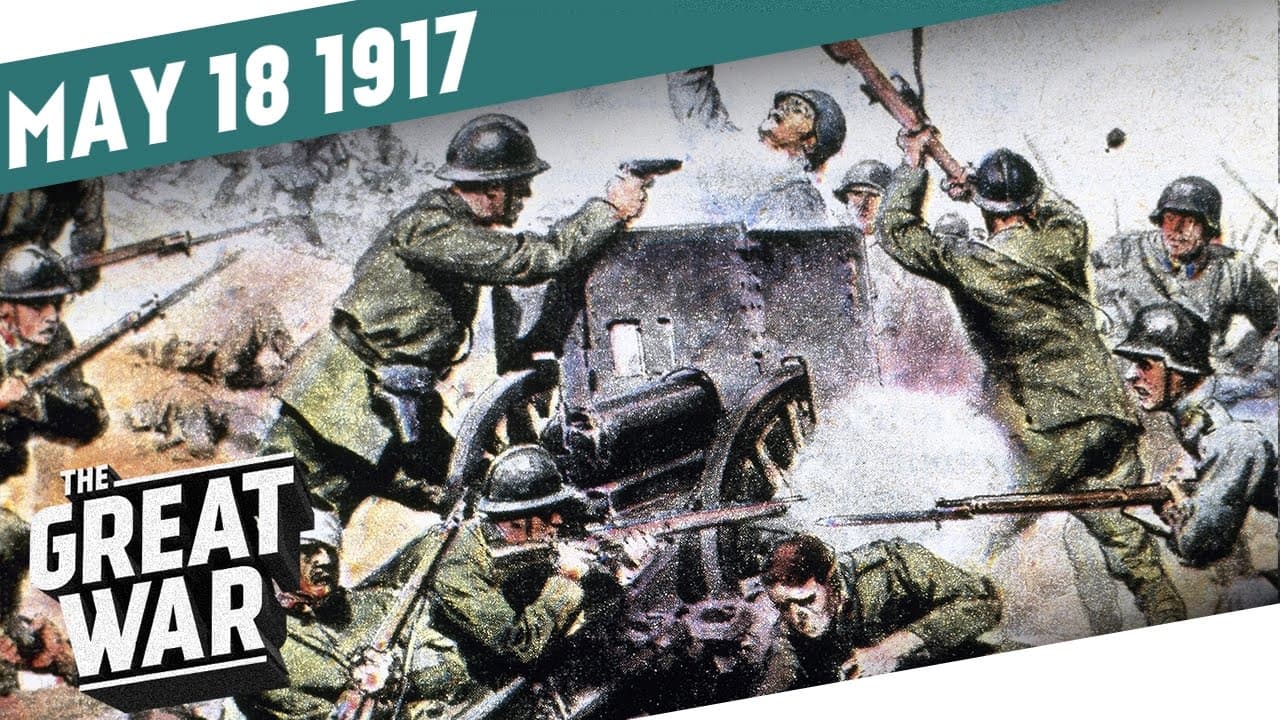
The 10th Battle of the Isonzo began after the winter of 1916/1917, with the Italian army launching a massive artillery barrage against Austro-Hungarian positions. Concurrently, political turmoil in Russia intensified with Leon Trotsky's arrival in Petrograd. Despite initial Italian victories, Austrian forces managed to hold key positions, indicating a prolonged conflict.
Transcript
Before the long winter of 1916/1917, the Italian army had launched nine Battles of the Isonzo River, hoping to breakthrough the Austro-Hungarian defenses. And now winter is over, and that means it’s time for the 10th Battle of the Isonzo River. I’m Indy Neidell; welcome to the Great War. Last week the Allied five-nation army attacked and lost all a... Read More
Key Insights
- The 10th Battle of the Isonzo began in May 1917 with a massive Italian artillery barrage.
- Leon Trotsky's arrival in Petrograd added complexity to the Russian political landscape.
- The British suffered heavy casualties at the Battle of Arras, with over 159,000 casualties in 39 days.
- The Italian army used British artillery in their offensive, marking a significant escalation.
- Despite initial gains, Italian forces faced stiff resistance from Austro-Hungarian defenders.
- The German military leadership was optimistic about victory, despite internal challenges.
- The Greek army engaged under the Salonika government, boosting their reputation among the Allies.
- German intelligence reported Allied concerns, but Germany faced significant supply issues.
Install to Summarize YouTube Videos and Get Transcripts
Explore YouTube Video Summarizer or Get YouTube Transcript Extractor
Questions & Answers
Q: What triggered the 10th Battle of the Isonzo?
The 10th Battle of the Isonzo was triggered by the end of the winter of 1916/1917, as the Italian army sought to break through Austro-Hungarian defenses. This offensive was marked by a substantial artillery barrage, which was larger than previous attempts, aimed at weakening enemy positions and gaining territorial advantage.
Q: How did Leon Trotsky's arrival impact the Russian political situation?
Leon Trotsky's arrival in Petrograd added to the political instability in Russia, as he aligned with Bolshevik positions without officially joining them. His presence intensified the rivalry between the Petrograd Soviet and the Provisional Government, both of which had differing views on Russia's involvement in World War I and the future direction of the country.
Q: What were the outcomes of the Battle of Arras for the British?
The Battle of Arras resulted in significant casualties for the British, totaling over 159,000 in 39 days. Despite these losses, British forces managed to push the Germans back between 3 and 9 kilometers on a 30-kilometer front, capturing prisoners and artillery. However, the high casualty rate raised questions about the effectiveness of the offensive.
Q: What role did British artillery play in the 10th Battle of the Isonzo?
British artillery played a crucial role in the 10th Battle of the Isonzo by providing the Italian army with enhanced firepower. This support allowed the Italians to launch a more substantial artillery barrage against Austro-Hungarian positions, contributing to initial successes in capturing key locations, although ultimate breakthroughs were not achieved.
Q: Why was the Italian victory at Mount Santo significant?
The Italian victory at Mount Santo was significant as it represented a strategic gain in the 10th Battle of the Isonzo, serving as a pivot point for the front. However, the victory was short-lived as Austrian forces launched a surprise counterattack, reclaiming the summit and demonstrating the resilience of Austro-Hungarian defenses.
Q: What challenges did Germany face despite military optimism?
Despite military optimism, Germany faced significant challenges, including food shortages, inflation, and civil unrest due to the Turnip Winter. The Hindenburg Programme failed to meet production expectations, and Germany's allies, except Bulgaria, were in poor condition. These issues threatened the sustainability of Germany's war efforts despite their favorable military position.
Q: How did the Greek army's involvement affect their reputation among the Allies?
The Greek army's involvement in the Battle of Raviné Hill under the Salonika government improved their reputation among the Allies. Despite heavy casualties, their successful capture and subsequent defense of the hill demonstrated their commitment to the Allied cause, countering previous perceptions of Greece as an unreliable partner due to Royalist confrontations.
Q: What was the strategic importance of the Bainsizza Plateau in the 10th Battle of the Isonzo?
The Bainsizza Plateau held strategic importance in the 10th Battle of the Isonzo as controlling it would enable the Italians to launch further offensives southward on the Carso Plateau. However, despite repeated attacks, the Austro-Hungarian forces maintained control over most of the plateau, preventing the Italians from achieving their planned breakthrough.
Summary & Key Takeaways
-
The 10th Battle of the Isonzo saw the Italian army launch a major offensive against Austro-Hungarian forces, using British artillery for the first time. Despite initial successes, including capturing key positions, the Italians faced strong resistance and were unable to achieve a decisive breakthrough.
-
In Russia, political instability continued with the resignation of key figures and the arrival of Leon Trotsky in Petrograd. The Petrograd Soviet and Provisional Government were at odds, complicating the political situation and impacting military strategies.
-
The British ended the costly Battle of Arras, suffering significant casualties. Meanwhile, German leadership remained optimistic about their military position, despite internal challenges such as food shortages and unrest among their allies.
Read in Other Languages (beta)
Share This Summary 📚
Summarize YouTube Videos and Get Video Transcripts with 1-Click
Try YouTube Summary with ChatGPT & Claude or YouTube Transcript Generator
Explore More Summaries from The Great War 📚
Summarize YouTube Videos and Get Video Transcripts with 1-Click
Try YouTube Summary with ChatGPT & Claude or YouTube Transcript Generator