How Singapore Is Trying to Build a Climate-Proof City | Momentum
TL;DR
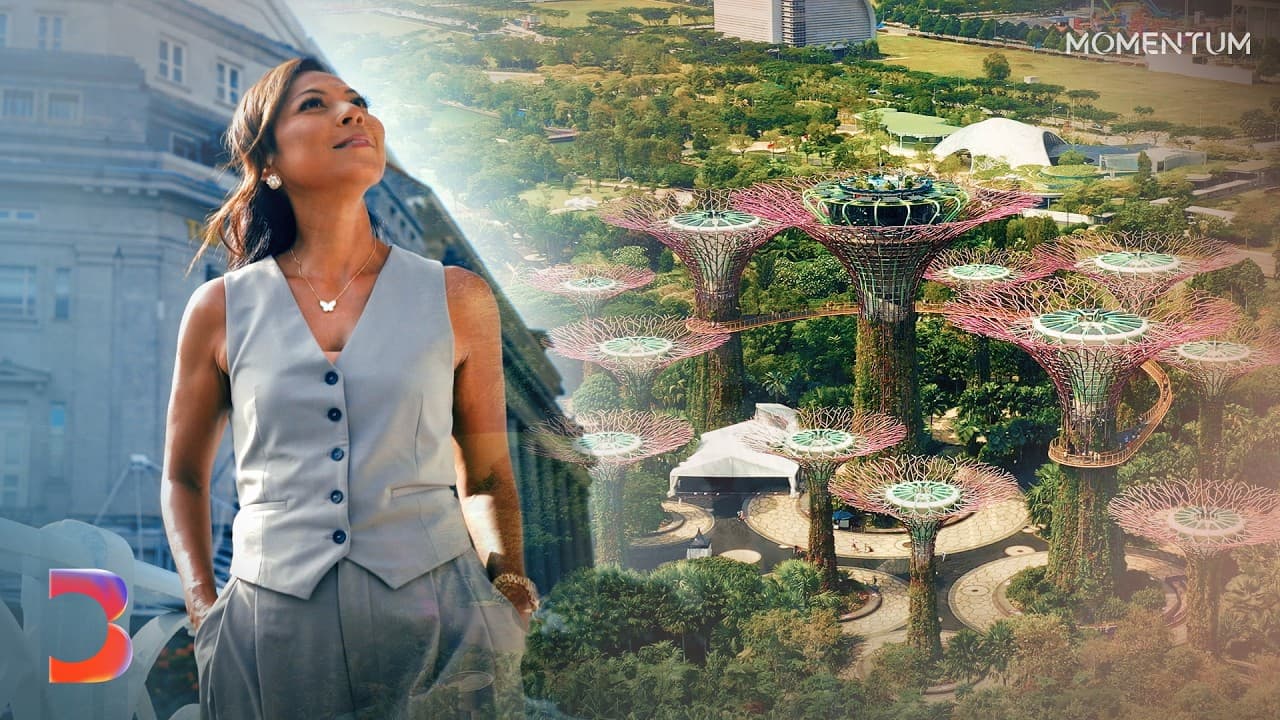
Singapore is leveraging technology to balance growth and sustainability.
Transcript
Singapore is often held up as a success story in just a matter of decades the city state has transformed itself from a colonial trading port to a buzzing Global City it's Asia's richest country with a per capita GDP that surpasses the UK and the US it has worldclass infrastructure efficient transportation and affordable housing but in recent years ... Read More
Key Insights
- Singapore has transformed from a colonial trading port into a global financial hub, but now faces challenges like climate change and an aging population.
- The city-state's government is focusing on renewable energy, primarily solar, to achieve net-zero emissions by 2050, despite geographical limitations.
- Floating solar farms, like the one in Tangy, are innovative solutions to Singapore's land scarcity, providing energy while reducing carbon emissions.
- Technological advancements in carbon capture and hydrogen production are being explored to further Singapore's renewable energy potential.
- Public housing in Singapore is a model of sustainability, with new projects like Tanga New Town incorporating smart technologies for energy efficiency.
- Biophilic design in urban planning aims to integrate nature into city life, enhancing residents' well-being and reducing urban heat.
- Singapore's meticulous urban planning could serve as a model for other small nations facing similar environmental challenges.
- Despite initial challenges, Singapore's approach to sustainable urban development is paving the way for future-proof cities.
Install to Summarize YouTube Videos and Get Transcripts
Explore YouTube Video Summarizer or Get YouTube Transcript Extractor
Questions & Answers
Q: How is Singapore addressing its climate change challenges?
Singapore is addressing its climate change challenges by focusing on renewable energy, particularly solar power, due to its geographical limitations. The government is investing in floating solar farms and exploring technologies like carbon capture and hydrogen production. Additionally, urban planning incorporates biophilic design to integrate nature into city life, reducing urban heat and enhancing residents' well-being.
Q: What role do floating solar farms play in Singapore's energy strategy?
Floating solar farms are crucial to Singapore's energy strategy as they provide a solution to the country's land scarcity. By utilizing water surfaces for solar panel installation, these farms generate renewable energy while reducing carbon emissions and water evaporation. The Tangy solar farm, for instance, powers thousands of flats and exemplifies Singapore's innovative approach to sustainable energy.
Q: What is biophilic design, and how is it applied in Singapore?
Biophilic design is an urban planning approach that integrates nature into city environments to enhance residents' well-being. In Singapore, this concept is applied through the strategic planting of greenery, creating shaded areas, and aligning with natural wind flows. Projects like Tanga New Town and Pongal Town utilize biophilic design to reduce urban heat, improve air quality, and provide a better quality of life for residents.
Q: How does Singapore's public housing contribute to sustainability?
Singapore's public housing contributes to sustainability by incorporating smart technologies and eco-friendly designs. New developments like Tanga New Town feature car-light centers, smart lighting, automated trash collection, and solar-powered cooling systems. These innovations reduce energy consumption and carbon emissions, making public housing a key component of Singapore's sustainable urban development strategy.
Q: What challenges does Singapore face in its renewable energy efforts?
Singapore faces challenges in its renewable energy efforts due to its limited land area and geographical constraints. The lack of major rivers and sufficient wind limits options for hydro and wind power. Consequently, Singapore relies heavily on solar energy and is exploring other technologies like hydrogen production and carbon capture to diversify its energy mix and achieve sustainability goals.
Q: What is the significance of Singapore's collaboration with Aquatic?
Singapore's collaboration with Aquatic is significant as it explores innovative carbon capture and hydrogen production technologies. This partnership involves a demonstration plant that captures carbon dioxide and produces hydrogen, a clean fuel. The project aims to enhance Singapore's renewable energy capabilities and contribute to global efforts in reducing carbon emissions and promoting sustainable energy solutions.
Q: How does Singapore's urban planning model serve as an example for other countries?
Singapore's urban planning model serves as an example for other countries by demonstrating how meticulous planning and innovative solutions can create sustainable cities. The integration of renewable energy, biophilic design, and smart technologies in public housing showcases a comprehensive approach to urban development. While not all aspects are replicable for larger nations, smaller countries facing similar challenges can learn valuable lessons from Singapore's strategies.
Q: What are some initial challenges faced by Tanga New Town?
Tanga New Town faced initial challenges such as malfunctioning cooling systems and limited transportation infrastructure. Residents reported issues with the solar-powered cooling units, which have since been addressed by the operator. The Housing and Development Board acknowledged that building infrastructure for new towns takes time, and efforts are ongoing to resolve these challenges and enhance the town's livability.
Summary & Key Takeaways
-
Singapore is a global financial hub facing challenges like climate change and an aging population. To address these, the government is focusing on renewable energy and innovative urban planning. Floating solar farms and biophilic design are key components of Singapore's strategy to achieve sustainability and improve residents' quality of life.
-
Floating solar farms, such as the one in Tangy, are part of Singapore's efforts to increase its renewable energy capacity despite limited land. These farms not only generate electricity but also reduce carbon emissions and water evaporation, demonstrating Singapore's commitment to innovative solutions for sustainability.
-
Public housing in Singapore, like Tanga New Town, incorporates smart technologies and biophilic design to enhance energy efficiency and residents' well-being. These projects exemplify how Singapore is leveraging technology and nature to create sustainable urban environments, serving as a model for other cities worldwide.
Read in Other Languages (beta)
Share This Summary 📚
Summarize YouTube Videos and Get Video Transcripts with 1-Click
Try YouTube Summary with ChatGPT & Claude or YouTube Transcript Generator
Explore More Summaries from Bloomberg Originals 📚





Summarize YouTube Videos and Get Video Transcripts with 1-Click
Try YouTube Summary with ChatGPT & Claude or YouTube Transcript Generator