What Is Causing China's Economic Slowdown in 2023?
TL;DR
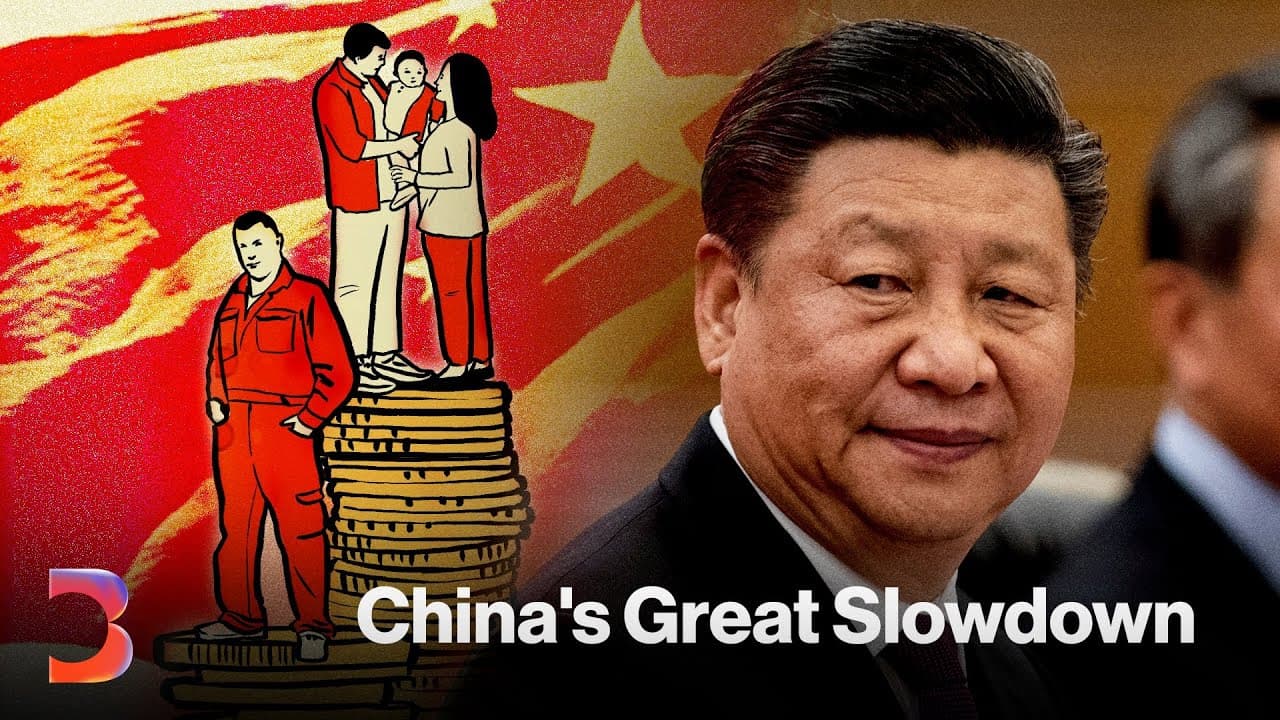
China's economic slowdown in 2023 is attributed to three main factors: a struggling real estate market due to government crackdowns on debt, declining consumer confidence leading to reduced spending, and excessive local debt limiting infrastructure investments. These challenges pose significant risks for not only China's economy but also for global markets, particularly in commodities and energy.
Transcript
This was supposed to be the year that China’s economy came roaring back. What we’ve had instead are signs that this economy is struggling. Faltering growth. Soaring youth jobless rates. An economy on the brink of deflation. After decades of a stunning economic rise, China's challenges are mounting. So, what's going on with the $18 trillion economy?... Read More
Key Insights
- China's economy is experiencing a slowdown, with faltering growth and rising youth unemployment, indicating potential deflation risks.
- The real estate market, once a growth driver, is now a concern due to government crackdowns on debt, leading to falling home prices and reduced consumer confidence.
- Consumer spending surged initially post-COVID-19, but has since declined as individuals prioritize saving over spending, affecting economic momentum.
- China's traditional infrastructure investment strategy is hindered by excessive local debt, requiring new approaches to stimulate economic growth.
- China's economic transformation since 1978 has been remarkable, but the current challenge is transitioning from an old growth model to a sustainable future path.
- Government crackdowns on the private sector, including tech and real estate, have created market uncertainties, affecting investor confidence.
- Diplomatic tensions, particularly with the US, complicate China's economic outlook, impacting trade relations and access to advanced technologies.
- China's economic health is crucial globally, especially for commodities and energy markets, as its slowdown could trigger worldwide economic ripple effects.
Install to Summarize YouTube Videos and Get Transcripts
Explore YouTube Video Summarizer or Get YouTube Transcript Extractor
Questions & Answers
Q: What are the main factors contributing to China's economic slowdown?
China's economic slowdown is attributed to several factors, including a struggling real estate market, reduced consumer confidence, and excessive local debt. The government's crackdown on the property sector has led to falling home prices, while consumer spending has declined as individuals prioritize saving. Additionally, traditional infrastructure investment strategies are limited by high local debt levels.
Q: How has China's real estate market affected its economy?
China's real estate market, once a key growth driver, is now a concern due to government crackdowns on debt. This has resulted in falling home prices, which have reduced consumer confidence and spending. The rapid and intensive crackdown on the property sector has outpaced the economy's ability to adjust, contributing to the current economic challenges.
Q: What impact has the government's crackdown on the private sector had?
The government's crackdown on the private sector, particularly in tech and real estate, has created market uncertainties and reduced investor confidence. These unprecedented measures have wiped out billions in market value for many companies and affected the wealth of certain billionaires. The government is now trying to reassure investors and restore growth by reopening to global business.
Q: How are diplomatic tensions with the US affecting China's economy?
Diplomatic tensions with the US complicate China's economic outlook, impacting trade relations and access to advanced technologies. Despite efforts to reset trust and ties, the two superpowers remain at odds over issues like Taiwan and high-tech access. This has led to a move among Western multinationals to diversify supply chains away from China, affecting its economic prospects.
Q: Why is China's economic health important globally?
China's economic health is crucial globally because it is a major end consumer for products, especially in commodities and energy markets. If China's economy does not recover as expected, it could have significant ripple effects worldwide. The interconnectedness of global markets means that China's slowdown could impact other countries' ability to sell goods and services.
Q: What challenges does China face in transitioning its economic model?
China faces challenges in transitioning from its old economic growth model, which relied on providing low-cost goods to the West, to a sustainable future path. The current struggle is to overcome the middle-income trap and address issues like overcapacity and local government debt. Restoring business confidence and finding new growth strategies are key to this transition.
Q: How has China's economic transformation since 1978 impacted its current situation?
China's economic transformation since 1978, driven by opening up to trade and investment, has been remarkable, turning it into a global economic powerhouse. However, the current situation requires a shift from the old growth model to a more sustainable approach. The economy's past success has set high expectations, making the current slowdown feel more pronounced.
Q: What role does consumer confidence play in China's economic recovery?
Consumer confidence plays a critical role in China's economic recovery. Initially, there was a surge in consumer spending post-pandemic, but it has since declined as individuals prioritize saving over spending. Falling home prices and economic uncertainties have contributed to reduced confidence, affecting spending habits and slowing the anticipated recovery.
Summary & Key Takeaways
-
China's economy is facing significant challenges, including a slowdown in growth, high youth unemployment, and potential deflation, affecting global economic stability. The real estate sector, a key growth driver, has been impacted by government crackdowns on debt, leading to falling home prices and reduced consumer confidence.
-
Initial post-pandemic consumer spending has waned as individuals prioritize saving, while traditional infrastructure investment strategies are limited by excessive local debt. China's economic transformation since 1978 has been impressive, but the current challenge lies in transitioning from its old growth model to a sustainable future.
-
Government crackdowns on the private sector have created market uncertainties, and diplomatic tensions with the US complicate China's economic outlook. As China's economic health is crucial globally, particularly for commodities and energy markets, its slowdown could have significant ripple effects worldwide.
Read in Other Languages (beta)
Share This Summary 📚
Summarize YouTube Videos and Get Video Transcripts with 1-Click
Try YouTube Summary with ChatGPT & Claude or YouTube Transcript Generator
Explore More Summaries from Bloomberg Originals 📚





Summarize YouTube Videos and Get Video Transcripts with 1-Click
Try YouTube Summary with ChatGPT & Claude or YouTube Transcript Generator