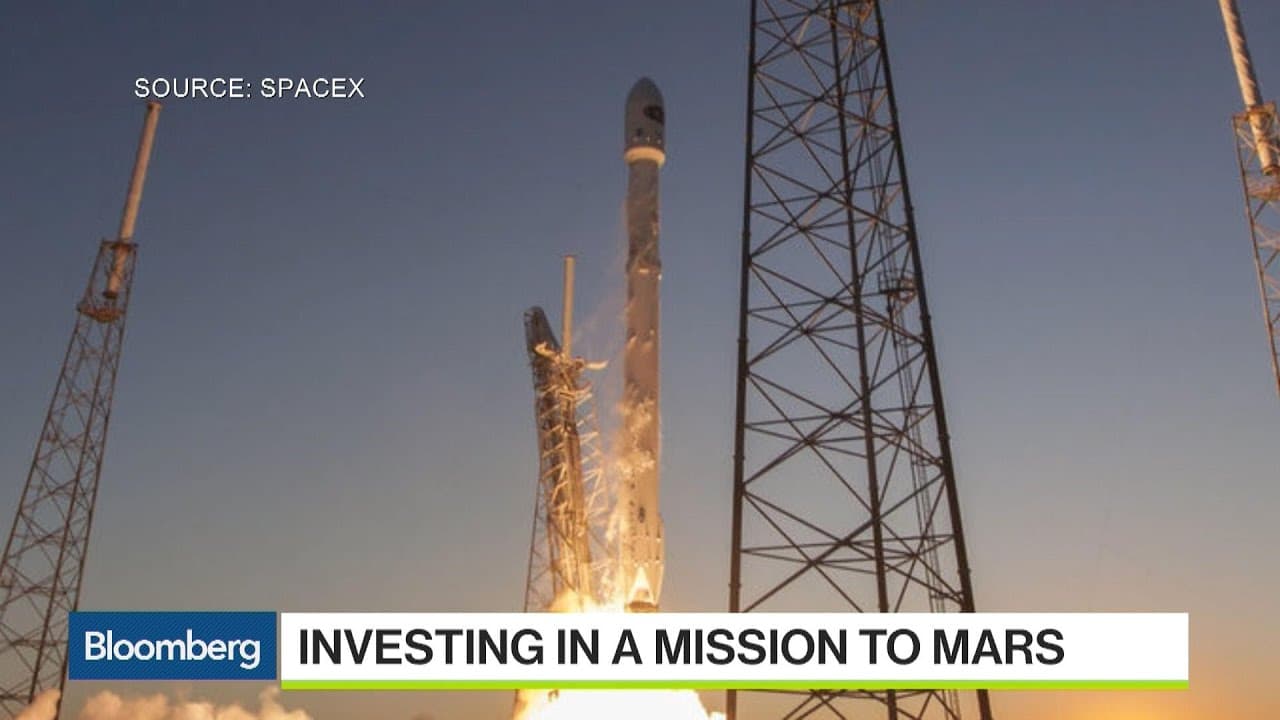
How Realistic Is Elon Musk's Plan to Colonize Mars?
TL;DR
Elon Musk's Mars colonization plan is exciting but faces significant challenges.
Transcript
what do you think of elon's plan to colonize Mars is it realistic or is it crazy well first of all it's super exciting and I think that's the point because I think that the most important objective of his announcement is to really Galvanize support for these for this idea of becoming a multiplanetary species um I think that he knows that the idea o... Read More
Key Insights
- Elon Musk's plan to colonize Mars aims to galvanize support for becoming a multiplanetary species, despite the challenges involved.
- Recent technological advancements have revolutionized the aerospace industry, making space ventures more affordable and accessible.
- The space industry previously faced a downturn due to the high costs and complexities of large satellites, leading to innovation in smaller, cost-effective solutions.
- Elon Musk's timeline for Mars colonization is ambitious, with significant challenges in human factors like radiation and psychological impacts yet to be addressed.
- The development of space infrastructure, such as fueling depots, could make space travel more efficient and less costly.
- Investors weigh the risks of space ventures by considering the potential for long-term societal benefits and immediate economic value in communications and planetary awareness.
- Current space ventures are exploring profitable opportunities in areas like communications, planetary sensors, and pharmaceutical research in zero gravity.
- Space startups are increasingly leveraging small satellite technology, disrupting traditional space industry models with innovative solutions.
Install to Summarize YouTube Videos and Get Transcripts
Explore YouTube Video Summarizer or Get YouTube Transcript Extractor
Questions & Answers
Q: What is the primary goal of Elon Musk's Mars colonization plan?
The primary goal of Elon Musk's Mars colonization plan is to galvanize support for the idea of humans becoming a multiplanetary species. By presenting an exciting vision of space exploration, Musk aims to inspire interest and investment in the necessary technologies and infrastructure to make this vision a reality, despite the significant challenges involved.
Q: How has recent technology impacted the aerospace industry?
Recent technological advancements have significantly impacted the aerospace industry by making space ventures more affordable and accessible. Innovations such as small satellite technology have disrupted traditional models, allowing new companies to enter the market and explore novel applications. This shift has led to increased investment and interest in space exploration and related industries.
Q: What challenges does Elon Musk face in his Mars colonization plan?
Elon Musk faces numerous challenges in his Mars colonization plan, including addressing human factors such as radiation exposure, psychological impacts, and the physiological effects of space travel. Additionally, the development of space infrastructure, like fueling depots, is necessary to make the plan more efficient and cost-effective. These challenges must be overcome to make Mars colonization feasible.
Q: What led to the previous downturn in the space industry?
The previous downturn in the space industry was primarily due to the high costs and complexities associated with large satellites. These massive satellites required significant resources to launch and maintain, leading to prohibitive expenses. As a result, the industry faced a crisis, creating an opportunity for innovation in smaller, more cost-effective satellite technology, which has since revitalized the industry.
Q: How do investors evaluate the risks of space ventures?
Investors evaluate the risks of space ventures by considering both the potential long-term societal benefits and the immediate economic value. While the ambitious goals of space exploration involve significant challenges and uncertainties, the potential for technological advancements and profitable applications in areas like communications and planetary awareness provides a compelling case for investment.
Q: What opportunities exist for economic value in space ventures?
Opportunities for economic value in space ventures exist primarily in communications and planetary awareness. Innovations in satellite technology allow for improved sensing and imaging capabilities, which can be applied to monitor Earth's atmosphere, marine traffic, and other environmental factors. Additionally, pharmaceutical research in zero gravity and asteroid mining represent promising areas for economic growth and development.
Q: What role do small satellites play in the current space industry?
Small satellites play a crucial role in the current space industry by providing a cost-effective and efficient solution for various applications. These satellites leverage advancements in technology, such as using cell phone parts, to offer innovative capabilities at a fraction of the cost of traditional large satellites. This has opened up new opportunities for startups and disrupted the traditional space industry model.
Q: How could space infrastructure development impact space exploration?
The development of space infrastructure, such as fueling depots and mining capabilities on the moon or asteroids, could significantly impact space exploration by reducing costs and increasing efficiency. By establishing a more robust support system in space, companies like SpaceX could undertake ambitious missions, such as Mars colonization, with greater feasibility and safety, ultimately advancing the broader goals of space exploration.
Summary & Key Takeaways
-
Elon Musk's Mars colonization plan is designed to inspire support for becoming a multiplanetary species, despite the immense challenges involved. Recent advancements in technology have transformed the aerospace industry, making space ventures cheaper and more accessible, leading to a surge in innovation and investment.
-
The space industry previously faced a crisis due to the prohibitive costs and complexities of large satellites. However, innovation in smaller, more cost-effective satellite technology has revitalized the industry, allowing new companies to disrupt traditional models and explore novel applications.
-
Investors in space ventures balance risks with potential rewards, considering both the long-term societal benefits and the immediate economic value in areas like communications and planetary awareness. The development of space infrastructure could further reduce costs and enhance the feasibility of space exploration.
Read in Other Languages (beta)
Share This Summary 📚
Summarize YouTube Videos and Get Video Transcripts with 1-Click
Try YouTube Summary with ChatGPT & Claude or YouTube Transcript Generator
Explore More Summaries from Bloomberg Originals 📚




Summarize YouTube Videos and Get Video Transcripts with 1-Click
Try YouTube Summary with ChatGPT & Claude or YouTube Transcript Generator