What Was the Largest Anti-Bolshevik Uprising?
TL;DR
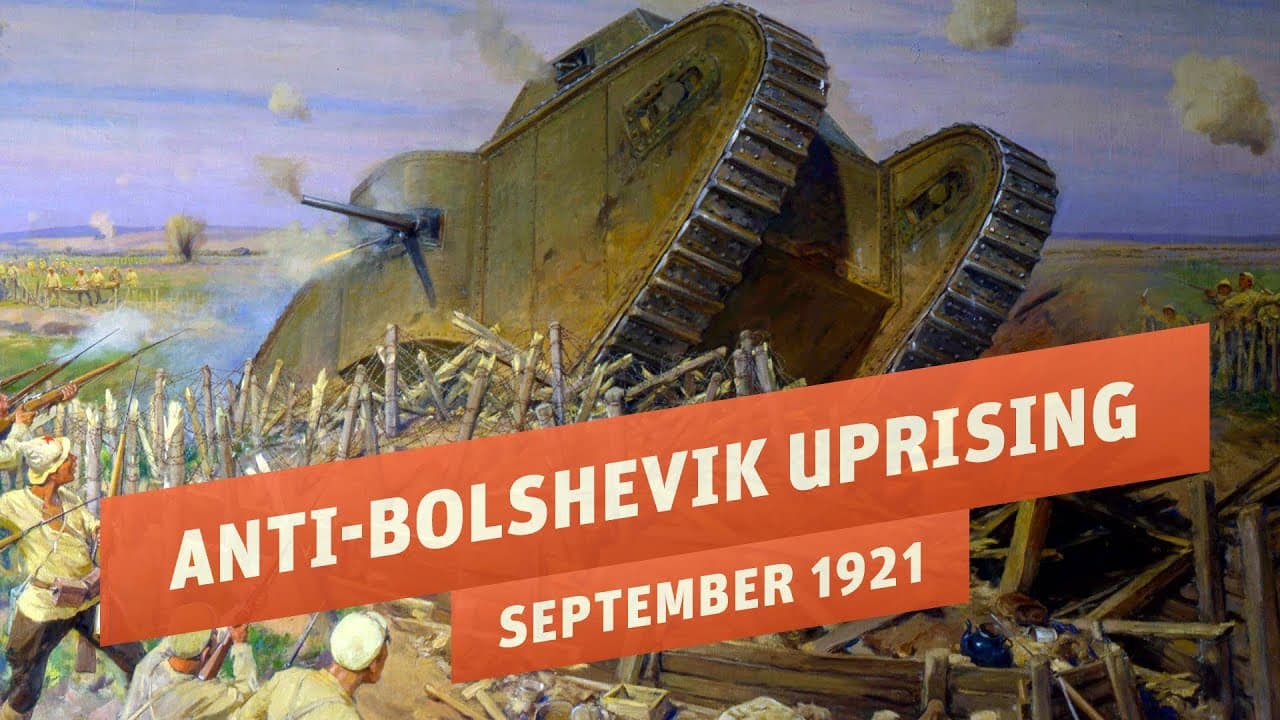
The largest anti-Bolshevik uprising during the Russian Civil War occurred in Western Siberia in 1921. Peasants rebelled against harsh Bolshevik policies, including War Communism, which led to severe food requisitions. The uprising briefly gained control over the region but was eventually suppressed by the Red Army.
Transcript
defeated the anti-revolutionary Whites, but the country was still suffering from famine and violence. There had been major peasant uprisings against the Bolshevik regime, and a dramatic rebellion of Red Navy sailors at Kronstadt was forcing Vladimir Lenin to rethink his economic policies. Plus the Japanese still occupied much of the Far East. In th... Read More
Key Insights
- The West Siberian uprising was the largest peasant rebellion during the Russian Civil War.
- Bolshevik policies like War Communism fueled the uprising by imposing harsh requisitions on peasants.
- Peasants and rural intellectuals, along with indigenous peoples, formed the People's Rebel Army.
- The rebellion disrupted communication and transportation by cutting telegraph lines and railways.
- Despite initial successes, the rebels lacked military experience and were poorly armed.
- Red Army reinforcements eventually suppressed the rebellion by freeing key railways.
- The uprising influenced Lenin to consider economic reforms, though this is debated among historians.
- The West Siberian rebellion remains a significant yet overlooked event in Russian history.
Install to Summarize YouTube Videos and Get Transcripts
Explore YouTube Video Summarizer or Get YouTube Transcript Extractor
Questions & Answers
Q: What triggered the West Siberian uprising in 1921?
The West Siberian uprising in 1921 was triggered by Bolshevik policies, particularly War Communism, which involved harsh requisitions of grain and other goods from peasants. These policies, combined with famine, led to widespread discontent. Peasants, along with rural intellectuals and indigenous peoples, formed the People's Rebel Army to resist these measures, sparking the largest anti-Bolshevik rebellion of the Russian Civil War.
Q: How did the Bolsheviks initially respond to the West Siberian uprising?
Initially, the Bolsheviks did not take the West Siberian uprising seriously, attributing it to wealthy peasants or 'kulaks'. They underestimated the scale and organization of the rebellion, which allowed the insurgents to gain control over significant parts of Western Siberia, disrupting communication and transportation lines. This lack of initial response contributed to the rebellion's early successes.
Q: What were the key strategies of the People's Rebel Army during the uprising?
The People's Rebel Army employed strategies such as cutting telegraph lines and blowing up sections of the Trans-Siberian railway to disrupt Bolshevik control. They formed anti-Bolshevik slogans, stockpiled weapons, and attempted to capture key cities. Despite their efforts, they faced challenges due to poor coordination, limited military experience, and a shortage of weapons, which ultimately hindered their effectiveness.
Q: How did the Red Army eventually suppress the West Siberian uprising?
The Red Army suppressed the West Siberian uprising by focusing on regaining control of the railways and key cities. They brought in armored trains and reinforcements to break through peasant defenses. The Red Army's superior organization and resources, along with strategic military actions, eventually overwhelmed the poorly armed and coordinated rebel forces, leading to the rebellion's suppression by mid-1921.
Q: What impact did the West Siberian uprising have on Bolshevik policies?
The West Siberian uprising highlighted significant peasant discontent with Bolshevik policies, particularly War Communism. Some historians argue that it influenced Lenin to introduce the New Economic Policy, which aimed to relax state control and introduce free-market reforms to stabilize the Soviet economy. However, this connection is debated, as the rebels were unaware of any planned policy changes during the uprising.
Q: Who were the key participants in the West Siberian uprising?
The key participants in the West Siberian uprising included Siberian peasants, rural intellectuals, priests, and indigenous peoples like the Ostyaks and Samoyeds. They formed the People's Rebel Army to resist Bolshevik policies. Despite their diverse backgrounds, they shared a common goal of opposing the harsh requisitions and central control imposed by the Bolshevik regime.
Q: What were the main challenges faced by the People's Rebel Army?
The People's Rebel Army faced several challenges, including poor coordination among different peasant groups, a lack of military experience, and a severe shortage of weapons. Many peasant soldiers were only willing to fight near their home villages, and their leaders struggled with military strategy. These challenges, combined with the Red Army's superior resources, ultimately led to the rebellion's failure.
Q: What was the legacy of the West Siberian uprising?
The legacy of the West Siberian uprising lies in its demonstration of significant peasant resistance to Bolshevik policies during the Russian Civil War. Although ultimately unsuccessful, it pressured the Bolshevik regime to reconsider its economic strategies. The uprising remains an important yet often overlooked event, highlighting the complexities of peasant struggles and regional dynamics in early Soviet history.
Summary & Key Takeaways
-
In 1921, Western Siberia experienced the largest anti-Bolshevik uprising of the Russian Civil War. Peasants, driven by harsh Bolshevik requisitions under War Communism, formed the People's Rebel Army. They briefly controlled the region but faced challenges due to poor coordination and lack of weapons.
-
The Bolshevik regime underestimated the uprising, initially attributing it to wealthy peasants. The rebels cut off key communication lines and railways, gaining temporary control. However, the Red Army's strategic reinforcements eventually recaptured key areas, suppressing the rebellion by mid-1921.
-
The West Siberian uprising, though ultimately unsuccessful, highlighted significant discontent with Bolshevik policies. It pressured Lenin to consider the New Economic Policy, aiming to stabilize the Soviet economy. The rebellion's legacy underscores the complexity of peasant resistance during the Russian Civil War.
Read in Other Languages (beta)
Share This Summary 📚
Summarize YouTube Videos and Get Video Transcripts with 1-Click
Try YouTube Summary with ChatGPT & Claude or YouTube Transcript Generator
Explore More Summaries from The Great War 📚

Summarize YouTube Videos and Get Video Transcripts with 1-Click
Try YouTube Summary with ChatGPT & Claude or YouTube Transcript Generator