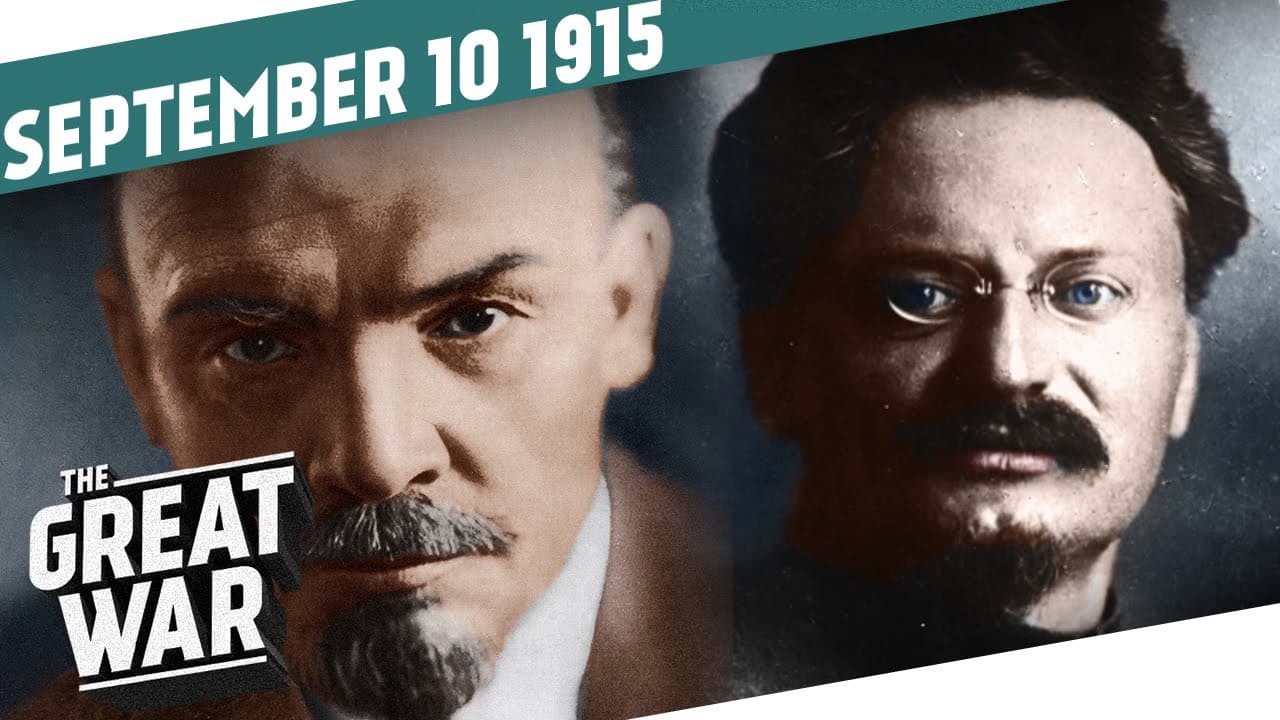
The Socialists Call for Peace - But the Plans Do Not I THE GREAT WAR - Week 59
TL;DR
Amid peace calls, war plans intensify on multiple fronts.
Transcript
We’ve watched the war in the skies as it’s grown ever larger, and with it has grown the need for defense from it; something to protect the troops and the public at home from death from above; the need for anti-aircraft weaponry. I’m Indy Neidell; welcome to the Great War. Last week, Tsar Nicholas dismissed Grand Duke Nikolai Nikolayevich as command... Read More
Key Insights
- Tsar Nicholas took personal command of Russian armies, a risky move given his lack of military experience, potentially worsening Russia's military situation.
- Rasputin's influence on Russian affairs grew as the Tsar focused on military matters, causing concern among Russian ministers.
- International Socialist Conference in Switzerland called for peace and civil war across Europe, highlighting widespread war fatigue.
- German Zeppelin raids on London intensified, prompting demands for anti-aircraft defenses, leading to the deployment of French auto-cannons.
- Bulgaria signed treaties with Central Powers, planning to attack Serbia, aiming to connect Berlin to Constantinople and cut off Russian influence in the Balkans.
- French and British planned a major offensive against Germany in Artois and Champagne, despite concerns about Russian military deterioration.
- Einstein observed that German public opinion was more aggressive than its government, driven by powerful banks and industries.
- The Balkan theater was set to become more active, with Central Powers' plans to decisively defeat Serbia and open new strategic routes.
Install to Summarize YouTube Videos and Get Transcripts
Explore YouTube Video Summarizer or Get YouTube Transcript Extractor
Questions & Answers
Q: What was the significance of Tsar Nicholas taking command of the Russian armies?
Tsar Nicholas taking command of the Russian armies was significant because it marked a major shift in Russian military leadership during a time of crisis. His decision was controversial due to his lack of military experience, which many feared would exacerbate Russia's struggles on the Eastern Front. Additionally, it increased Rasputin's influence in political affairs, causing further instability.
Q: How did the International Socialist Conference in Switzerland impact the war?
The International Socialist Conference in Switzerland highlighted the growing discontent with the ongoing war. By calling for immediate peace and a civil war between classes across Europe, it underscored the widespread war fatigue and the desire for change. Although it did not directly alter military strategies, it reflected the mounting pressure on governments to justify continued conflict.
Q: What prompted the demand for anti-aircraft defenses in London?
The demand for anti-aircraft defenses in London was prompted by a series of devastating German Zeppelin raids. These raids caused significant casualties and damage, including a particularly destructive attack on London that killed 22 people and injured 86. The public outcry for protection led to the deployment of French 75mm auto-cannons, marking a critical step in urban defense against aerial threats.
Q: Why did Bulgaria decide to align with the Central Powers?
Bulgaria decided to align with the Central Powers due to territorial ambitions and strategic considerations. The treaties signed promised Bulgaria financial subsidies and future territorial gains at Serbia's expense. The alignment aimed to decisively defeat Serbia, open a strategic route to Constantinople, and strengthen Bulgaria's position in the Balkans, aligning with Central Powers' broader strategic goals.
Q: What were the objectives of the planned French and British offensive?
The planned French and British offensive aimed to break the German lines in Artois and Champagne, with the main attack by the French Fourth Army in Champagne. Secondary attacks were planned to divert German reserves. Despite concerns about Russian military deterioration, the offensive was seen as crucial to maintaining pressure on Germany and supporting the broader Allied war effort.
Q: How did Einstein perceive the German attitude towards the war?
Einstein perceived the German attitude towards the war as increasingly aggressive and expansionist, driven by victories over Russia. He noted that public sentiment was more extreme than the government's stance, influenced by powerful financial and industrial interests. Einstein believed that these entities wielded significant influence over the Kaiser, shaping Germany's war objectives and limiting prospects for peace.
Q: What were the strategic implications of Bulgaria's planned attack on Serbia?
The strategic implications of Bulgaria's planned attack on Serbia were significant. By aligning with the Central Powers, Bulgaria aimed to open a direct route from Berlin to Constantinople, enhancing logistical support for the Ottoman Empire. This move threatened to cut off Russian influence in the Balkans and potentially shift the balance of power, complicating the Allies' strategic calculations in the region.
Q: What challenges did Tsar Nicholas face by taking command of the Russian military?
Tsar Nicholas faced numerous challenges by taking command of the Russian military, including his own lack of military expertise, which risked exacerbating Russia's strategic vulnerabilities. His decision also led to political instability, as ministers threatened to resign and concerns grew over Rasputin's influence. The move was seen as a gamble during a period of setbacks, testing the Tsar's leadership and Russia's military resilience.
Summary & Key Takeaways
-
Tsar Nicholas assumes direct command of Russian forces, a controversial decision amidst military setbacks and political tensions, raising concerns about Rasputin's growing influence.
-
International Socialist Conference demands peace, while German Zeppelin raids on London increase, leading to the introduction of new anti-aircraft defenses.
-
Bulgaria aligns with Central Powers to attack Serbia, as French and British forces prepare for a major offensive against Germany, escalating the conflict further.
Read in Other Languages (beta)
Share This Summary 📚
Summarize YouTube Videos and Get Video Transcripts with 1-Click
Try YouTube Summary with ChatGPT & Claude or YouTube Transcript Generator
Explore More Summaries from The Great War 📚
Summarize YouTube Videos and Get Video Transcripts with 1-Click
Try YouTube Summary with ChatGPT & Claude or YouTube Transcript Generator