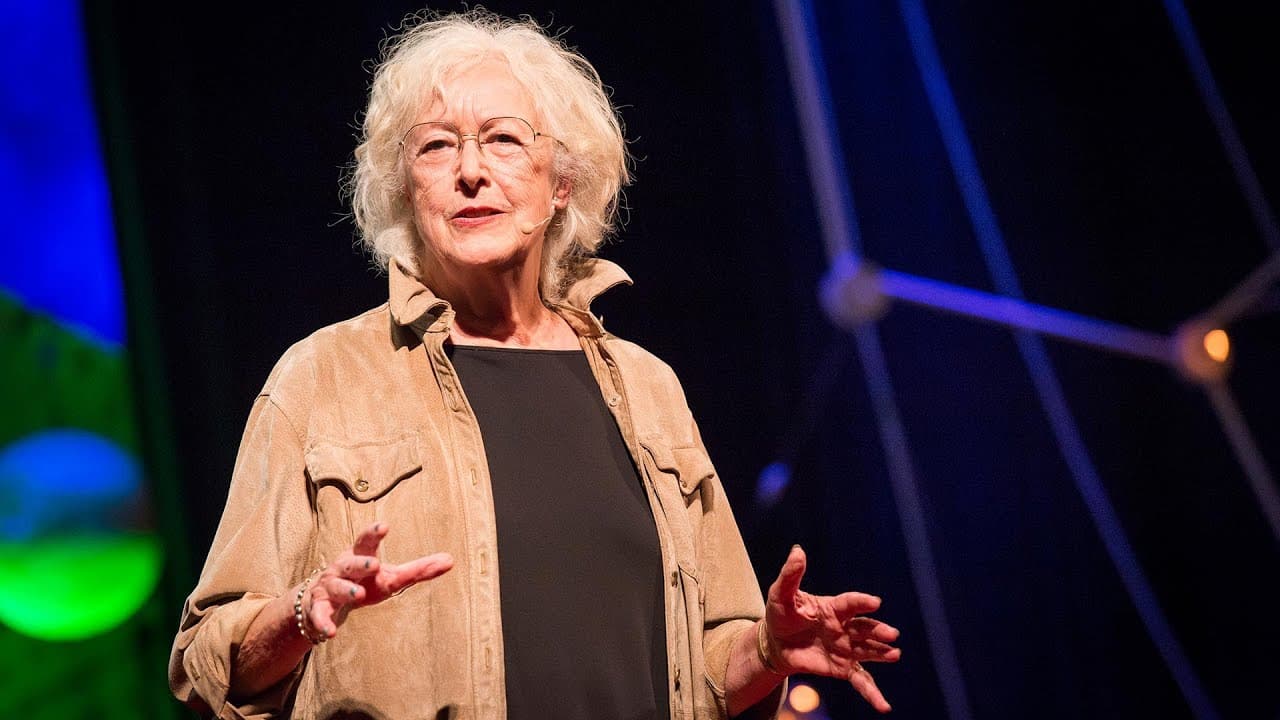
Lesley Hazleton: The doubt essential to faith
TL;DR
This content discusses the experience of translator Joseph Geni exploring the life of Muhammad and the importance of doubt in faith.
Transcript
Translator: Joseph Geni Reviewer: Morton Bast Writing biography is a strange thing to do. It's a journey into the foreign territory of somebody else's life, a journey, an exploration that can take you places you never dreamed of going and still can't quite believe you've been, especially if, like me, you're an agnostic Jew and the life you've been ... Read More
Key Insights
- 🌌 The speaker explores the journey of writing a biography, particularly the challenges of exploring the life of Muhammad as a secular Jew, raising questions about the first revelation of the Quran and the mystical moment of Islam.
- 💡 The earliest accounts of Muhammad's revelation reveal that he doubted the experience, contrary to expectations of a divine encounter, which adds integrity and authenticity to his story.
- 💔 Doubt is not imperfect, but rather an essential part of faith, as it prevents absolute conviction and the arrogance of fundamentalism. Doubt allows for ongoing struggle and questioning of beliefs, fostering a real and deep faith.
- 🔥 Fanaticism and militant extremism is not true faith but a cult fueled by closed-minded certainty. It is necessary to distinguish between faith and fanaticism to challenge the dominance of extremist voices and restore the understanding of faith as a struggle and conversation.
- 💪 Faith in the future and in each other, despite doubts, is a rejection of despair and a commitment to a better world. This rejection of nihilism is what drives us as humans, regardless of our religious beliefs or lack thereof.
- 🌍 Muhammad would be appalled by the actions of militant fundamentalists in the Middle East and around the world, as he believed in peace, equality, and the sanctity of human life. He would denounce terrorism and commit to the challenging process of making peace.
- 🚪 Exploring boundaries, both physical and intellectual, is an act of transgression that leads to new insights and understanding. It is through crossing boundaries that we can challenge our assumptions and expand our knowledge.
- 💬 Awe and real faith are often neglected in modern society, where we seek control and explanations for everything. However, encountering the divine or embracing faith requires acceptance of something beyond human comprehension and a sense of awe.
Install to Summarize YouTube Videos and Get Transcripts
Explore YouTube Video Summarizer or Get YouTube Transcript Extractor
Questions & Answers
Q: What is the core mystical moment of Islam?
The core mystical moment of Islam is the night in the year 610 when Muhammad received the first revelation of the Koran on a mountain outside Mecca.
Q: How did Muhammad initially react to the first revelation?
Muhammad did not initially believe that the revelation he experienced was real. He thought it might have been a hallucination or a trick of the eye, and even considered that he was possessed by an evil spirit.
Q: How did Muhammad's doubt contribute to his faith?
Muhammad's doubt played a crucial role in his faith. It is through doubt that he was able to wrestle with his experiences, question what he thought he knew, and engage in a continual struggle with faith. Doubt allowed him to have a more nuanced and authentic understanding of his faith.
Q: What is the difference between faith and fanaticism?
Faith involves ongoing questioning, struggle, and an acceptance of doubt. It is characterized by a willingness to engage in a conversation with doubt and to defy it when necessary. Fanaticism, on the other hand, is an absolute, unquestioning belief that lacks the humility to accept doubt or consider alternative ideas.
Q: How does faith in the future and in each other drive us as humans?
Despite doubts and uncertainties, we reject the despairing nihilism that comes with giving up. Instead, we maintain faith in the future and in each other. This faith drives us to work towards a better world, to reject closed-minded certainty, and to commit ourselves fully to the hard process of making peace.
Summary & Key Takeaways
-
The author reflects on the process of writing a biography of Muhammad and the doubts he encountered along the way.
-
Muhammad's first revelation of the Quran was marked by doubt and disbelief, rather than certainty or joy.
-
Doubt is seen as an essential component of faith, and the author argues against the dogmatism of fundamentalism in any religion.
Read in Other Languages (beta)
Share This Summary 📚
Summarize YouTube Videos and Get Video Transcripts with 1-Click
Try YouTube Summary with ChatGPT & Claude or YouTube Transcript Generator
Explore More Summaries from TED 📚



Summarize YouTube Videos and Get Video Transcripts with 1-Click
Try YouTube Summary with ChatGPT & Claude or YouTube Transcript Generator