How reliable is your memory? | Elizabeth Loftus
TL;DR
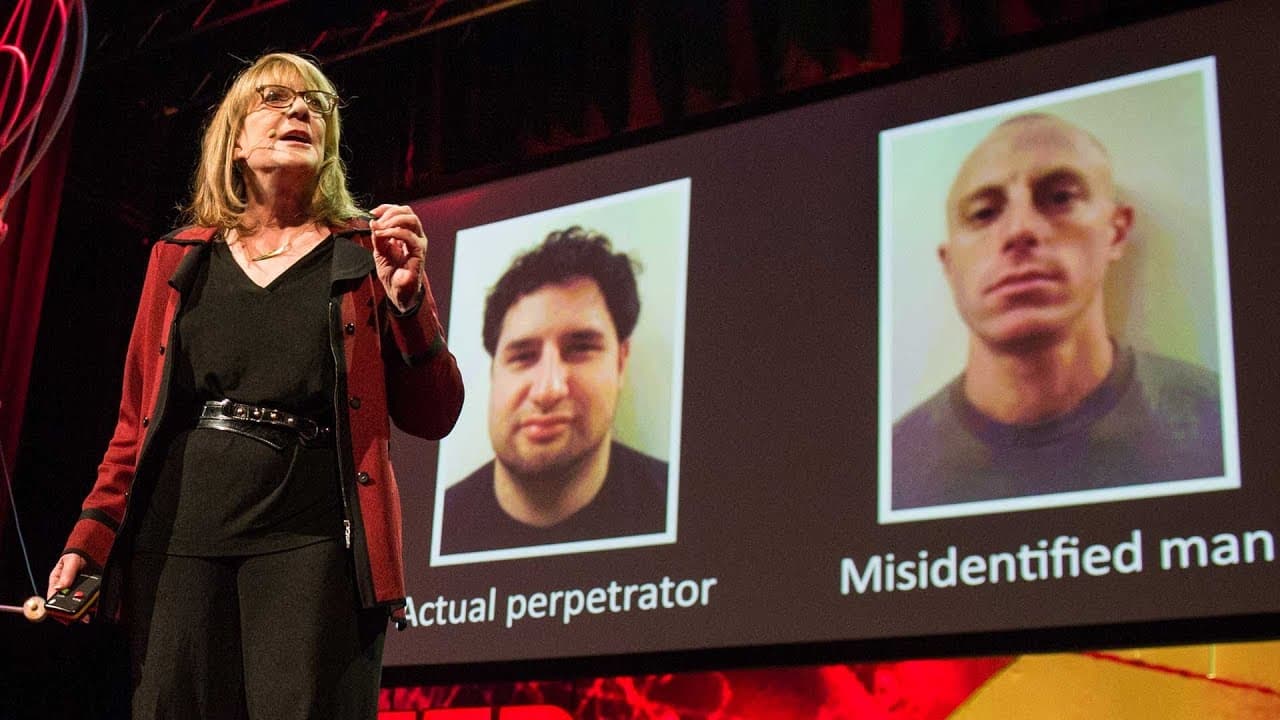
False memories can significantly impact legal outcomes, leading to wrongful convictions as seen in cases like Steve Titus, who was exonerated after being identified incorrectly by a victim. Memory is reconstructive, meaning it can be influenced by external factors, suggestions, and misinformation, resulting in distorted recollections that affect behavior and justice.
Transcript
I'd like to tell you about a legal case that I worked on involving a man named Steve Titus. Titus was a restaurant manager. He was 31 years old, he lived in Seattle, Washington, he was engaged to Gretchen, about to be married, she was the love of his life. And one night, the couple went out for a romantic restaurant meal. They were on their way hom... Read More
Key Insights
- 💔 False memories can lead to wrongful convictions, with faulty eyewitness memory being a major factor in many cases.
- 💔 Memory is not like a recording device; it is reconstructive and can be influenced by external factors, leading to the formation of false memories.
- 💡 Leading questions and suggestive information can distort and contaminate memories, causing individuals to remember events differently from how they really occurred.
- 🧠 Psychological therapy techniques, such as imagination exercises and suggestion, can lead to the creation of false memories that are vivid and emotionally distressing.
- 🧠 False memories can have long-lasting effects on behavior, influencing individuals' preferences and aversions.
- 🔍 The ethical implications surrounding the use of memory manipulation techniques raise questions about when and if they should be used.
- 🔍 Misinformation from questioning, conversations with others, and media coverage can contaminate and alter the accuracy of memories.
- ✋ The ability to plant false memories underscores the unreliability of memory and the need for independent corroboration of events.
Install to Summarize YouTube Videos and Get Transcripts
Explore YouTube Video Summarizer or Get YouTube Transcript Extractor
Questions & Answers
Q: What was the outcome of Steve Titus' trial based on the false memory of the rape victim?
Steve Titus was convicted of rape based on the false memory of the victim. She originally pointed to Titus' photo in a lineup as the closest resemblance to the rapist. On the stand, she proclaimed that she was absolutely positive he was the man. However, it was later revealed that Titus was innocent and the real rapist was found.
Q: How did Steve Titus try to prove his innocence after his conviction?
After losing faith in the legal system, Steve Titus got the attention of an investigative journalist and together they found the real rapist. The information was brought to the judge, who ultimately set Titus free.
Q: What is the role of the speaker in this case?
The speaker is a psychological scientist who studies memory. She was asked to work on Steve Titus' case to understand how a victim can go from considering someone as "the closest" resemblance to being "absolutely positive" that person is guilty.
Q: What did the speaker discover about memory?
The speaker has studied memory for decades and has found that memory is not like a recording device. It is instead reconstructive and can be influenced by outside factors. People can remember things that didn't happen or remember details differently from how they actually occurred.
Q: How many innocent people have been convicted due to faulty eyewitness memory?
According to the speaker, information on 300 innocent people in the United States who were convicted of crimes they did not commit has been gathered. Three-quarters of these cases were due to faulty eyewitness memory.
Q: How can memories be manipulated or distorted?
Memories can be manipulated or distorted through the introduction of misinformation. This can occur through leading questions, talking to other witnesses who provide erroneous information, or exposure to media coverage that may alter one's memory of an event.
Q: What does the speaker's research on false memories demonstrate about their impact on behavior?
The speaker's research has shown that false memories can have repercussions on behavior. For example, planting a false memory of getting sick from certain foods can make individuals less likely to want to eat those foods at an outdoor picnic. This demonstrates the influence false memories can have on behavior.
Q: Why did police suspect Steve Titus in the rape case?
Police suspected Steve Titus because his car resembled one driven by the rapist and Titus resembled the attacker. They photographed him and included the picture in a lineup, where the victim said his photo was the closest match.
Q: What happened to Steve Titus after he was proven innocent?
Steve Titus was freed after an investigative journalist found the real rapist, who confessed. Titus had already lost his job, fiancée, and savings, and he later died at age 35 from a stress-related heart attack shortly before his civil case was due in court.
Q: Can stress and suggestive information cause eyewitness misidentification?
Yes, the military training study showed that suggestive information could cause people to misidentify someone even after a highly stressful experience. Many participants identified a different person as their aggressive interrogator, sometimes choosing someone who did not remotely resemble the real interrogator.
Summary
The speaker discusses the case of Steve Titus, who was wrongfully convicted based on a false memory. The speaker explains the reconstructive nature of memory and how it can be influenced by external factors, such as suggestion and misinformation. They also talk about the ethical implications of manipulating memories and the importance of independent corroboration.
Questions & Answers
Q: What was the case involving Steve Titus?
Steve Titus was wrongfully convicted of rape based on a false memory. He was mistaken for the rapist by the victim and was later exonerated when the real rapist was found.
Q: How did the false memory impact Steve Titus' life?
Steve Titus lost his job, his fiancée left him, and he experienced financial loss. He filed a lawsuit against the police and others he held responsible, but he died of a stress-related heart attack before the case could be resolved.
Q: What does the speaker study?
The speaker is a psychological scientist who studies memory, particularly false memories.
Q: How many innocent people have been convicted due to faulty eyewitness memory?
According to a project in the United States, 300 innocent people have been convicted of crimes they didn't commit. Three-quarters of these cases were due to faulty eyewitness memory.
Q: How does memory work?
Contrary to popular belief, memory is not like a recording device. It is constructive and reconstructive. Our memories can be influenced and altered by external factors, similar to how a Wikipedia page can be edited by multiple people.
Q: How did the speaker first start studying the construction of false memories?
In the 1970s, the speaker conducted experiments involving simulated crimes and accidents. They showed people these events and asked them questions about what they remembered, discovering that leading questions could alter their memories.
Q: Can stressful events also lead to false memories?
Yes, even in highly stressful situations, false memories can be created. In a study involving military members undergoing intense interrogation training, suggestive information about a different interrogator led to misidentification of the real interrogator.
Q: How are memories contaminated by misinformation in real life?
Memories can be contaminated when people are questioned in a leading way, talk to other witnesses who provide erroneous information, or are exposed to media coverage that may influence their memory of an event.
Q: What is an extreme form of false memory problem?
Some patients who undergo therapy come out with extreme false memories, such as memories of horrific abuse in satanic rituals. These memories often arise from specific forms of psychotherapy that involve imagination exercises, dream interpretation, hypnosis, or exposure to false information.
Q: How did the speaker face backlash for their research on false memories?
The speaker faced hostilities from repressed memory therapists and their influenced patients. They even had armed guards at their speeches and were sued for defamation and invasion of privacy by a woman who believed her repressed memory.
Takeaways
Memory is not reliable, and false memories can have serious consequences. Eyewitness testimony, although persuasive, can be misleading and faulty. Memories are not like recordings; they are reconstructive and can be influenced by external factors. Independent corroboration is crucial to verify the accuracy of someone's memory. Understanding the fragility of memory can help us be more tolerant of memory mistakes and prevent unjust outcomes like Steve Titus' case.
Summary & Key Takeaways
-
Steve Titus, a restaurant manager, was wrongfully convicted of rape based on a false memory from the victim and was later exonerated with the help of an investigative journalist.
-
False memories can be planted and manipulated through suggestion and can have lasting effects on behavior.
-
Memory is not a reliable recording device, but rather a reconstructive process that can be influenced by external factors and misinformation.
Read in Other Languages (beta)
Share This Summary 📚
Summarize YouTube Videos and Get Video Transcripts with 1-Click
Try YouTube Summary with ChatGPT & Claude or YouTube Transcript Generator
Explore More Summaries from TED 📚




Summarize YouTube Videos and Get Video Transcripts with 1-Click
Try YouTube Summary with ChatGPT & Claude or YouTube Transcript Generator