How do we create a better economy?
TL;DR
Economist Kate Raworth challenges the idea of endless growth as a sign of progress and presents a new perspective on a healthy economy.
Transcript
What does it mean for a country to have a healthy economy? What does a healthy economy even look like? Does it look like this? What about like this? Economist Kate Raworth shared a pretty interesting answer to this question on the TED Interview podcast. And it challenges an idea that most economists take for granted. We live— particularly in the W... Read More
Key Insights
- 🤘 The Western society's belief in endless growth as a sign of progress is flawed and unsustainable.
- 🧑🏭 GDP as a measure of the economy does not consider important factors like unpaid work and environmental impact.
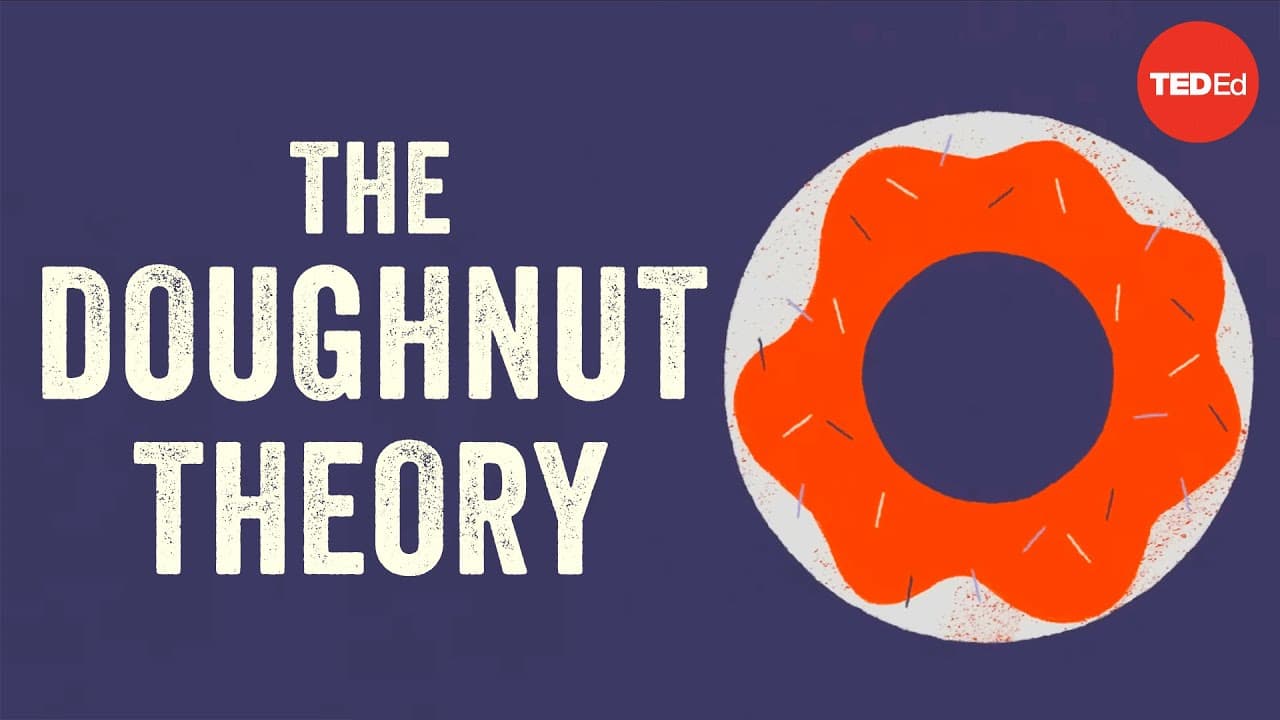
- 👶 The "doughnut" model offers a new perspective on a healthy economy, where meeting human needs is balanced with ecological limits.
- 🪡 A paradigm shift is needed to prioritize sustainability and well-being over constant economic growth.
- 🫵 The health of the economy should be viewed in terms of balance and interdependence, similar to the human body.
- ❓ Progress should be redefined to include social foundations and ecological boundaries.
- 😘 Low-income countries can focus on economic growth to meet basic needs, but developed countries must shift to sustainable practices.
Install to Summarize YouTube Videos and Get Transcripts
Explore YouTube Video Summarizer or Get YouTube Transcript Extractor
Questions & Answers
Q: What is the traditional belief about growth and progress in the economy?
The traditional belief is that growth is a sign of progress and prosperity. It is assumed that increasing GDP will lead to better welfare and living standards.
Q: What is the flaw in using GDP as a measure of the economy?
GDP fails to consider unpaid caring work, value created in communities, and the impact on the environment. It does not provide a comprehensive view of the well-being and sustainability of a nation.
Q: What is the "doughnut" model proposed by Kate Raworth?
The doughnut model represents a balance between meeting the essentials of life for all people (the inner ring) and not overshooting planetary boundaries (the outer ring). It aims to ensure that no one is left behind while also protecting the Earth's resources.
Q: Why is there a need to rethink growth and progress in the economy?
The planet is experiencing a climate emergency and ecosystem collapse. Endless growth is unsustainable and poses a threat to the environment and human well-being. Rethinking growth is necessary to achieve a sustainable and equitable future.
Summary & Key Takeaways
-
Society has a strong belief that growth is a sign of progress, but economist Kate Raworth argues that endless growth is not sustainable and threatens the health of the economy.
-
GDP, the commonly used measure of economic output, does not take into account unpaid work, value created in communities, and the impact on the living world.
-
Raworth proposes the "doughnut" model as a compass for 21st-century prosperity, where the goal is to meet the essentials of life for all people without overshooting planetary boundaries.
Read in Other Languages (beta)
Share This Summary 📚
Summarize YouTube Videos and Get Video Transcripts with 1-Click
Try YouTube Summary with ChatGPT & Claude or YouTube Transcript Generator
Explore More Summaries from TED-Ed 📚


Summarize YouTube Videos and Get Video Transcripts with 1-Click
Try YouTube Summary with ChatGPT & Claude or YouTube Transcript Generator