Snipers in World War 1 (Documentary)
TL;DR
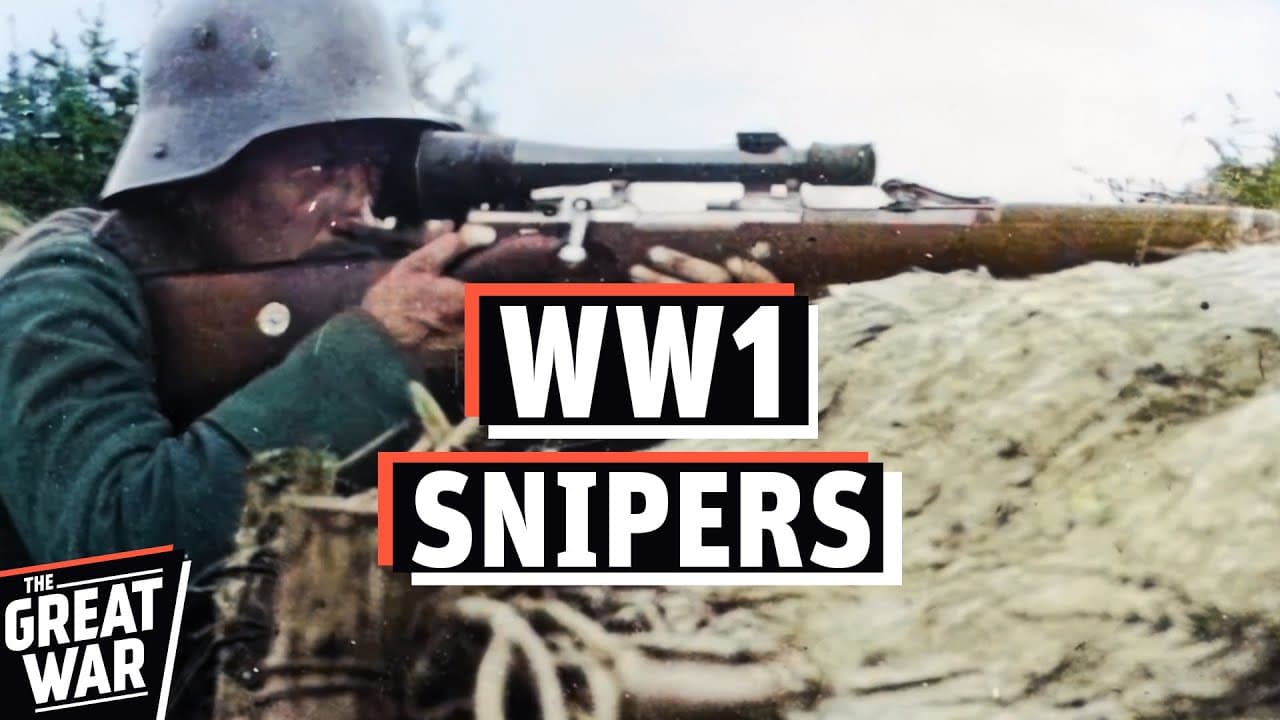
Snipers emerged as a crucial element in WWI trench warfare.
Transcript
Snipers are an integral part of today’s armies, but it wasn’t always the case . In fall 1914, the British and French armies on the First World Wadustr’s Western Front were wrestling with a problem: unseen German riflemen were picking off any man who showed himself above the trench. Something had to be done about it – and the result was the birth of... Read More
Key Insights
- The emergence of snipers during WWI was a response to the challenge of unseen German riflemen picking off soldiers on the Western Front.
- German and Austro-Hungarian armies initially had the upper hand due to their tradition of sharpshooting and superior optics industries.
- The Allies were initially unprepared for the sniping threat, but eventually developed their own sniping schools and tactics.
- Snipers were used to dominate No Man’s Land, targeting officers, machine gunners, and enemy snipers to disrupt enemy operations.
- Both sides developed specialized equipment and tactics, including periscope rifles, camouflage, and armored plates to enhance sniper effectiveness.
- Canadian, Australian, and other Dominion troops became renowned for their sniping skills, often due to their hunting backgrounds.
- By 1917, the British had improved their sniping capabilities, surpassing the Germans in both number and quality of snipers.
- The psychological impact of snipers was significant, adding to the tension and fear experienced by soldiers on the front lines.
Install to Summarize YouTube Videos and Get Transcripts
Explore YouTube Video Summarizer or Get YouTube Transcript Extractor
Questions & Answers
Q: What prompted the development of modern sniping during WWI?
The development of modern sniping during WWI was prompted by the challenge of unseen German riflemen on the Western Front, who were picking off Allied soldiers. This threat led to the need for precise rifle fire from protected positions, resulting in the birth and evolution of modern sniping techniques and equipment.
Q: How did the Germans initially have an advantage in sniping?
The Germans initially had an advantage in sniping due to their long tradition of sharpshooting and Jäger infantry units, as well as their access to the best optics industries in the world. This allowed them to equip front-line troops with accurate rifles and telescopic lenses, giving them an edge over the Allies.
Q: What were some of the tactics and equipment developed for sniping during WWI?
During WWI, both sides developed tactics and equipment for sniping, including the use of periscope rifles to shoot without exposing oneself, camouflage suits, and armored plates for protection. Snipers worked in pairs, with one observer and one shooter, and targeted high-value enemy personnel like officers and machine gunners.
Q: How did the Allies respond to the German sniping threat?
The Allies responded to the German sniping threat by developing their own sniping schools and tactics. British officers, like Vernon Hesketh-Prichard, played a key role in convincing army brass to establish formal sniping training programs. Over time, the Allies improved their sniping capabilities, eventually surpassing the Germans in quality and number.
Q: What role did Dominion troops play in the sniping war?
Dominion troops from Canada, Australia, New Zealand, and South Africa played a significant role in the sniping war due to their backgrounds as hunters and outdoorsmen. Their skills made them highly effective snipers, contributing to the British success in surpassing German sniping capabilities by 1917.
Q: What was the psychological impact of snipers on soldiers during WWI?
The presence of snipers during WWI had a significant psychological impact on soldiers, adding to the tension and fear experienced on the front lines. Snipers could strike unexpectedly, targeting soldiers when they least expected it, which heightened the stress and anxiety of being in the trenches.
Q: How did sniping tactics evolve with the return of mobile warfare in 1918?
With the return of mobile warfare in 1918, sniping tactics evolved to include joining advanced infantry teams in attacks to take out enemy snipers and machine guns. Snipers also played a role in locating enemy artillery batteries, and their presence in leading infantry sections helped in assaults against German strongpoints.
Q: What was the overall impact of sniping in WWI?
The overall impact of sniping in WWI is difficult to quantify due to limited research and anecdotal evidence. However, snipers and sharpshooters killed tens of thousands of men, contributing to the tension and fear on the front lines. The principles and tactics developed during the war continue to influence modern sniping.
Summary & Key Takeaways
-
The First World War marked the birth of modern sniping as armies adapted to the challenges of trench warfare. German forces initially had an advantage due to their sharpshooting tradition and access to superior optics, but the Allies gradually developed their own sniping capabilities.
-
Snipers played a crucial role in dominating No Man's Land, targeting high-value enemy personnel and disrupting operations. Both sides developed specialized tactics and equipment, including periscope rifles and camouflage, to enhance sniper effectiveness.
-
By 1917, the British had improved their sniping capabilities, aided by the skills of Dominion troops. The presence of snipers significantly impacted the morale and psychological state of soldiers, contributing to the tension and fear experienced on the front lines.
Read in Other Languages (beta)
Share This Summary 📚
Summarize YouTube Videos and Get Video Transcripts with 1-Click
Try YouTube Summary with ChatGPT & Claude or YouTube Transcript Generator
Explore More Summaries from The Great War 📚


Summarize YouTube Videos and Get Video Transcripts with 1-Click
Try YouTube Summary with ChatGPT & Claude or YouTube Transcript Generator