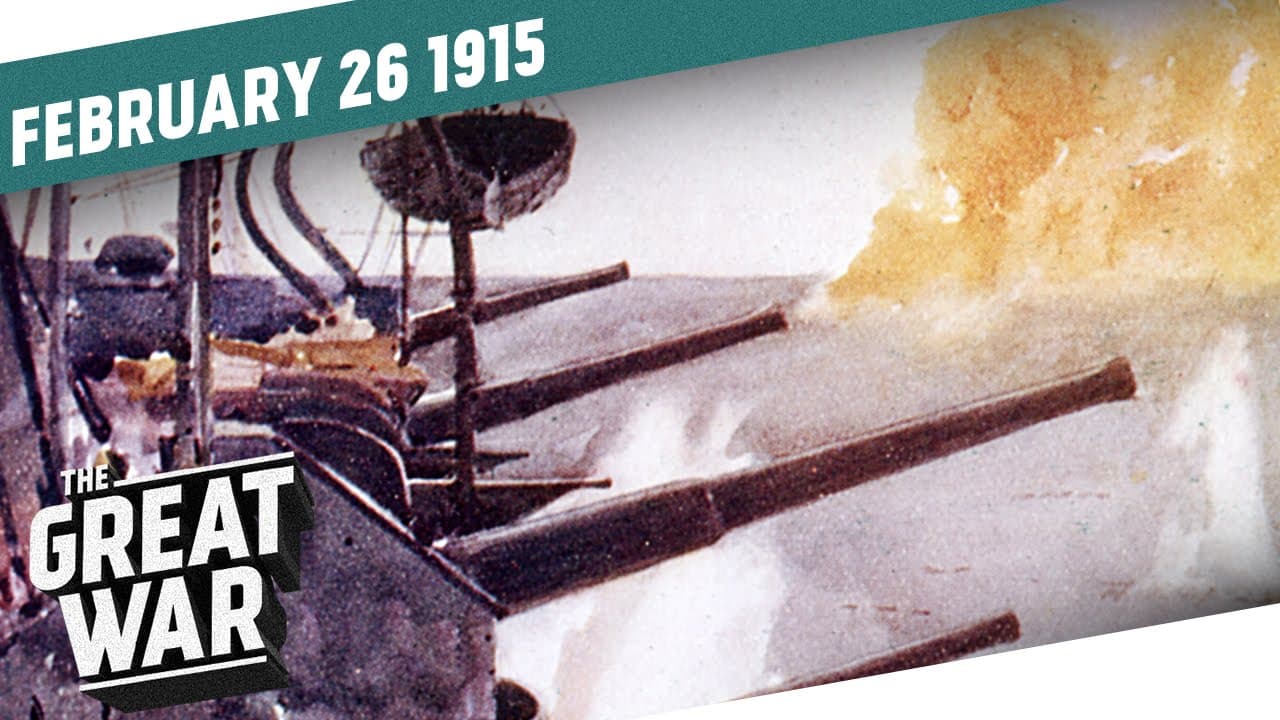
Prelude to Gallipoli - Naval Bombardement of the Dardanelles I THE GREAT WAR Week 31
TL;DR
British and French forces open a new front in the Dardanelles.
Transcript
In just seven months, this war has grown beyond anyone’s expectations or even imaginations. From the Austro-Hungarian declaration of war on Serbia, there had now been fronts in France, Belgium, East Prussia, Poland, the Carpathian Mountains, Serbia, the Caucasus... there was fighting as far away as Africa, the Red Sea, the Persian Gulf, the Far Eas... Read More
Key Insights
- The war has expanded far beyond initial expectations, with battles now occurring across multiple continents, including Europe, Africa, and Asia.
- The British and French initiated a naval attack on the Dardanelles, aiming to open a supply route to Russian ports and relieve pressure on the Western Front.
- The Dardanelles strait is strategically crucial, connecting the Mediterranean to the Black Sea and separating Europe from Asia.
- Austria-Hungary faced significant challenges, with failed offensives and high casualties due to harsh winter conditions in the Carpathian Mountains.
- The German blockade began targeting merchant ships, marking a shift in naval warfare tactics.
- The Ottoman Empire, considered a weak opponent by the Allies, faced defeats in several regions, including the Caucasus and the Persian Gulf.
- The Austro-Hungarian army launched a second winter offensive in the Carpathians, despite previous failures and logistical challenges.
- The Western Front saw minor gains for the Allies, with ongoing battles in Champagne and increased air warfare activities.
Install to Summarize YouTube Videos and Get Transcripts
Explore YouTube Video Summarizer or Get YouTube Transcript Extractor
Questions & Answers
Q: What was the strategic significance of the Dardanelles in World War I?
The Dardanelles strait was strategically significant because it connected the Mediterranean Sea to the Black Sea, serving as a crucial maritime route. Controlling the Dardanelles would allow the Allies to open a supply line to Russia, relieve pressure on the Eastern Front, and potentially force the Ottoman Empire out of the war. This strategic location also separated Europe from Asia, making it a vital point for military operations.
Q: Why did the British and French decide to open a new front in the Dardanelles?
The British and French decided to open a new front in the Dardanelles to break the stalemate on the Western Front and provide support to Russia by opening a supply route to its Black Sea ports. The Allies believed that a successful campaign in the Dardanelles could weaken the Ottoman Empire, relieve pressure on the Eastern Front, and potentially lead to a breakthrough in the overall war effort.
Q: What challenges did the Austro-Hungarian army face during its winter offensive in the Carpathians?
The Austro-Hungarian army faced significant challenges during its winter offensive in the Carpathians, including harsh weather conditions, high casualties from illness and frostbite, and logistical difficulties in maintaining supply lines. The offensive was further complicated by political pressure to relieve the besieged Przemysl Fortress and the need to replace exhausted troops with reinforcements, leading to a strained military effort.
Q: How did the German blockade impact naval warfare during World War I?
The German blockade marked a shift in naval warfare tactics by targeting merchant ships as legitimate military targets. This strategy aimed to disrupt Allied supply lines and weaken their war effort by cutting off essential goods and resources. The blockade's implementation highlighted the increasing importance of naval power and the role of submarines in modern warfare, contributing to the broader evolution of military strategies during World War I.
Q: What role did air warfare play on the Western Front during this period?
Air warfare on the Western Front was still in its early stages during this period, with both sides experimenting with new tactics and technologies. The use of Zeppelins and airplanes for reconnaissance and bombing missions began to emerge, although their effectiveness was limited. Despite these limitations, air warfare represented a new dimension of combat, with both sides recognizing its potential to influence the outcome of battles and the overall war effort.
Q: What were the outcomes of the Russian counteroffensive in Northern Poland?
The Russian counteroffensive in Northern Poland initially halted German progress, resulting in heavy fighting throughout the region. The Russians managed to recapture the town of Przasnysz, taking thousands of German prisoners in the process. Despite the temporary success, the ongoing conflict in Northern Poland highlighted the challenges faced by both sides in maintaining territorial gains and the fluctuating nature of the Eastern Front during World War I.
Q: How did the Allies perceive the Ottoman Empire's military capabilities?
The Allies generally perceived the Ottoman Empire's military capabilities as weak, considering them to be 'easy pickings' due to previous defeats in regions like the Caucasus and the Persian Gulf. This perception contributed to the decision to target the Dardanelles, as the Allies believed that a successful campaign could quickly weaken the Ottoman Empire and open a new front. However, the complexity and challenges of the campaign demonstrated that the Ottomans were more formidable than initially anticipated.
Q: What was the significance of the French Champagne Offensive during this time?
The French Champagne Offensive was significant as it represented a continued effort by the Allies to break the stalemate on the Western Front. Despite being over two months old, the offensive aimed to exhaust German forces and achieve territorial gains. Although progress was slow and costly, the offensive demonstrated the Allies' determination to apply pressure on German defenses and seek a breakthrough in the protracted trench warfare that characterized the Western Front.
Summary & Key Takeaways
-
In February 1915, British and French forces launched a naval bombardment of the Dardanelles, aiming to break the stalemate on the Western Front and open a supply route to Russia. This strategic move was part of a broader effort to relieve pressure on the Eastern Front and gain a decisive advantage in the war.
-
The Dardanelles strait, a vital passage connecting the Mediterranean and the Black Sea, became the focus of a new front in World War I. The Allies hoped to weaken the Ottoman Empire and support Russia, but the campaign faced numerous challenges, including strong Turkish defenses and logistical difficulties.
-
As the Allies targeted the Dardanelles, Austria-Hungary struggled with its winter offensive in the Carpathians, facing high casualties and logistical issues. Meanwhile, the Western Front saw continued fighting, with minor gains for the Allies and increased air warfare activities, highlighting the evolving nature of World War I.
Read in Other Languages (beta)
Share This Summary 📚
Summarize YouTube Videos and Get Video Transcripts with 1-Click
Try YouTube Summary with ChatGPT & Claude or YouTube Transcript Generator
Explore More Summaries from The Great War 📚


Summarize YouTube Videos and Get Video Transcripts with 1-Click
Try YouTube Summary with ChatGPT & Claude or YouTube Transcript Generator