Russian Civil War in Central Asia (Documentary)
TL;DR
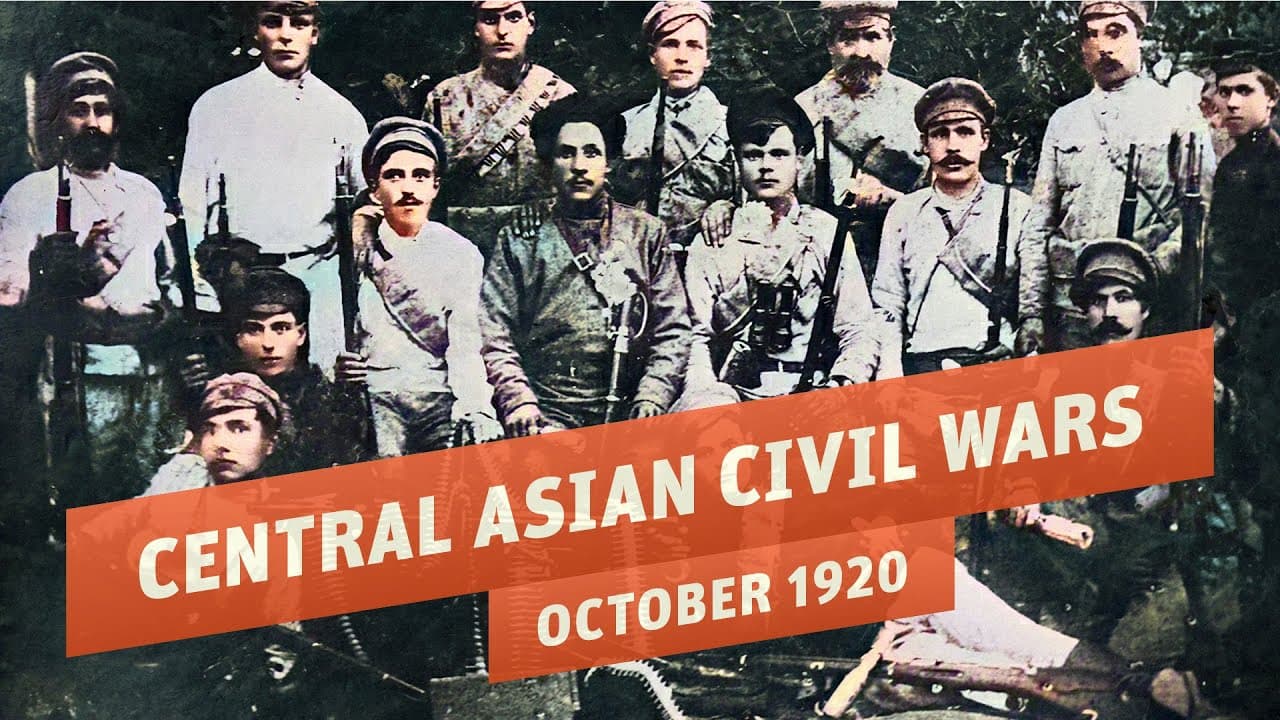
The Russian Civil War caused chaos and conflict in Central Asia.
Transcript
By the fall of 1920, the Russian Civil War had unleashed three years of ethnic and internal conflict in Central Asia, and there was no end in sight. In this episode we’ll catch up on the dramatic events of the former Russian imperial lands in Central Asia from the revolution right up to the end of 1920, 100 years ago . Events in the region are very... Read More
Key Insights
- The Russian Civil War created severe ethnic and internal conflict in Central Asia, with no resolution in sight by 1920.
- Russian conquest in the late 19th century led to demographic changes and tensions between settlers and nomadic Muslim herdsmen.
- The Basmachi movement emerged from the devastation of the 1916 revolt and famine, aiming to protect local traditions.
- The Jadids sought to reform Central Asian society along European lines, opposing both Russian settlers and traditionalist Basmachi.
- Various factions, including reformist Jadids and traditionalist Basmachis, vied for influence amidst the chaos of the Russian Civil War.
- The Bolsheviks aimed to regain control over Central Asia for strategic and economic reasons, leading to conflicts with local groups.
- Frunze's military and political strategies helped the Bolsheviks gain control over key regions, but challenges persisted.
- Despite Bolshevik victories, the Basmachi continued to resist, and tensions with the Jadids highlighted ongoing struggles for control.
Install to Summarize YouTube Videos and Get Transcripts
Explore YouTube Video Summarizer or Get YouTube Transcript Extractor
Questions & Answers
Q: What led to the rise of the Basmachi movement?
The Basmachi movement arose from the devastation caused by the 1916 revolt and subsequent famine in Central Asia. The movement consisted of local traditionalists who aimed to protect their homeland and preserve their customary way of life against Russian settlers and Central Asian intellectuals advocating for social reforms. The Basmachi relied on guerilla tactics and local support.
Q: Who were the Jadids and what did they aim to achieve?
The Jadids were a reformist cultural and intellectual movement in Central Asia that sought to modernize society along European lines. They believed that Islam had been corrupted by old elites and that education was key to societal reform. Opposing traditionalists like the Basmachi, they aimed to recreate Central Asian society around the concept of a nation, drawing inspiration from the Ottoman Empire and Young Turks.
Q: How did the Bolsheviks attempt to regain control over Central Asia?
The Bolsheviks aimed to regain control over Central Asia for strategic and economic reasons, fearing British influence and recognizing the region's valuable resources. They sent an envoy, Pyotr Kobozev, to establish control, limited Russian settler power, and created the Central Bureau of Muslim Communists (Musburo) to include locals in decision-making. They also collaborated with the Jadids initially, although this cooperation was short-lived.
Q: What challenges did Frunze face in suppressing the Basmachi movement?
Frunze faced significant challenges in suppressing the Basmachi movement, which exploited the region's difficult terrain and relied on local support. The Basmachi consisted of decentralized guerilla groups skilled in irregular warfare. Frunze implemented a strategy of cutting off local support, deploying mobile cavalry units, and using aircraft for reconnaissance. Despite some successes, the Basmachi continued to resist, retreating to remote areas.
Q: What was the outcome of the Bolshevik invasion of Bukhara?
The Bolshevik invasion of Bukhara, led by Frunze, resulted in the defeat of the emir's forces and the establishment of the Bukharan People's Soviet Republic. Despite the victory, the emir escaped, and the region remained politically unstable. The Bolsheviks worked with the Jadids to establish a Soviet republic, but tensions persisted due to differing visions for the region's future.
Q: How did the Jadids' vision differ from the Bolsheviks' goals?
The Jadids aimed to modernize Central Asian society along nationalist lines, emphasizing education and cultural reform. In contrast, the Bolsheviks sought central control and class-consciousness, focusing on spreading communist ideology. This fundamental disconnect led to tensions, as the Jadids paid lip service to communism while pursuing their own nationalist agenda on the ground.
Q: What role did the Bolsheviks assign to local actors in Central Asia?
The Bolsheviks recognized the importance of involving local actors to legitimize their control over Central Asia. They established the Central Bureau of Muslim Communists (Musburo) to include locals in decision-making. Frunze also courted local Jadids and communists, allowing them some leadership roles, although he eventually forced the Jadids to merge with the Communist Party, reflecting the Bolsheviks' desire for central control.
Q: What were the strategic and economic reasons for Bolshevik interest in Central Asia?
The Bolsheviks were interested in Central Asia for both strategic and economic reasons. Strategically, they feared British influence from India and Afghanistan's growing power. Economically, the region produced valuable resources, including cotton, oil, and food, which were crucial for the Bolshevik regime. Regaining control over Central Asia was vital for securing the revolution and stabilizing the region under Bolshevik rule.
Summary & Key Takeaways
-
The Russian Civil War caused significant turmoil in Central Asia, with various factions struggling for power amidst the chaos. The Basmachi movement, a guerilla force, sought to preserve traditional ways, while the reformist Jadids aimed to modernize society. The Bolsheviks intervened to secure strategic and economic interests, leading to ongoing conflict.
-
Central Asia experienced ethnic tensions and demographic changes following Russian conquest in the late 19th century. The Basmachi movement emerged from the devastation of the 1916 revolt and famine, while the Jadids sought societal reform. The region was politically fragmented, with multiple factions vying for influence during the Russian Civil War.
-
The Bolsheviks, led by Frunze, aimed to regain control over Central Asia, recognizing its strategic importance. They employed military and political strategies to suppress the Basmachi and other groups. Despite initial successes, the Bolsheviks faced ongoing resistance from local factions, highlighting the complexities of the region's political landscape.
Read in Other Languages (beta)
Share This Summary 📚
Summarize YouTube Videos and Get Video Transcripts with 1-Click
Try YouTube Summary with ChatGPT & Claude or YouTube Transcript Generator
Explore More Summaries from The Great War 📚




Summarize YouTube Videos and Get Video Transcripts with 1-Click
Try YouTube Summary with ChatGPT & Claude or YouTube Transcript Generator