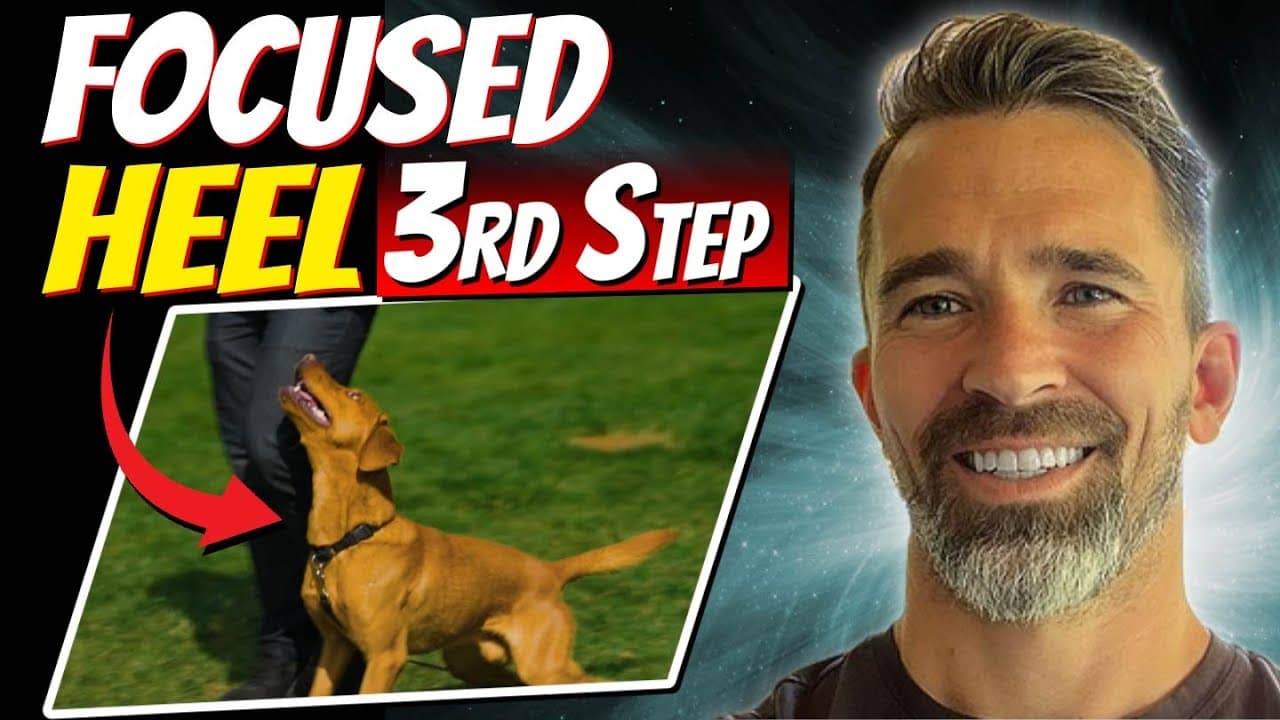
Teaching Your Dog a Focused Heel: Step 3
TL;DR
Guide to teaching your dog a focused heel with rewards.
Transcript
we were doing a lot of the power steering where we're just walking with our dog in the heel position working on those left about turns working on those right about turns all we're going to do now is we're just going to space out the reward for our dog while they maintain the position so just like the backwards follow exercise that we were doing the... Read More
Key Insights
- The exercise focuses on maintaining the heel position by spacing out rewards, encouraging the dog to look up and trust the handler.
- Using luring and reinforcement helps the dog stay in position while gradually reducing the frequency of rewards.
- Avoid leading the dog into obstacles to maintain their trust in focusing on the handler rather than their surroundings.
- Common issues include dogs forging ahead when they understand the command, requiring handlers to adjust speed and reward placement.
- Handlers should be cautious not to inadvertently prompt automatic sits during heel training by maintaining a consistent pace.
- Incorporating spins and directional changes keeps training dynamic and prevents the dog from anticipating commands.
- Training sessions should be varied and engaging, incorporating various commands and movements to maintain the dog's interest.
- Commands should be introduced gradually, with luring and assistance phased out as the dog becomes more proficient.
Install to Summarize YouTube Videos and Get Transcripts
Explore YouTube Video Summarizer or Get YouTube Transcript Extractor
Questions & Answers
Q: How can you maintain your dog's trust during heel training?
To maintain your dog's trust during heel training, avoid leading them into obstacles where they might stumble or become cautious. Ensure they can focus on you without worrying about their surroundings. This helps them trust your guidance and maintain focus during training.
Q: What common issue might arise when a dog starts understanding the heel command?
A common issue when a dog starts understanding the heel command is forging, where the dog moves ahead of the handler. This occurs because the dog becomes excited and motivated. Adjusting speed and reward placement can help manage this behavior effectively.
Q: Why is it important to vary training sessions?
Varying training sessions is important to keep the dog engaged and prevent them from anticipating commands. Incorporating different movements, commands, and exercises ensures the training remains dynamic and interesting, which helps maintain the dog's focus and enthusiasm.
Q: How should rewards be used during heel training?
During heel training, rewards should be spaced out to encourage the dog to maintain the position for longer periods. Initially, frequent rewards help establish the behavior, but gradually reducing them helps the dog learn to stay in position without constant reinforcement.
Q: What role does luring play in teaching a focused heel?
Luring plays a crucial role in teaching a focused heel by guiding the dog into the correct position and encouraging them to look up at the handler. It helps establish the behavior initially, but should be phased out as the dog becomes more proficient in maintaining the position independently.
Q: How can handlers prevent automatic sits during heel training?
Handlers can prevent automatic sits during heel training by maintaining a consistent pace and avoiding cues that might prompt the dog to sit. Keeping the training dynamic and adjusting speed can help prevent the dog from anticipating a sit command when the handler slows down.
Q: When should commands be introduced during training?
Commands should be introduced gradually during training, once the dog begins to understand the desired behavior. Initially, focus on guiding the dog into position with luring and rewards. As the dog becomes more proficient, start introducing verbal commands to reinforce the behavior.
Q: What are some tips for keeping training sessions engaging?
To keep training sessions engaging, incorporate a variety of commands, movements, and exercises. Use spins, directional changes, and different reward placements to maintain the dog's interest. Ensure the sessions are dynamic and interactive, which helps prevent the dog from becoming bored or anticipating commands.
Summary & Key Takeaways
-
This video guides viewers through the third step of teaching a dog to maintain a focused heel position using positive reinforcement techniques. It emphasizes the importance of spacing out rewards and encouraging the dog to look up at the handler while maintaining trust.
-
Handlers are advised to avoid leading the dog into obstacles to maintain trust and to adjust their speed and reward placement to prevent issues such as forging. The video also discusses the importance of keeping training sessions dynamic and engaging.
-
Commands should be introduced gradually, with luring and assistance phased out as proficiency increases. The video provides practical tips for incorporating spins and directional changes to keep training sessions interesting and prevent the dog from anticipating commands.
Read in Other Languages (beta)
Share This Summary 📚
Summarize YouTube Videos and Get Video Transcripts with 1-Click
Try YouTube Summary with ChatGPT & Claude or YouTube Transcript Generator
Explore More Summaries from Nate Schoemer 📚



Summarize YouTube Videos and Get Video Transcripts with 1-Click
Try YouTube Summary with ChatGPT & Claude or YouTube Transcript Generator