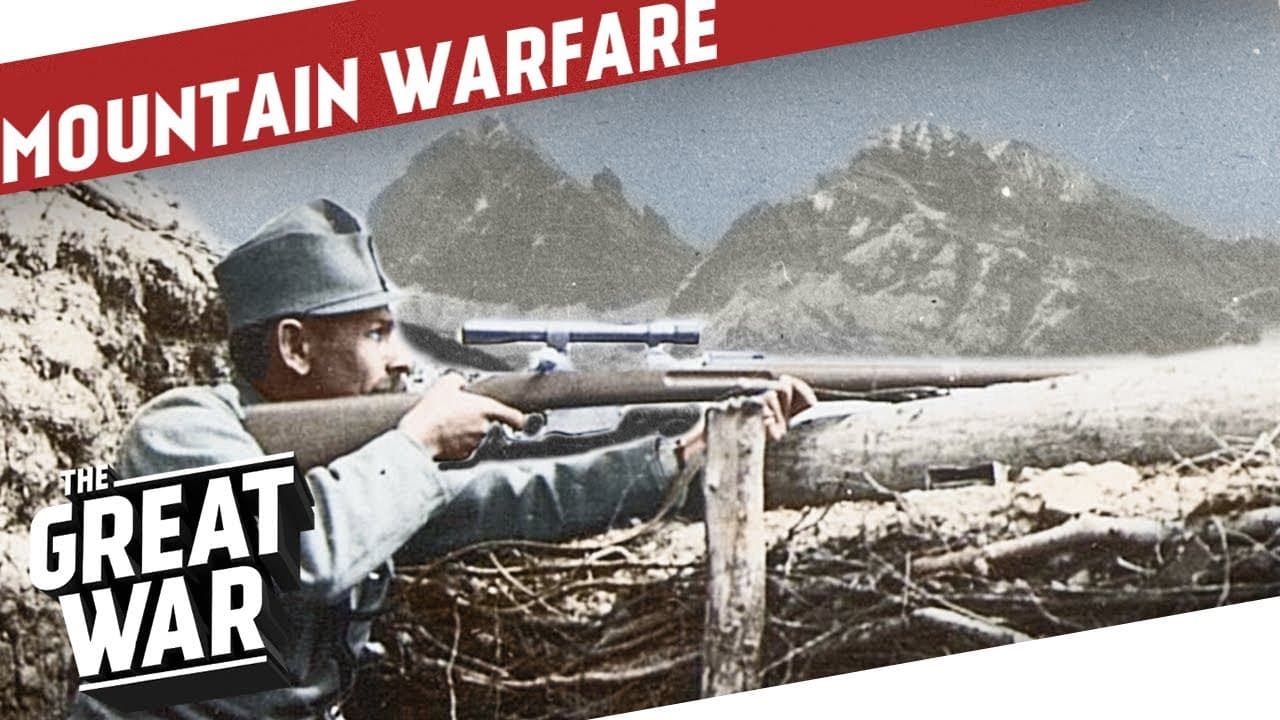
The Edge of the Abyss - Mountain Warfare On The Italian Front I THE GREAT WAR Special
TL;DR
WWI mountain warfare was brutal and required extreme resilience.
Transcript
There were over a dozen fronts on which the First World War was fought, on or near five continents It was fought in deserts, in mud, in snow, on land, at sea, and in the air. And it was fought in the mountains. I’m Indy Neidell; welcome to a Great war on the road special episode about mountain warfare in the first world war. Fighting in cold climat... Read More
Key Insights
- Mountain warfare in WWI was fought in harsh conditions, requiring soldiers to endure extreme cold, altitudes, and treacherous terrain.
- The Italian Alpini and Austrian Alpenjäger were specialized mountain troops, trained in skiing, climbing, and sharpshooting, essential for survival and combat in the mountains.
- The Italian front saw over 3,000 km of trenches and half a million soldiers quartered in mountain huts, highlighting the scale and intensity of the conflict.
- Winter conditions were brutal, with temperatures dropping to -30 degrees and heavy snowfalls isolating troops for weeks, demanding high-calorie diets and specialized winter gear.
- Both Italian and Austrian troops utilized the terrain for strategic advantage, employing mountain artillery and explosives to create avalanches and rockfalls as weapons.
- The mysticism and folklore of the mountains influenced the soldiers' mindset, with tales of supernatural beings and a deep Catholic faith providing psychological support.
- Despite being outnumbered, Austrian forces effectively used defensive tactics, engineering caverns and dugouts, and employing long-range artillery to offset Italian advances.
- The brutal nature of mountain warfare, with its sharp stones, high winds, and strategic use of explosives, made it one of the most challenging aspects of WWI, requiring exceptional bravery and resilience.
Install to Summarize YouTube Videos and Get Transcripts
Explore YouTube Video Summarizer or Get YouTube Transcript Extractor
Questions & Answers
Q: What made mountain warfare during WWI particularly challenging?
Mountain warfare during WWI was challenging due to the harsh environmental conditions, including extreme cold, high altitudes, and treacherous terrain. Soldiers had to endure freezing temperatures, heavy snowfall, and the risk of avalanches, which required specialized training and equipment to survive and fight effectively.
Q: Who were the specialized mountain troops in WWI?
The specialized mountain troops in WWI included the Italian Alpini and the Austrian Alpenjäger. These units were trained in climbing, skiing, and sharpshooting, which were essential skills for navigating the difficult mountain terrain and engaging in combat at high altitudes.
Q: How did the Italians and Austrians use the terrain to their advantage?
The Italians and Austrians used the mountainous terrain strategically by employing mountain artillery, explosives, and engineering works like trenches and dugouts. They created avalanches and rockfalls as weapons, and Austrian forces, often on the defensive, used long-range artillery to counter Italian advances from fortified positions.
Q: What role did folklore and religion play for the soldiers?
Folklore and religion played a significant role in providing psychological support to the soldiers. The mysticism of the mountains, with tales of vampires, fairies, and hobgoblins, combined with a deep Catholic faith, helped soldiers cope with the isolation and danger, as they believed saints protected them from harm.
Q: How did the weather impact the soldiers' ability to fight?
The weather had a severe impact on the soldiers' ability to fight, with early and harsh winters bringing temperatures down to nearly -30 degrees and heavy snowfalls isolating troops. This required high-calorie diets and specialized winter gear, as well as resilience to endure the cold and maintain combat readiness.
Q: What were some of the tactics used in mountain warfare?
Tactics in mountain warfare included the use of explosives to create avalanches, strategic positioning of mountain artillery, and the construction of trenches and dugouts adapted to the rocky terrain. Both sides used sharpshooters to control valleys and target enemy positions from a distance, making mobility and surprise attacks crucial.
Q: Why was mountain warfare considered one of the harshest parts of WWI?
Mountain warfare was considered one of the harshest parts of WWI due to the extreme environmental conditions, the physical demands on soldiers, and the brutal nature of combat. The combination of harsh weather, difficult terrain, and innovative, deadly tactics made it a uniquely challenging and deadly aspect of the war.
Q: What logistical challenges did the soldiers face in the mountains?
Logistical challenges in the mountains included transporting ammunition and supplies up steep slopes, often using mules and manpower. Maintaining supply lines in the harsh climate was difficult, and soldiers required high-calorie rations and specialized gear to survive. Isolation due to weather or combat further complicated logistics, necessitating self-sufficiency for extended periods.
Summary & Key Takeaways
-
Mountain warfare during World War I was characterized by extreme conditions, requiring specialized troops like the Italian Alpini and Austrian Alpenjäger. These soldiers were trained in climbing, skiing, and sharpshooting, essential for survival in the treacherous Alpine environment.
-
The Italian front saw extensive trench networks and harsh winters, with temperatures plummeting to -30 degrees. The soldiers needed high-calorie diets and specialized winter gear to survive, and the terrain was used strategically with artillery and explosives.
-
The conflict was brutal, with sharp stones, high winds, and avalanches causing significant casualties. Despite being outnumbered, Austrian forces effectively used defensive tactics and the terrain to their advantage, making mountain warfare one of the most challenging aspects of WWI.
Read in Other Languages (beta)
Share This Summary 📚
Summarize YouTube Videos and Get Video Transcripts with 1-Click
Try YouTube Summary with ChatGPT & Claude or YouTube Transcript Generator
Explore More Summaries from The Great War 📚

Summarize YouTube Videos and Get Video Transcripts with 1-Click
Try YouTube Summary with ChatGPT & Claude or YouTube Transcript Generator