What Happened to Wirecard's Missing Billions?
TL;DR
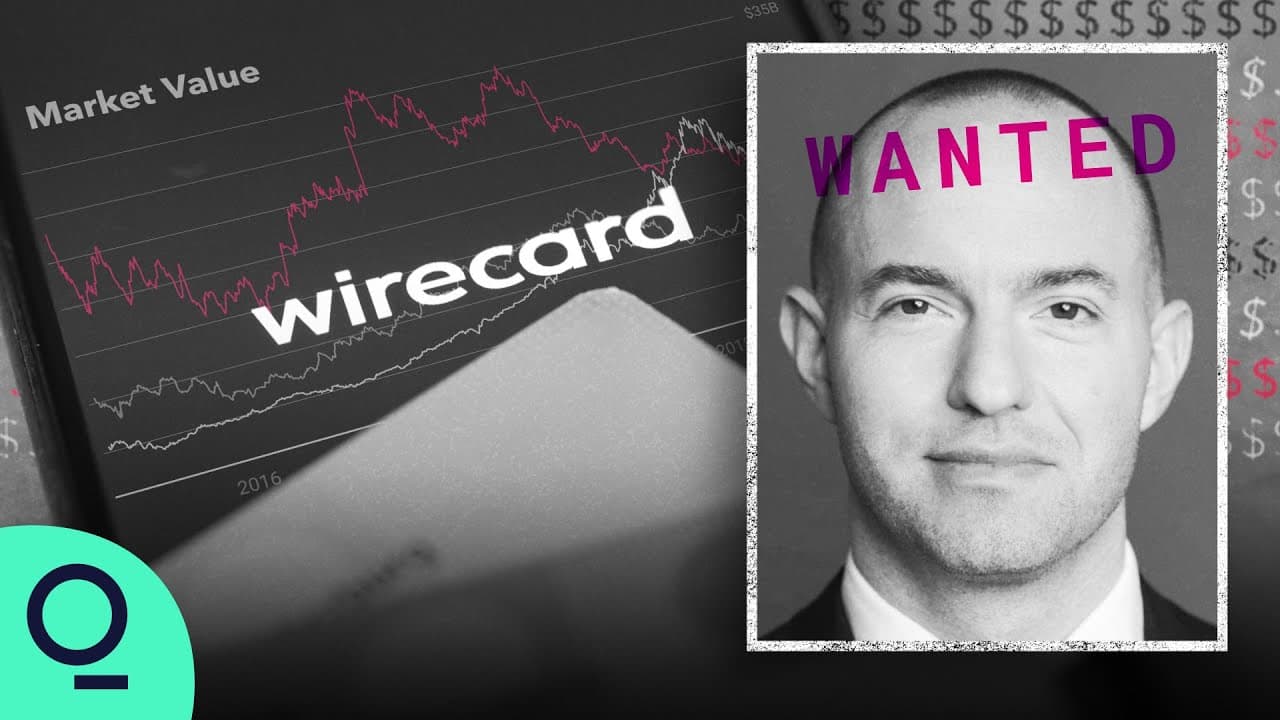
Wirecard, once a prominent German fintech company, collapsed due to fraudulent activities, with $2 billion unaccounted for. This scandal involved top executives, including COO Jan Marsalek, who remains missing. The company's rise and fall highlight significant failures in oversight and auditing, raising questions about corporate governance and accountability.
Transcript
The former chief executive of Wirecard, Marcus Braun, has been arrested. Auditors revealed that nearly $2 billion has gone missing. This has been a wild ride for Wirecard. You only need to look at the share price over the past five days. Wirecard is a payment processing company. At their height they were worth 22 billion euros. Wirecard was suppose... Read More
Key Insights
- Wirecard was a major German fintech company valued at over 22 billion euros at its peak.
- The company collapsed after auditors discovered nearly $2 billion missing from its accounts.
- Jan Marsalek, Wirecard's COO, disappeared amidst the scandal and is suspected of having ties to secret services.
- Wirecard's fraudulent activities involved fake profits and transactions, especially in Asia and the Middle East.
- The company's collapse is considered one of Germany's biggest financial scandals.
- Auditors Ernst & Young failed to detect the fraud for years, raising questions about auditing practices.
- Wirecard's downfall is a significant embarrassment for German institutions and highlights the need for better corporate oversight.
- Investors and creditors are seeking over 12 billion euros in repayments due to Wirecard's fraudulent activities.
Install to Summarize YouTube Videos and Get Transcripts
Explore YouTube Video Summarizer or Get YouTube Transcript Extractor
Questions & Answers
Q: How did Wirecard's fraudulent activities come to light?
Wirecard's fraudulent activities were exposed when auditors discovered nearly $2 billion missing from its accounts. This led to a deeper investigation revealing that the company had been faking profits and transactions, especially in regions where it lacked operating licenses. The Financial Times also published reports highlighting accounting irregularities, prompting further scrutiny.
Q: What role did Jan Marsalek play in the Wirecard scandal?
Jan Marsalek, Wirecard's COO, was a central figure in the scandal. He was involved in orchestrating the company's fraudulent activities, including fake profits and transactions. Marsalek disappeared amid the scandal, and his suspected ties to secret services and mercenaries add complexity to his role. His whereabouts remain unknown, making him a key figure in the investigation.
Q: Why did auditors fail to detect Wirecard's fraud earlier?
Auditors, particularly Ernst & Young, failed to detect Wirecard's fraud due to a lack of thorough oversight and reliance on misleading financial statements provided by the company. Wirecard's use of third-party partners to fake profits and transactions further complicated detection. The scandal highlights deficiencies in auditing practices and the need for more stringent regulatory measures.
Q: What impact did the Wirecard scandal have on investors and creditors?
The Wirecard scandal had a severe impact on investors and creditors, who are now seeking over 12 billion euros in repayments. The company's collapse wiped out its market value, leading to significant financial losses. The scandal also eroded trust in corporate governance and auditing practices, prompting calls for reforms to prevent similar incidents in the future.
Q: How did Wirecard's business model contribute to its collapse?
Wirecard's business model relied heavily on fraudulent activities, including fake profits and transactions through third-party partners in regions without operating licenses. This created a facade of success and growth, masking the company's unprofitability. The lack of transparency and oversight eventually led to its collapse when the fraud was exposed, highlighting the dangers of such deceptive practices.
Q: What were the consequences of Wirecard's collapse for Germany?
Wirecard's collapse was a major embarrassment for Germany, exposing significant failures in corporate oversight and auditing. It raised questions about the effectiveness of regulatory frameworks and the role of auditors in preventing fraud. The scandal damaged Germany's reputation in the fintech industry and led to calls for reforms to enhance corporate governance and accountability.
Q: What lessons can be learned from the Wirecard scandal?
The Wirecard scandal underscores the importance of robust auditing and regulatory frameworks to prevent corporate fraud. It highlights the need for greater transparency and accountability in financial reporting and the risks of unchecked corporate practices. The case also emphasizes the role of media and whistleblowers in uncovering fraud and the necessity for swift regulatory action to address such issues.
Q: How did Wirecard's rise and fall reflect changes in the German economy?
Wirecard's rise reflected Germany's shift towards fintech and electronic payments, positioning the company as a symbol of innovation. However, its fall exposed vulnerabilities in corporate governance and oversight. The scandal highlighted the need for Germany to balance innovation with regulatory measures to ensure sustainable growth and prevent similar corporate failures in the future.
Summary & Key Takeaways
-
Wirecard's collapse was triggered by the discovery of $2 billion missing, revealing extensive fraud. The company's fraudulent business model involved fake profits and transactions, particularly in Asia and the Middle East. The scandal highlights significant oversight failures by auditors like Ernst & Young and raises questions about corporate governance.
-
Jan Marsalek, Wirecard's COO, played a key role in the scandal and remains missing, with suspected ties to secret services. His disappearance adds a layer of intrigue to the case. Wirecard's rise and fall underscore the risks of unchecked corporate practices and the need for stricter regulations.
-
The Wirecard scandal is a major embarrassment for Germany, impacting investors and creditors seeking over 12 billion euros in repayments. The case emphasizes the importance of robust auditing and regulatory frameworks to prevent similar corporate fraud in the future.
Read in Other Languages (beta)
Share This Summary 📚
Summarize YouTube Videos and Get Video Transcripts with 1-Click
Try YouTube Summary with ChatGPT & Claude or YouTube Transcript Generator
Explore More Summaries from Bloomberg Originals 📚






Summarize YouTube Videos and Get Video Transcripts with 1-Click
Try YouTube Summary with ChatGPT & Claude or YouTube Transcript Generator