What Was the Dervish Movement in Somalia and Its Impact?
TL;DR
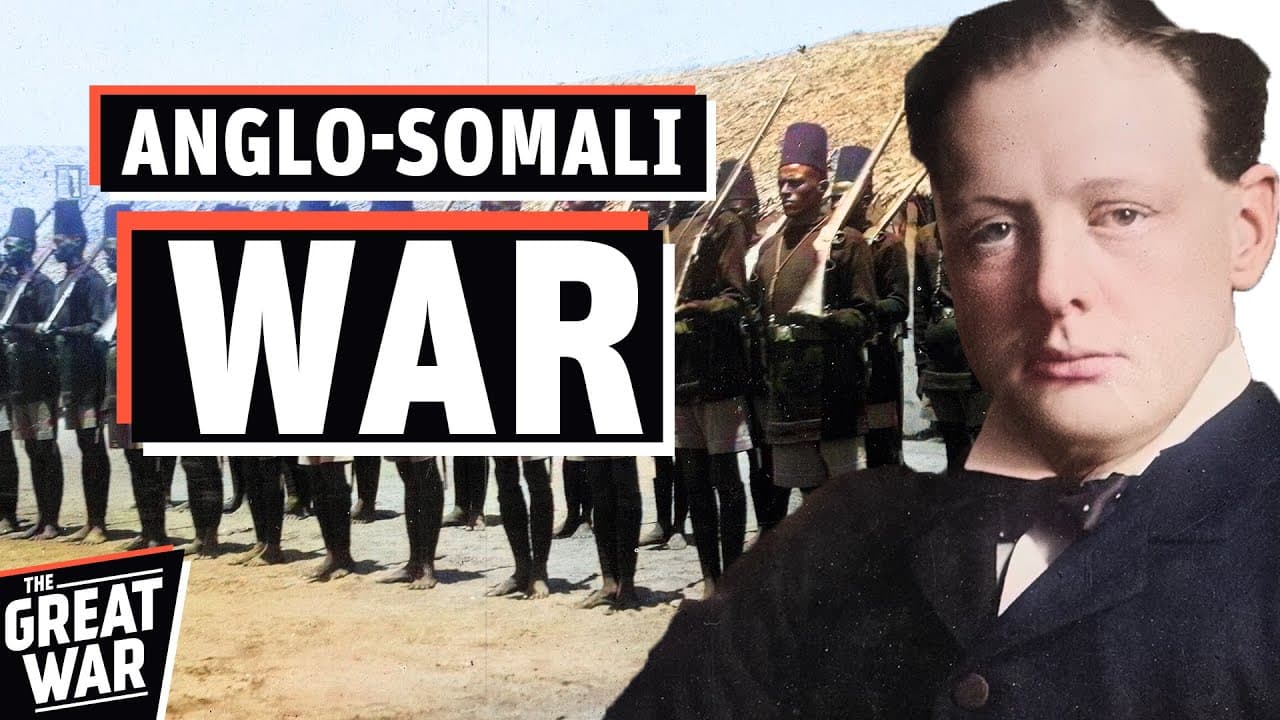
The Dervish Movement, led by Muhammad Abdullah Hassan, resisted European colonial powers in Somalia for 20 years through religious and nationalist fervor. Despite establishing a unique proto-state, the movement ultimately fell in 1920 due to British military campaigns, including the use of air power. Hassan remains a key figure in Somali history, epitomizing resistance against colonialism and early nationalist sentiments.
Transcript
hi I'm Jesse Alexander and welcome to the Great War the parts of East Africa inhabited by Somali peoples had been colonized by the European powers relatively late in the 19th century by the 1890s the region was Loosely divided between the British the French and the Italians this foreign presence led to a resistance movement and a religious revival ... Read More
Key Insights
- The Dervish Movement, led by Muhammad Abdullah Hassan, resisted European colonial powers in Somalia for two decades, starting in the late 19th century.
- Hassan's movement was driven by religious revival and anti-colonial nationalism, challenging the presence of British, Italian, and French forces in the region.
- Hassan established a proto-state with a unique theocratic and martial structure, differing from traditional Somali societal norms.
- The Dervish State faced internal and external challenges, including tribal conflicts, colonial military campaigns, and eventual isolation.
- The British and Italians employed military and diplomatic strategies to contain Hassan's influence, culminating in a decisive campaign in 1920.
- The introduction of air power by the British was a significant factor in the final campaign against the Dervish forces, showcasing early use of aviation in colonial warfare.
- Despite his eventual defeat, Hassan remains a significant figure in Somali history, symbolizing resistance and nationalism.
- The end of the Dervish Movement did not bring peace to Somalia, as colonial interests and tribal conflicts persisted.
Install to Summarize YouTube Videos and Get Transcripts
Explore YouTube Video Summarizer or Get YouTube Transcript Extractor
Questions & Answers
Q: What motivated Muhammad Abdullah Hassan to lead the Dervish Movement?
Muhammad Abdullah Hassan was motivated by a combination of religious revival and anti-colonial nationalism. His strict interpretation of Islam, influenced by the Wahhabist revival, and his opposition to European colonial presence in Somalia drove him to lead a resistance movement. These motivations were intertwined, as he viewed foreign influence as a threat to both his religious and national identity.
Q: How did the Dervish Movement challenge traditional Somali society?
The Dervish Movement, under Hassan's leadership, introduced a theocratic and martial structure that was unique in Somali society. Traditionally, Somali society was more egalitarian, with independent pastoral tribes lacking a unifying ideology. Hassan's movement centralized authority under his leadership, enforced strict religious practices, and sought to unite various tribes under a common cause, challenging the established social norms.
Q: What role did air power play in the British campaign against the Dervish Movement?
Air power played a significant role in the British campaign against the Dervish Movement in 1920. The British employed aircraft to conduct surprise attacks, which were unexpected by Hassan and his followers. The psychological impact of air raids, combined with the physical destruction caused by the bombings, contributed to the collapse of the Dervish resistance. This marked one of the early uses of aviation in colonial warfare.
Q: How did internal conflicts affect the Dervish Movement?
Internal conflicts significantly affected the Dervish Movement, as tribal rivalries and dissent within Hassan's own ranks posed challenges. Disputes over religious practices and leadership decisions led to revolts and desertions. Additionally, the movement's reliance on certain tribes created tensions, as Hassan's pan-tribal ideology struggled to maintain cohesion amidst traditional tribal divisions and external pressures.
Q: What were the British and Italian strategies to contain the Dervish Movement?
The British and Italians employed a combination of military and diplomatic strategies to contain the Dervish Movement. They conducted military campaigns to weaken Hassan's forces and established treaties to create buffer states. The British also implemented blockades and supported rival Somali tribes to isolate the Dervish State. These strategies aimed to limit Hassan's influence and prevent further instability in the region.
Q: Why did the Dervish Movement ultimately fail?
The Dervish Movement ultimately failed due to a combination of factors, including military defeats, internal dissent, and external isolation. The British campaign in 1920, utilizing air power, dealt a significant blow to Hassan's forces. Additionally, the lack of support from potential allies, such as the Ottoman Empire and Ethiopia, left the movement vulnerable. The inability to maintain a stable and cohesive state further contributed to its downfall.
Q: What is Muhammad Abdullah Hassan's legacy in Somali history?
Muhammad Abdullah Hassan's legacy in Somali history is multifaceted. He is remembered as a symbol of resistance against colonialism and a proponent of Somali nationalism. To the British, he was known as the 'Mad Mulla,' while to many Somalis, he is considered a national hero and a significant historical figure. His leadership and the Dervish Movement's impact remain central to discussions of Somali identity and history.
Q: How did the end of the Dervish Movement affect Somalia?
The end of the Dervish Movement did not bring peace to Somalia. The region remained unstable due to ongoing tribal conflicts and competing colonial interests from the British and Italians. The power vacuum left by Hassan's death led to further disputes among Somali tribes, and colonial powers continued to exert influence, delaying the region's political and economic settlement. Instability persisted in the Horn of Africa for years to come.
Summary & Key Takeaways
-
The Dervish Movement in Somalia, led by Muhammad Abdullah Hassan, resisted British, Italian, and French colonial powers for 20 years, starting in the late 19th century. Hassan's leadership was characterized by religious fervor and anti-colonial nationalism, establishing a unique proto-state in the region.
-
Hassan's Dervish State faced numerous challenges, including internal tribal conflicts and external colonial military campaigns. Despite some successes, the movement was eventually isolated and weakened, leading to its downfall in 1920 after a British military campaign utilizing air power.
-
Muhammad Abdullah Hassan remains a significant historical figure in Somalia, representing resistance against colonialism and the fight for Somali nationalism. The fall of the Dervish Movement did not end instability in the region, as colonial and tribal tensions continued.
Read in Other Languages (beta)
Share This Summary 📚
Summarize YouTube Videos and Get Video Transcripts with 1-Click
Try YouTube Summary with ChatGPT & Claude or YouTube Transcript Generator
Explore More Summaries from The Great War 📚




Summarize YouTube Videos and Get Video Transcripts with 1-Click
Try YouTube Summary with ChatGPT & Claude or YouTube Transcript Generator