The Puppy Training Advice You’ll Wish You Heard Sooner
TL;DR
Expert advice on puppy training, socialization, and avoiding common pitfalls.
Transcript
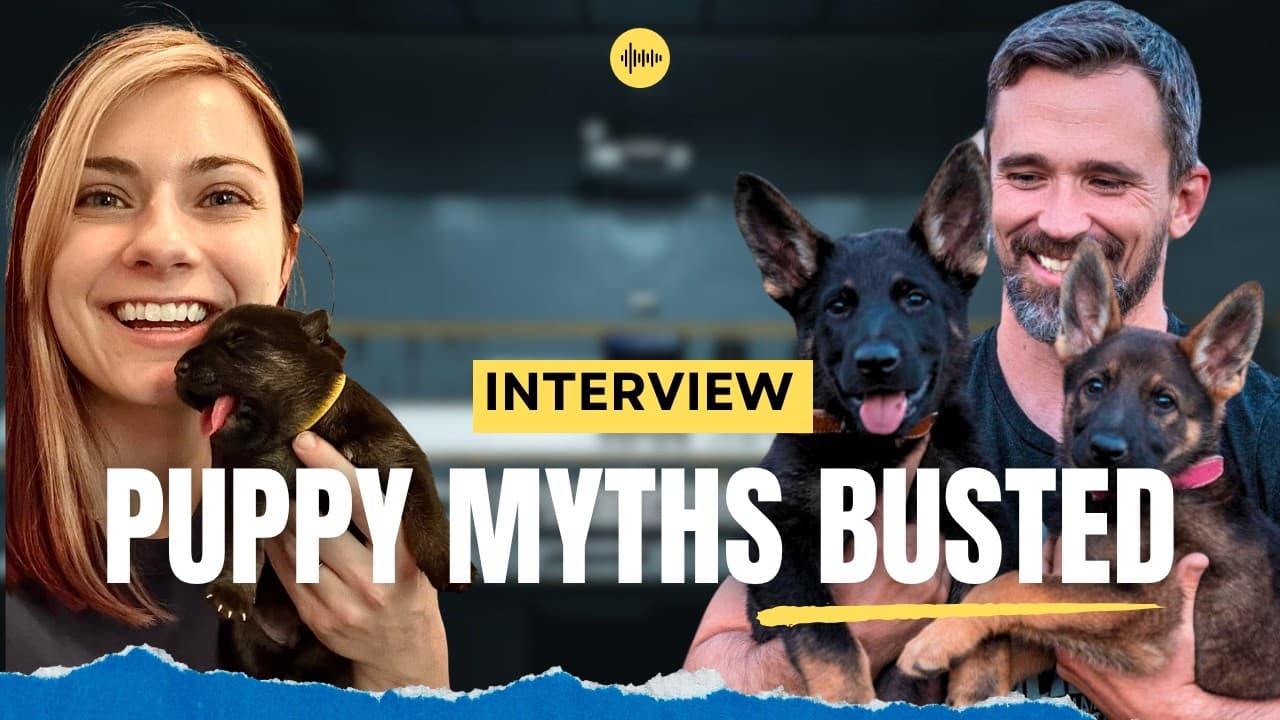
today's guest is Moren Cuchinella a master dog trainer competitor and founder of Spirited K9 based in Blue Ridge Georgia anything that makes it so like you have to control every action or stop your puppy from being a puppy I really wouldn't listen to that advice from training her first German Shepherd when she was 16 to perform over 100 behaviors i... Read More
Key Insights
- Moren Cuchinella emphasizes the importance of allowing puppies to be puppies, cautioning against overly controlling advice that stifles natural behaviors.
- Socialization is crucial but should focus on quality interactions with known dogs rather than quantity, ensuring safe and positive experiences.
- Crate training is vital for safety, travel, and emergencies, teaching puppies to accept and relax in their crates.
- Punishment in dog training is often misunderstood; it can be mild and should be used to set boundaries without creating fear.
- Muzzle training, like crate training, is a proactive step that can be beneficial even if a dog is not aggressive.
- A tired puppy is not a substitute for training; exercise should complement behavior correction and training efforts.
- Watching puppies closely prevents unwanted behaviors from becoming habits, emphasizing supervision when not crated.
- Enjoyment and play are crucial in building a strong relationship with puppies, balancing training with positive interactions.
Install to Summarize YouTube Videos and Get Transcripts
Explore YouTube Video Summarizer or Get YouTube Transcript Extractor
Questions & Answers
Q: What is the main advice Moren gives about puppy training?
Moren advises allowing puppies to be themselves, avoiding overly controlling methods that prevent natural exploration and learning. She emphasizes the importance of play and positive reinforcement to build strong relationships and prevent behavioral issues.
Q: How should new puppy owners approach socialization?
Socialization should focus on quality interactions with known and trusted dogs rather than quantity. This ensures that puppies have positive experiences and learn appropriate social behaviors without overwhelming or negative encounters.
Q: What is the role of crate training in puppy development?
Crate training is essential for safety, travel, and emergencies. It teaches puppies to accept and relax in their crates, preventing destructive behaviors when unsupervised and providing a safe space for rest and security.
Q: How does Moren view punishment in dog training?
Moren views punishment as often misunderstood, advocating for mild corrections that set boundaries without creating fear. She stresses the importance of understanding the context and ensuring that any correction is fair and proportional to the behavior.
Q: Why is muzzle training recommended even for non-aggressive dogs?
Muzzle training is a proactive measure that prepares dogs for situations where they might be in pain or need restraint, such as emergencies or vet visits. Proper introduction ensures that dogs accept the muzzle without fear or resistance.
Q: Is tiring out a puppy a substitute for training?
No, tiring out a puppy is not a substitute for training. While exercise is beneficial, it should complement behavior correction and training efforts, not replace them. Training addresses specific behaviors and ensures puppies learn appropriate actions.
Q: What is the importance of supervision in puppy training?
Supervision is crucial in preventing unwanted behaviors from becoming habits. By closely watching puppies, owners can intervene and redirect behaviors, ensuring that puppies do not learn to engage in destructive or undesirable actions.
Q: How can owners balance training and enjoyment with their puppies?
Owners should balance training with play and positive interactions, ensuring that puppies enjoy their time and develop strong bonds. This approach fosters a positive learning environment and encourages puppies to engage willingly in training activities.
Summary & Key Takeaways
-
Moren Cuchinella, a master dog trainer, shares insights on effective puppy training, emphasizing the importance of allowing puppies to explore and learn naturally. She advises against overly controlling approaches that can lead to behavioral issues.
-
Socialization is highlighted as a key component of puppy development, but it should be approached with quality interactions over quantity. Crate training is recommended for safety and as a confidence-building tool.
-
Punishment and dominance theories are discussed, with a focus on setting boundaries without fear. The importance of supervision and play in training is emphasized, ensuring puppies develop into well-adjusted dogs.
Read in Other Languages (beta)
Share This Summary 📚
Summarize YouTube Videos and Get Video Transcripts with 1-Click
Try YouTube Summary with ChatGPT & Claude or YouTube Transcript Generator
Explore More Summaries from Nate Schoemer 📚


Summarize YouTube Videos and Get Video Transcripts with 1-Click
Try YouTube Summary with ChatGPT & Claude or YouTube Transcript Generator