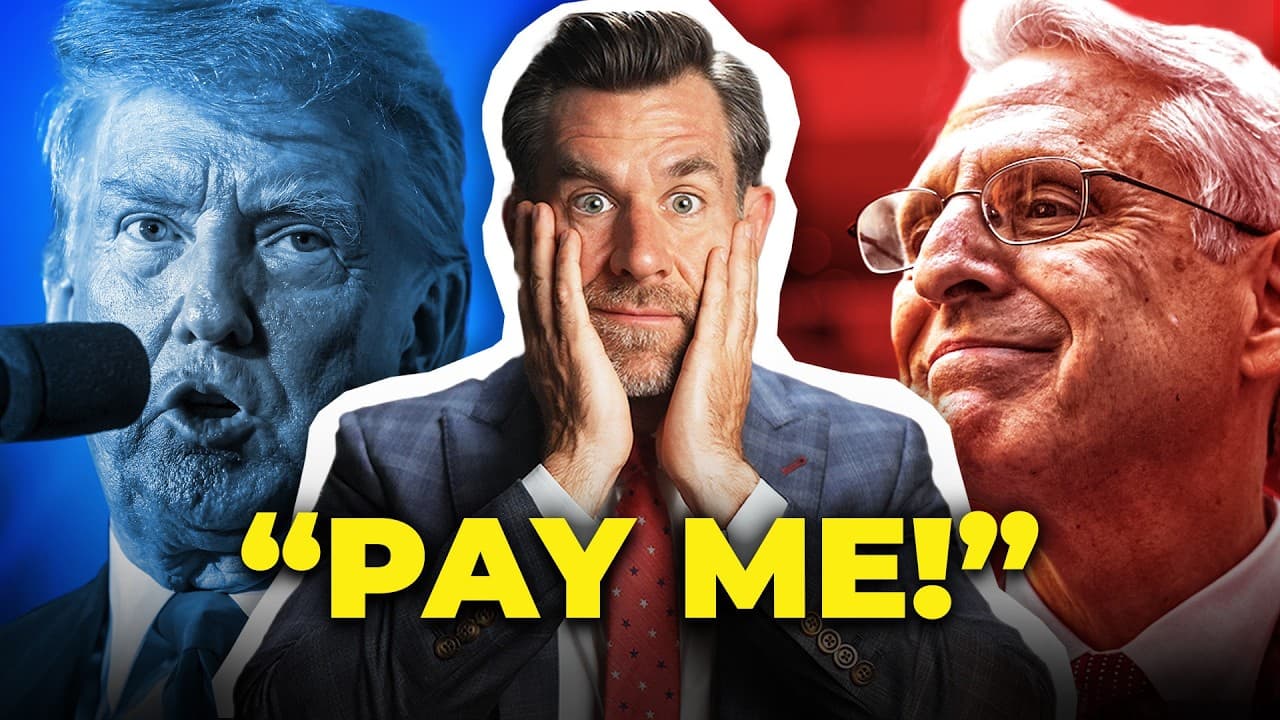
Can Trump Sue the DOJ Over Mar-a-Lago Raid?
TL;DR
Donald Trump's potential lawsuit against the Department of Justice hinges on claims of malicious prosecution and abuse of process following the Mar-a-Lago raid. However, legal obstacles such as sovereign immunity and the Federal Tort Claims Act make the case unlikely to succeed. The lawsuit seems more like a political maneuver than a viable legal strategy.
Transcript
- Now I know it's stiff competition, but this might be Donald Trump's dumbest suit yet. His lawyers say he's going to sue the Department of Justice for hundreds of millions of dollars for, I guess being mean to him. No, I don't think that's going to work based on the law, unless he's elected president again, because he could just order the DOJ to j... Read More
Key Insights
- Donald Trump plans to sue the Department of Justice over the Mar-a-Lago raid.
- Sovereign immunity generally prevents lawsuits against the government unless waived.
- The Federal Tort Claims Act specifies limited circumstances for suing the government.
- Trump's claims include malicious prosecution and abuse of process, which are hard to prove.
- The lawsuit may be more of a political strategy than a legal one.
- Trump's lawyer argues the raid was politically motivated to stop his re-election.
- Legal experts believe the lawsuit is unlikely to succeed due to legal barriers.
- If Trump wins the presidency, he could potentially influence the outcome of the case.
Install to Summarize YouTube Videos and Get Transcripts
Explore YouTube Video Summarizer or Get YouTube Transcript Extractor
Questions & Answers
Q: Can Donald Trump successfully sue the DOJ over the Mar-a-Lago raid?
Donald Trump's potential lawsuit against the DOJ over the Mar-a-Lago raid faces significant legal challenges. Sovereign immunity generally protects the government from such lawsuits unless immunity is waived. Additionally, the Federal Tort Claims Act does not cover claims of malicious prosecution and abuse of process, making the lawsuit unlikely to succeed.
Q: What is sovereign immunity in the context of Trump's lawsuit?
Sovereign immunity is a legal doctrine that protects the government from being sued without its consent. In the context of Trump's lawsuit against the DOJ, it means that he cannot proceed with the lawsuit unless the government waives this immunity. This doctrine presents a significant barrier to Trump's legal claims regarding the Mar-a-Lago raid.
Q: What legal obstacles does Trump's lawsuit face under the Federal Tort Claims Act?
The Federal Tort Claims Act allows for lawsuits against the government in specific circumstances, such as property damage or personal injury caused by government employees. However, it explicitly excludes claims like malicious prosecution and abuse of process, which are central to Trump's case. This exclusion poses a major legal obstacle for his lawsuit against the DOJ.
Q: Why do legal experts doubt the success of Trump's lawsuit against the DOJ?
Legal experts doubt the success of Trump's lawsuit due to the legal barriers posed by sovereign immunity and the Federal Tort Claims Act. These doctrines limit the circumstances under which the government can be sued, and Trump's claims of malicious prosecution and abuse of process are particularly difficult to prove. The lawsuit appears more political than legal.
Q: What are the political implications of Trump's lawsuit against the DOJ?
Trump's lawsuit against the DOJ seems to be more of a political strategy than a serious legal endeavor. By filing the lawsuit, Trump can rally his supporters and frame the DOJ's actions as politically motivated. If he wins the presidency, he could potentially influence the outcome of the case, making the lawsuit a tool for political leverage.
Q: How does Trump's lawsuit relate to his previous legal actions?
Trump's lawsuit against the DOJ is consistent with his history of using legal actions as political tools. He previously filed lawsuits against figures like Hillary Clinton and James Comey, which were dismissed as frivolous. These actions often serve to rally his base and generate media attention, rather than achieve legal victories.
Q: What role does Trump's lawyer play in the DOJ lawsuit?
Trump's lawyer, Daniel Epstein, is central to the DOJ lawsuit, articulating the claims of malicious prosecution and abuse of process. Epstein argues that the Mar-a-Lago raid was politically motivated, aiming to prevent Trump's re-election. However, legal experts criticize the viability of these claims, given the legal constraints posed by sovereign immunity and the Federal Tort Claims Act.
Q: What is the Federal Tort Claims Act and how does it impact Trump's lawsuit?
The Federal Tort Claims Act allows individuals to sue the government for certain torts, like property damage or personal injury, caused by federal employees. However, it excludes claims such as malicious prosecution and abuse of process, which are central to Trump's lawsuit. This exclusion significantly impacts the viability of Trump's case against the DOJ.
Summary & Key Takeaways
-
Donald Trump plans to sue the Department of Justice over the Mar-a-Lago raid, claiming malicious prosecution and abuse of process. However, sovereign immunity and the Federal Tort Claims Act present significant legal challenges. The lawsuit appears to be more of a political maneuver than a viable legal strategy, with experts doubting its success.
-
The Federal Tort Claims Act limits the circumstances under which the government can be sued, and Trump's claims of malicious prosecution and abuse of process face high legal hurdles. His lawyer argues the raid was politically motivated to prevent Trump's re-election, but legal experts remain skeptical about the lawsuit's viability.
-
Trump's potential lawsuit against the DOJ is seen as unlikely to succeed due to sovereign immunity and the Federal Tort Claims Act. The case seems to be a political tactic rather than a serious legal endeavor, with Trump's team using it to rally support and possibly influence future political outcomes.
Read in Other Languages (beta)
Share This Summary 📚
Summarize YouTube Videos and Get Video Transcripts with 1-Click
Try YouTube Summary with ChatGPT & Claude or YouTube Transcript Generator
Explore More Summaries from LegalEagle 📚





Summarize YouTube Videos and Get Video Transcripts with 1-Click
Try YouTube Summary with ChatGPT & Claude or YouTube Transcript Generator