Lew: U.S. Can't Shut Itself Off From Mexico
TL;DR
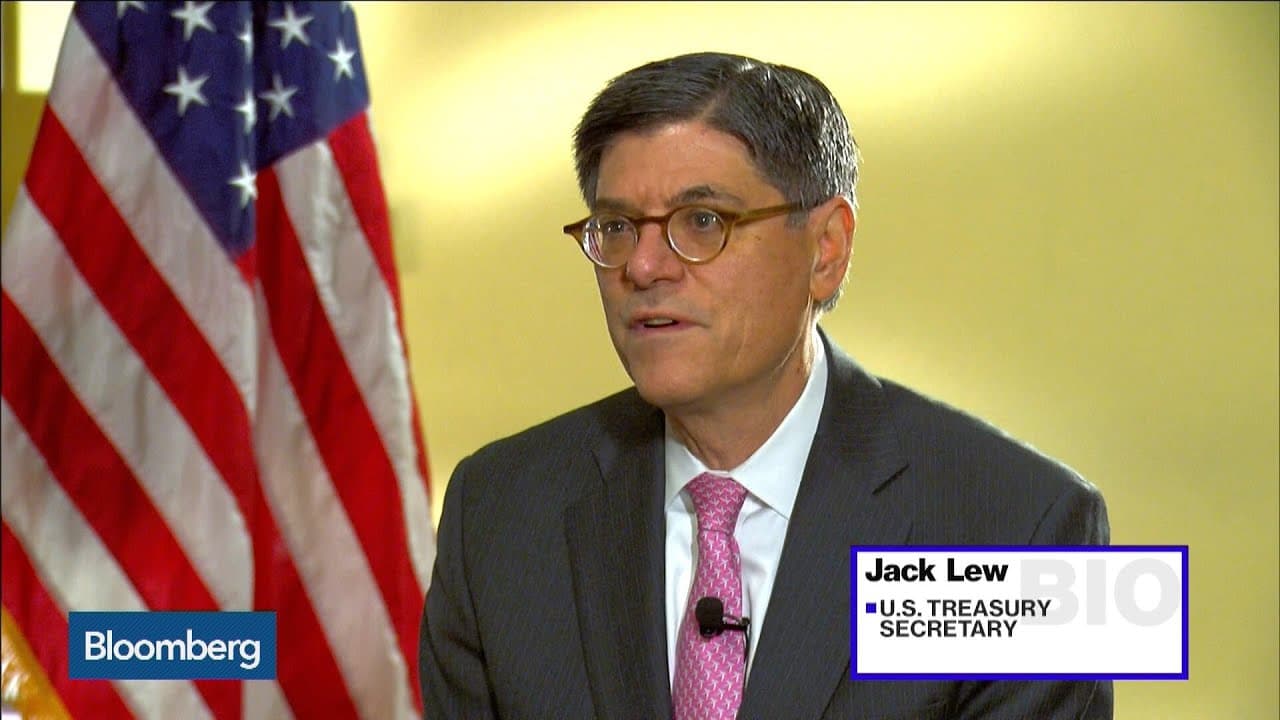
Jack Lew emphasizes interconnected U.S.-Mexico relations and critiques new Saudi Arabia legislation.
Transcript
but first let me ask you about Saudi Arabia the vote that we had yesterday the White House is waited on the politics of it potential diplomatic ramifications of it calling it the most embarrassing thing the Senate has done in several decades I'm interested in the economic ramifications however we had Saudi Arabia warning that they might sell off th... Read More
Key Insights
- Jack Lew criticizes recent U.S. legislation allowing 9/11 victim families to sue Saudi Arabia, citing potential negative diplomatic and economic repercussions.
- Lew expresses confidence in the U.S. Treasury market's resilience despite potential Saudi treasury sell-offs, emphasizing its depth and liquidity.
- He highlights the importance of stable fiscal and monetary policies in weathering fluctuating commodity prices, using Mexico as a positive example.
- Lew underscores the interconnectedness of U.S. and Mexican economies, stressing the importance of cooperation and mutual growth.
- He discusses global anxiety over technology and globalization, advocating for policies that ensure economic growth benefits all individuals.
- Lew comments on the importance of maintaining London as a financial hub post-Brexit, urging constructive engagement between the UK and EU.
- He debates with EU Commissioner Vestager on retroactive tax law changes, emphasizing the need for predictable tax environments.
- Lew outlines the importance of structural reforms, fiscal policies, and international cooperation in driving global economic growth.
Install to Summarize YouTube Videos and Get Transcripts
Explore YouTube Video Summarizer or Get YouTube Transcript Extractor
Questions & Answers
Q: What is Jack Lew's stance on the new U.S. legislation regarding Saudi Arabia?
Jack Lew criticizes the new U.S. legislation that allows families of 9/11 victims to sue Saudi Arabia, describing it as 'very bad legislation.' He argues that it could have negative diplomatic and economic ramifications, potentially affecting U.S. interests and its representatives abroad. He hopes Congress will reconsider the legislation.
Q: How does Jack Lew view the U.S. Treasury market in light of potential Saudi sell-offs?
Jack Lew expresses confidence in the resilience of the U.S. Treasury market, stating it is the deepest and most liquid in the world. Despite Saudi Arabia's warning of potentially selling off their treasuries, Lew believes that foreign investment will continue and that the U.S. Treasury market will remain stable and attractive.
Q: What does Jack Lew say about the importance of the U.S.-Mexico economic relationship?
Jack Lew emphasizes the critical importance of the U.S.-Mexico economic relationship, highlighting its significance for both countries' economic and security interests. He points out the interconnectedness of their economies, with substantial trade and movement of people, and stresses the need for cooperation and mutual success to ensure both nations thrive together.
Q: How does Jack Lew propose addressing global anxiety about technology and globalization?
Jack Lew suggests that the answer to global anxiety about technology and globalization lies in ensuring economic growth benefits all individuals. He advocates for investments in infrastructure, education, and childcare to improve people's lives and opportunities. By addressing these concerns, governments can demonstrate their commitment to making economic growth inclusive and beneficial for everyone.
Q: What is Jack Lew's perspective on Brexit and London's financial hub status?
Jack Lew underscores the importance of maintaining London as a financial hub post-Brexit, emphasizing the deep economic and strategic ties between the U.S. and UK. He urges constructive engagement between the UK and EU to ensure maximum integration and stability. Lew highlights the need for patience as the complex process unfolds, advocating for amicable negotiations to achieve positive outcomes.
Q: What disagreement does Jack Lew have with EU Commissioner Vestager?
Jack Lew disagrees with EU Commissioner Vestager's approach to retroactive tax law changes, arguing that it creates uncertainty and shifts tax burdens unfairly. He believes that rewriting tax laws retroactively undermines predictable tax environments and could discourage international business confidence. Lew emphasizes the need for transparent and consistent tax policies to foster economic stability.
Q: How does Jack Lew view the role of structural reforms and fiscal policies in global economic growth?
Jack Lew highlights the importance of structural reforms, fiscal policies, and international cooperation in driving global economic growth. He notes that countries are increasingly willing to use fiscal tools to stimulate their economies. Lew emphasizes the need for sound monetary policies, structural reforms, and fiscal measures tailored to each country's circumstances to foster sustainable economic development.
Q: What does Jack Lew suggest as a model for economic resilience?
Jack Lew cites the U.S. economy as a model for resilience, highlighting its ability to bounce back from economic challenges. He attributes this to a combination of sound fiscal, monetary, and structural policies, including decisive actions to address and fix systemic issues. Lew encourages other countries to adopt similar balanced policy approaches to enhance their economic resilience and growth prospects.
Summary & Key Takeaways
-
Jack Lew critiques U.S. legislation allowing lawsuits against Saudi Arabia, highlighting potential economic and diplomatic issues. He reaffirms the strength of U.S. Treasury markets amidst potential Saudi sell-offs. Lew emphasizes the importance of sound economic policies in managing commodity price fluctuations, citing Mexico as a positive example of fiscal and monetary stability.
-
Lew stresses the interconnectedness of the U.S. and Mexican economies, advocating for mutual growth and cooperation. He addresses global concerns about technology and globalization, calling for policies that ensure economic growth benefits individuals. Lew also discusses the significance of maintaining London's financial hub status post-Brexit, urging constructive UK-EU engagement.
-
In discussions with EU Commissioner Vestager, Lew opposes retroactive tax law changes, advocating for predictable tax environments. He highlights the role of structural reforms, fiscal policies, and international cooperation in driving global economic growth, noting increased willingness among countries to use fiscal tools for economic improvement.
Read in Other Languages (beta)
Share This Summary 📚
Summarize YouTube Videos and Get Video Transcripts with 1-Click
Try YouTube Summary with ChatGPT & Claude or YouTube Transcript Generator
Explore More Summaries from Bloomberg Originals 📚




Summarize YouTube Videos and Get Video Transcripts with 1-Click
Try YouTube Summary with ChatGPT & Claude or YouTube Transcript Generator