How China Is Rewiring Its Faltering Economy
TL;DR
China shifts focus to high-tech industries amid economic challenges.
Transcript
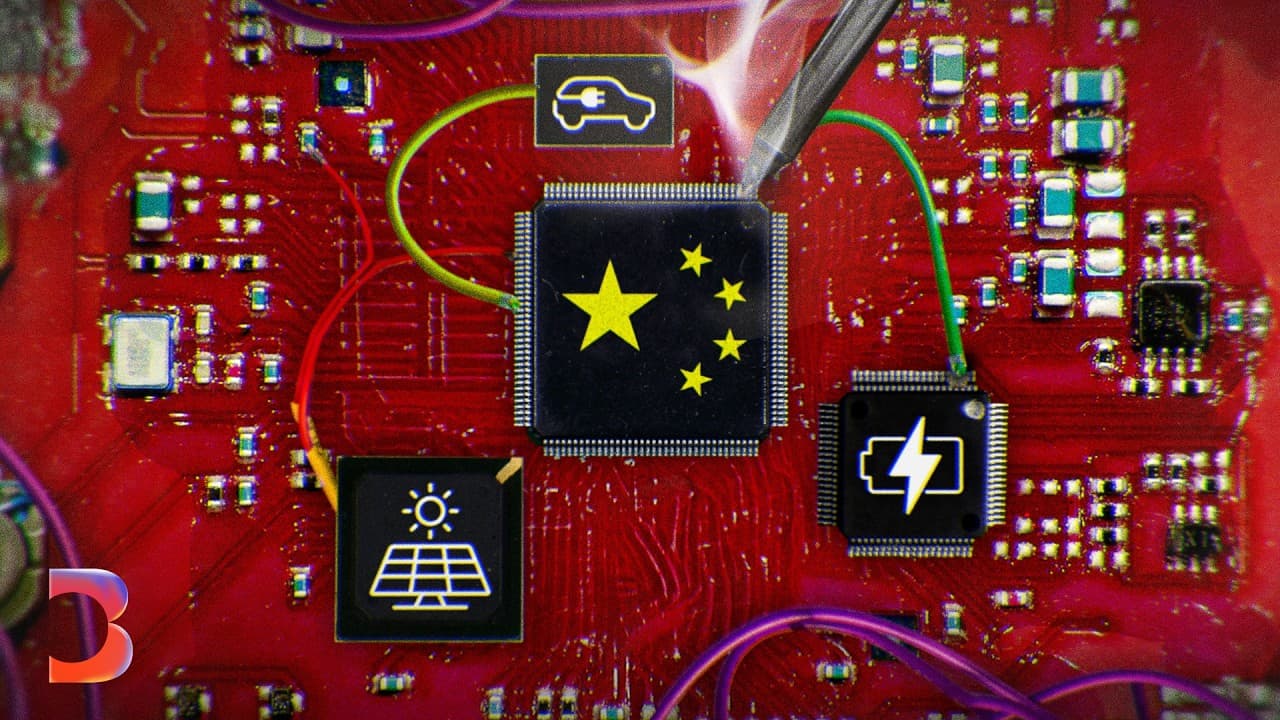
China is building a whole new economic engine, and it's a lot shinier than the last one. The prolonged slump of China's property market is dragging down consumer confidence and weighing on an economy already suffering from the effects of low productivity in heavy industry and cheap manufacturing. So Beijing needs a replacement and it's focused on c... Read More
Key Insights
- China is transitioning from low-end manufacturing to high-tech industries like solar panels, electric vehicles, and semiconductors, aiming for sustainable growth.
- The property market slump is affecting consumer confidence and economic stability, necessitating a shift to new economic drivers.
- Xi Jinping's government supports high-tech growth with policies offering cheap land, credit, and easy permits, driving global dominance in solar panel manufacturing.
- China's booming electric vehicle industry, led by companies like BYD, is positioning the country as a global automotive heavyweight.
- Geopolitical tensions with the US and Europe, including tariffs and export controls, challenge China's tech ascent but also push for self-sufficiency.
- China's semiconductor industry, despite innovations, lags behind global leaders due to export controls and technological barriers.
- The economic transformation aims to reduce reliance on exports by fostering domestic consumption, though consumer spending remains a challenge.
- China's growth strategy mirrors South Korea's shift from heavy industry to technology, but global demand limitations pose challenges for similar success.
Install to Summarize YouTube Videos and Get Transcripts
Explore YouTube Video Summarizer or Get YouTube Transcript Extractor
Questions & Answers
Q: What is China's new economic focus?
China is focusing on transitioning from low-end manufacturing to high-tech industries such as solar panels, electric vehicles, and semiconductors. This shift aims to create a more sustainable, lucrative economy, moving away from its previous reliance on property and infrastructure-driven growth.
Q: How is the property market affecting China's economy?
The slump in China's property market is dragging down consumer confidence and affecting economic stability. This has prompted the government to seek new economic drivers, as the property sector's contribution to GDP continues to decline, impacting industries like steel and cement.
Q: What role does government policy play in China's economic shift?
The Chinese government supports high-tech industry growth through policies that provide cheap land, credit, and easy environmental permits. This support has been crucial in helping industries like solar panel manufacturing dominate globally, aligning with Xi Jinping's vision for a high-tech economy.
Q: How is China addressing geopolitical challenges?
China faces geopolitical challenges, including tariffs and export controls from the US and Europe. These challenges push China to pursue self-sufficiency in key technologies. Despite these hurdles, China continues to innovate and aims to strengthen its position in the global tech landscape.
Q: What is the significance of China's electric vehicle industry?
China's electric vehicle industry, led by companies like BYD, is rapidly growing, making China a global automotive powerhouse. The industry benefits from government support and is producing high-quality vehicles at competitive prices, contributing significantly to the country's economic transformation.
Q: How is China addressing its semiconductor industry challenges?
China's semiconductor industry faces challenges due to export controls and technological barriers. Despite innovations like Huawei's chip development, the industry lags behind global leaders. The government continues to invest in technology to overcome these challenges and enhance self-sufficiency.
Q: What is the impact of consumer spending on China's growth strategy?
China's growth strategy aims to boost domestic consumption to reduce reliance on exports. However, consumer spending remains a challenge due to reduced confidence from the property market slump. Increasing domestic consumption is crucial for sustaining economic growth and achieving long-term goals.
Q: How does China's strategy compare to South Korea's economic transformation?
China's strategy mirrors South Korea's shift from heavy industry to technology, aiming to become a major exporter of high-tech products. However, China's larger economy and geopolitical tensions present unique challenges, as global demand may not be sufficient to absorb all Chinese exports.
Summary & Key Takeaways
-
China is shifting from low-end manufacturing to high-tech industries to sustain economic growth amid a property market slump. Key sectors include solar panels, electric vehicles, and semiconductors, with government support driving industry dominance.
-
Geopolitical tensions and tariffs from the US and Europe challenge China's tech growth, but also fuel a push for self-sufficiency. Despite challenges, China aims to boost per-capita GDP and maintain a 5% growth rate.
-
China's economic transformation seeks to reduce export reliance and boost domestic consumption. The strategy mirrors South Korea's tech shift but faces challenges due to global demand limitations and tense geopolitical relations.
Read in Other Languages (beta)
Share This Summary 📚
Summarize YouTube Videos and Get Video Transcripts with 1-Click
Try YouTube Summary with ChatGPT & Claude or YouTube Transcript Generator
Explore More Summaries from Bloomberg Originals 📚






Summarize YouTube Videos and Get Video Transcripts with 1-Click
Try YouTube Summary with ChatGPT & Claude or YouTube Transcript Generator