Why Is the Amazon Rainforest Being Destroyed?
TL;DR
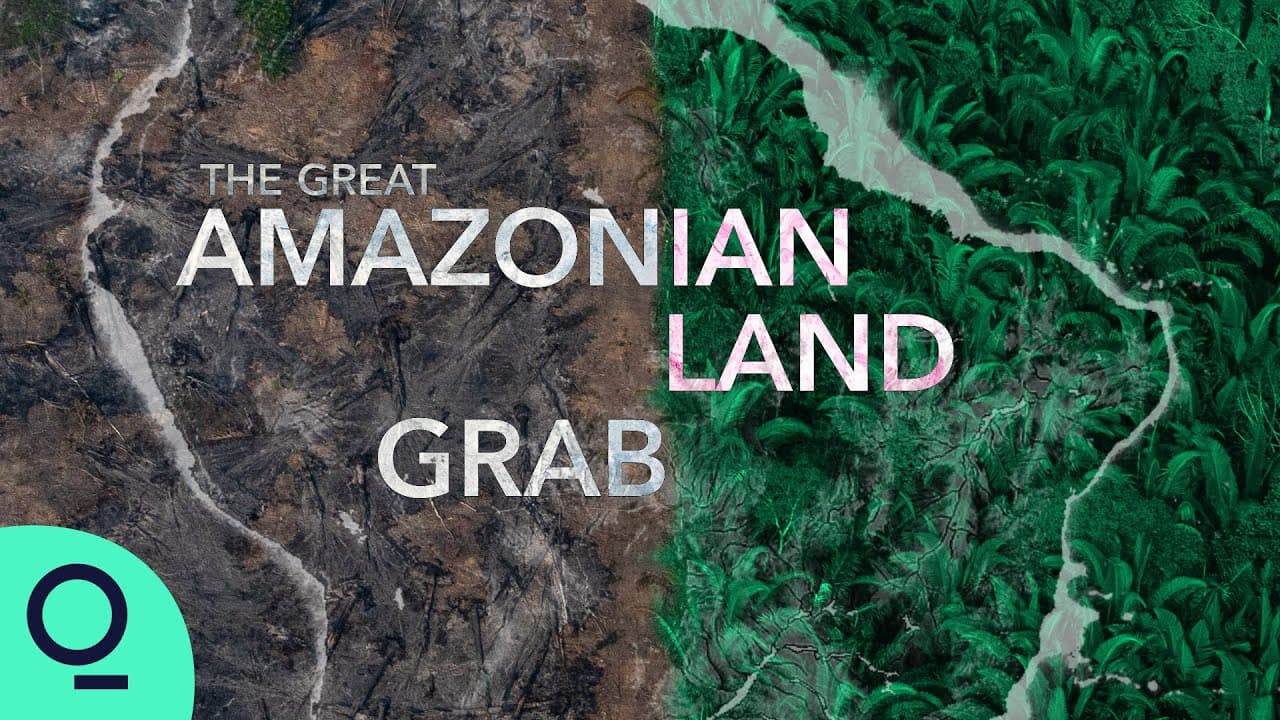
The Amazon rainforest is facing severe deforestation due to global demand for commodities like beef and hardwoods, driven by both local and international forces. Despite Brazil's government efforts to curb deforestation, economic incentives and historical policies continue to encourage land grabs and environmental degradation, pushing the ecosystem towards a critical tipping point.
Transcript
The Amazon rainforest is one of the largest, if not the largest in the world. Rainforests are critically important for the global climate in many ways. It regulates temperature and weather cycles in the Americas, and it actually carries rain to much of the continent, which is a bread basket for the world. They have what are called flying rivers abo... Read More
Key Insights
- The Amazon rainforest plays a crucial role in regulating global climate and weather patterns.
- Deforestation in the Amazon is accelerating, nearing a potential ecological tipping point.
- Brazil's government policies historically encouraged Amazon development for economic growth.
- Global demand for commodities like beef and hardwood fuels Amazon deforestation.
- Small farmers initially clear land, later replaced by large industrial ranchers and farmers.
- Brazil's dysfunctional land management system exacerbates deforestation issues.
- Large-scale land grabs are often followed by government amnesty, encouraging further deforestation.
- Efforts to curb deforestation are challenged by economic, social, and political factors.
Install to Summarize YouTube Videos and Get Transcripts
Explore YouTube Video Summarizer or Get YouTube Transcript Extractor
Questions & Answers
Q: How does the Amazon rainforest affect global climate?
The Amazon rainforest is a critical component of the global climate system. It regulates temperature and weather cycles, particularly in the Americas, by producing 'flying rivers'—bands of moisture that influence weather patterns far beyond the Amazon. The rainforest's vast ecosystem also plays a significant role in carbon sequestration, helping to mitigate climate change by absorbing carbon dioxide from the atmosphere.
Q: Why is deforestation in the Amazon accelerating?
Deforestation in the Amazon is accelerating due to increasing global demand for commodities such as beef and hardwoods. Economic incentives for local farmers and ranchers, coupled with Brazil's historical policies promoting Amazon development, have led to widespread land clearing. Additionally, Brazil's dysfunctional land management system and government amnesty for land grabs further exacerbate the problem, pushing the ecosystem towards a critical tipping point.
Q: What role does Brazil's government play in Amazon deforestation?
Brazil's government has historically promoted the development of the Amazon as a means to achieve economic growth, encouraging land grabs and industrial agriculture. Current policies continue to prioritize economic development over environmental protection, with government amnesty for land grabs and reduced funding for regulatory agencies. These actions, combined with a dysfunctional land management system, contribute significantly to ongoing deforestation in the Amazon.
Q: How do global consumers contribute to Amazon deforestation?
Global consumers contribute to Amazon deforestation through their demand for commodities such as beef and hardwoods, which are produced in the region. This demand drives economic incentives for local farmers and ranchers to clear land for agriculture and livestock production. The global market's appetite for these products fuels the cycle of deforestation, as local producers seek to meet international demand, often at the expense of the rainforest's ecosystem.
Q: What are the economic incentives for deforestation in the Amazon?
Economic incentives for deforestation in the Amazon include the potential profits from agriculture and livestock production, driven by global demand for commodities like beef and hardwoods. Local farmers and ranchers are motivated to clear land to cultivate these products, often with government support or amnesty for land grabs. The promise of economic prosperity and land ownership further incentivizes deforestation, despite the environmental consequences.
Q: What historical policies contributed to Amazon deforestation?
Historical policies in Brazil encouraged the development of the Amazon as part of the country's economic growth strategy. In the 1970s and 1980s, the government promoted industrial agriculture and incentivized migration to the Amazon, offering land to settlers. These policies laid the groundwork for widespread deforestation, as large-scale land clearing became a means to achieve economic prosperity and fulfill Brazil's ambitions for first-world status.
Q: How does Brazil's land management system impact deforestation?
Brazil's land management system is dysfunctional, with unclear land ownership and a lack of effective regulation, which exacerbates deforestation. Public land is often illegally claimed and cleared by small farmers, who are later replaced by large ranchers and farmers. The government's amnesty for land grabs and reduced funding for regulatory agencies further undermine efforts to manage and protect the Amazon, allowing deforestation to continue unchecked.
Q: What challenges exist in curbing Amazon deforestation?
Curbing Amazon deforestation faces challenges from entrenched economic, social, and political forces. Economic incentives for agriculture and livestock production drive land clearing, while Brazil's government policies and dysfunctional land management system facilitate illegal land grabs. International pressure and environmental advocacy efforts are often met with resistance from powerful economic interests, making it difficult to implement comprehensive solutions that address the root causes of deforestation.
Summary & Key Takeaways
-
The Amazon rainforest is vital for global climate regulation, but deforestation is accelerating due to local and international demand for commodities. Brazil's government has historically promoted Amazon development, leading to land grabs and environmental degradation. The cycle of destruction continues as small farmers clear land, followed by large ranchers and farmers who establish industrial agriculture.
-
Despite efforts to curb deforestation, Brazil's land management system remains dysfunctional, facilitating illegal land grabs. Economic incentives and historical policies drive deforestation, with global demand for beef and hardwoods exacerbating the issue. The Amazon is nearing a critical tipping point, threatening its ability to regulate climate and weather patterns.
-
Efforts to protect the Amazon face significant challenges from entrenched economic, social, and political forces. The Brazilian government, under pressure from international leaders, has made some attempts to address deforestation, but systemic issues and powerful economic interests continue to drive environmental destruction. The situation requires comprehensive solutions that address the root causes of deforestation.
Read in Other Languages (beta)
Share This Summary 📚
Summarize YouTube Videos and Get Video Transcripts with 1-Click
Try YouTube Summary with ChatGPT & Claude or YouTube Transcript Generator
Explore More Summaries from Bloomberg Originals 📚






Summarize YouTube Videos and Get Video Transcripts with 1-Click
Try YouTube Summary with ChatGPT & Claude or YouTube Transcript Generator