Can Life Be Based on Silicon Instead of Carbon?
TL;DR
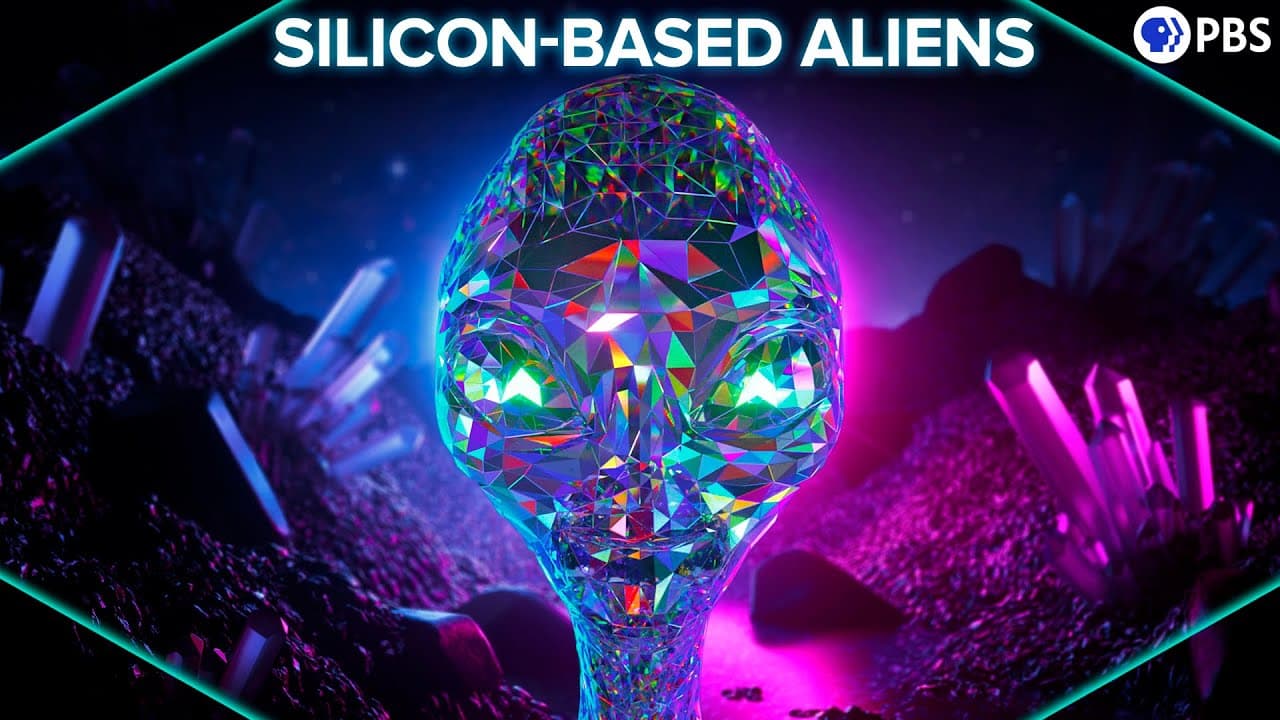
While silicon shares some chemical properties with carbon and is abundant on many planets, it is rarely utilized by life on Earth due to its instability in water and tendency to form strong bonds with oxygen. Carbon’s versatility and accessibility make it the preferred element for life, although silicon-based life could theoretically exist in specialized environments like liquid hydrocarbons or sulphuric acid.
Transcript
Thank you to brilliant.org for supporting PBS. Life as we know it is carbon-based, but does it have to be that way? There is another element on the periodic table that shares some of the key properties of carbon but is far more abundant on most planets. I’m talking about silicon. So could there silicon-based life out there? All of the chemical ... Read More
Key Insights
- Silicon is a promising alternative to carbon due to its chemical similarity and abundance on many planets, yet it is rarely used by life on Earth.
- Carbon's superior ability to form stable and diverse molecular structures makes it the preferred element for life on Earth.
- Silicon-based molecules are generally unstable in water, limiting their potential for life in Earth-like environments.
- Alternative solvents like liquid hydrocarbons or sulphuric acid could support silicon-based life in other planetary environments.
- Silicon's tendency to form strong bonds with oxygen poses a challenge for silicon-based life, as it can result in unidirectional reactions.
- Carbon has significant advantages over silicon, including easier accessibility in the form of CO2 and more energy-efficient waste products.
- Silicon-based life might exist in specialized environments, but carbon-based life is likely more common due to its favorable properties.
- Existing Earth organisms like diatoms demonstrate silicon's potential in biological structures, though not as a primary life element.
Install to Summarize YouTube Videos and Get Transcripts
Explore YouTube Video Summarizer or Get YouTube Transcript Extractor
Questions & Answers
Q: Why is carbon favored over silicon for life on Earth?
Carbon is favored because it forms stable and diverse molecular structures, providing the necessary scaffolding for life's biochemical processes. Its ability to form strong covalent bonds with itself and other elements allows for the creation of complex molecules like DNA, proteins, and carbohydrates. Additionally, carbon's accessibility in the form of CO2 and its energy-efficient waste products make it an ideal choice for life.
Q: What challenges does silicon face as a basis for life?
Silicon faces several challenges as a life-building element. Its molecules are generally unstable in water, a crucial solvent for life on Earth. Silicon also tends to form strong bonds with oxygen, leading to unidirectional reactions that are not conducive to life's dynamic processes. Additionally, silicon's waste product, silica, is solid and not easily expelled, unlike carbon's gaseous CO2.
Q: Could silicon-based life exist in the universe?
While silicon-based life could potentially exist, it would require highly specialized environments. These might include planets or moons with alternative solvents like liquid hydrocarbons or sulphuric acid, where silicon molecules are more stable. However, the conditions for silicon-based life are less favorable compared to the carbon-based life that thrives in more common environments.
Q: What role does silicon play in existing Earth organisms?
Silicon plays a role in certain Earth organisms, such as diatoms, which incorporate silicon into their cell walls. These organisms demonstrate silicon's potential in biological structures, providing rigidity and protection. However, the internal biochemistry of diatoms remains carbon-based, highlighting silicon's limited use as a primary life element.
Q: How does silicon's abundance compare to carbon on Earth?
Silicon is far more abundant than carbon in Earth's crust, making up over 28% of its mass in the form of silicate rocks. In contrast, carbon constitutes only about 0.02% of the crust. Despite this abundance, carbon's chemical properties make it more suitable for life, as it is more accessible and versatile in forming complex organic molecules.
Q: What are the potential solvents for silicon-based life?
Potential solvents for silicon-based life include liquid hydrocarbons and sulphuric acid. Liquid hydrocarbons, found on moons like Titan, are stable at low temperatures, while sulphuric acid, present in Venus's atmosphere, is chemically aggressive. Both solvents present challenges, such as temperature constraints and reactivity, but they could theoretically support silicon-based biochemistry.
Q: Why is carbon-in-water considered an ideal option for life?
Carbon-in-water is considered ideal due to carbon's ability to form a wide variety of stable, complex molecules necessary for life's biochemical processes. Water serves as an excellent solvent, facilitating molecular interactions and maintaining thermal stability. This combination provides an optimal environment for the dynamic and reversible reactions essential for life.
Q: What is the significance of silicon-based organisms in science fiction?
Silicon-based organisms are a popular concept in science fiction due to silicon's chemical similarity to carbon and its potential to form complex molecules. These fictional life forms often inhabit extreme environments, showcasing the diversity of life possibilities. While speculative, they encourage exploration of alternative biochemistries and expand our understanding of life's potential across the universe.
Summary & Key Takeaways
-
The video discusses the potential for silicon-based life forms, highlighting silicon's chemical similarities to carbon and its abundance on many planets. However, silicon's instability in water and strong affinity for oxygen limit its viability as a life-building element on Earth.
-
While silicon could support life in environments with alternative solvents like liquid hydrocarbons or sulphuric acid, carbon's superior molecular versatility and energy efficiency make it the preferred choice for life as we know it. Silicon-based life remains a speculative possibility in unique planetary conditions.
-
The video also explores the role of silicon in Earth organisms like diatoms, which use silicon in their cell walls. Despite these examples, carbon's advantages mean it is likely the dominant life-building element in the universe, with silicon-based life being relatively rare.
Read in Other Languages (beta)
Share This Summary 📚
Summarize YouTube Videos and Get Video Transcripts with 1-Click
Try YouTube Summary with ChatGPT & Claude or YouTube Transcript Generator
Explore More Summaries from PBS Space Time 📚





Summarize YouTube Videos and Get Video Transcripts with 1-Click
Try YouTube Summary with ChatGPT & Claude or YouTube Transcript Generator