Permanent Artificial Hearts Are Closer Than You Think
TL;DR
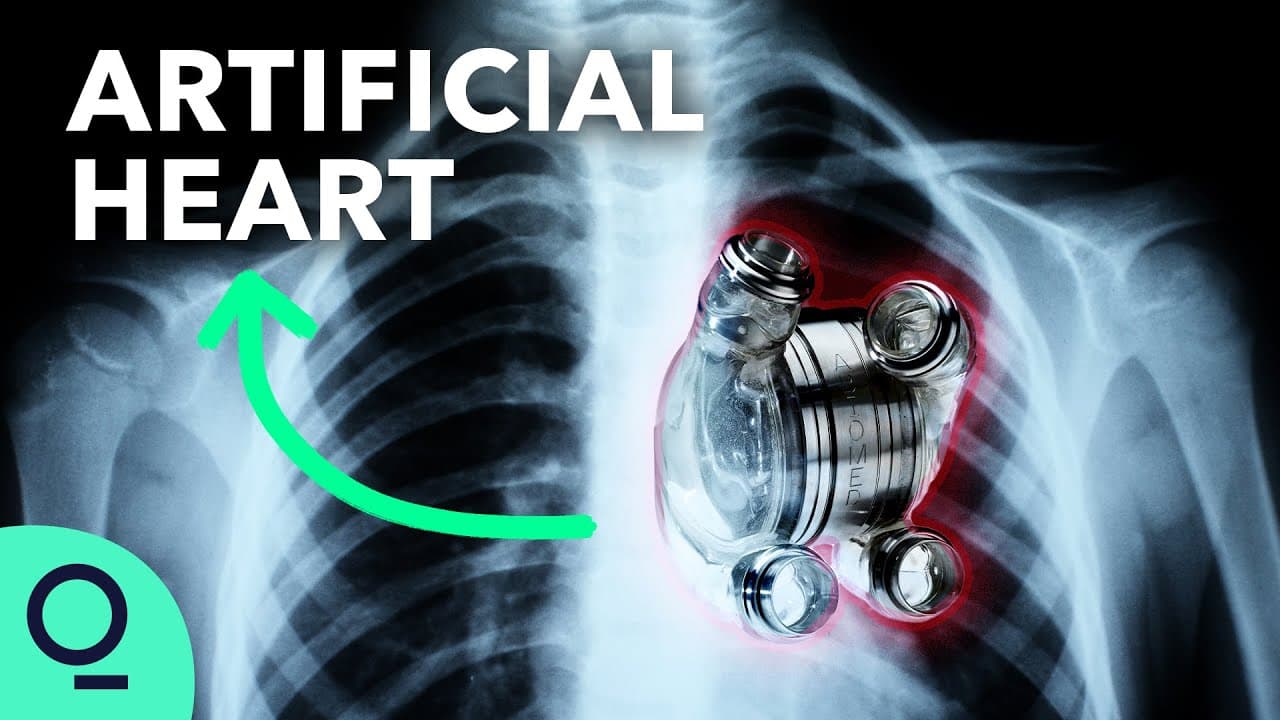
Artificial hearts may soon replace failing human hearts permanently.
Transcript
Cardiovascular disease and specifically heart failure is the number one cause of death in men and women across just about every demographic. If we had a patient with a bad heart and we could take their heart out and replace it with a machine, we'd do it all the time. For the last half century, scientists have been working tirelessly to create a mac... Read More
Key Insights
- Cardiovascular disease is the leading cause of death globally, necessitating innovative solutions like artificial hearts to address heart failure.
- The development of a practical, permanent artificial heart would revolutionize modern medicine by providing an alternative to donor heart transplants.
- Current artificial hearts, like SynCardia and Carmat, are only approved as temporary solutions, highlighting the need for more durable options.
- The BiVACOR device introduces a novel approach with a magnetically levitated spinning disc to potentially increase the longevity of artificial hearts.
- BiVACOR aims to create a continuous flow of blood, challenging traditional concepts of heart function, such as the necessity of a pulse.
- The BiVACOR device is undergoing rigorous testing and is preparing for its first human implant, signaling a major step forward in artificial heart technology.
- Carmat's heart has received EU approval for commercial sale, aiming to become a permanent replacement rather than a temporary solution.
- Technological advancements, such as wireless charging, are crucial for improving the quality of life for artificial heart patients, making them comparable to transplant recipients.
Install to Summarize YouTube Videos and Get Transcripts
Explore YouTube Video Summarizer or Get YouTube Transcript Extractor
Questions & Answers
Q: What is the main limitation of current heart transplants?
The main limitation of current heart transplants is the scarcity of donor hearts. While there are nearly 6,000 heart transplants performed annually, there are about a million requests each year, with 600,000 in the U.S. alone. This shortage necessitates the development of alternative solutions, such as artificial hearts.
Q: How does the BiVACOR device differ from traditional artificial hearts?
The BiVACOR device differs from traditional artificial hearts by using a magnetically levitated spinning disc instead of compressing sacks. This design reduces mechanical wear and potentially increases the device's longevity. It pumps blood continuously, challenging the traditional necessity of a pulse, and aims to provide a more durable solution for heart failure patients.
Q: What is the significance of the Carmat device's EU approval?
The Carmat device's EU approval is significant because it marks a step forward in making artificial hearts a viable commercial product. While currently approved for temporary use, the company aims for it to become a permanent replacement for failing hearts, potentially reducing reliance on donor transplants and improving patient outcomes.
Q: What challenges do artificial hearts face in terms of durability?
Artificial hearts face significant challenges in terms of durability due to the mechanical wear from continuous operation. A heart beats approximately 42 million times a year, and replicating this without failure is difficult. Innovations like BiVACOR's magnetically levitated disc aim to address these challenges by minimizing wear and extending the device's lifespan.
Q: How does BiVACOR plan to address the issue of pulsatility in its device?
BiVACOR plans to address the issue of pulsatility by allowing their device to operate in both continuous flow and pulsatile modes. By rapidly spinning the disc up and down, they can simulate a pulse, which can be adjusted based on the patient's activity level. This flexibility aims to replicate natural heart function more closely.
Q: What advancements are needed to improve the quality of life for artificial heart patients?
To improve the quality of life for artificial heart patients, advancements are needed in battery life and wireless charging technology. Currently, patients must remain connected to a briefcase-sized power pack, limiting their mobility. Enhancing these technologies would allow patients greater freedom and a lifestyle more comparable to that of heart transplant recipients.
Q: What role did personal motivation play in the development of the BiVACOR device?
Personal motivation played a significant role in the development of the BiVACOR device. Daniel Timms, the inventor, was driven by his father's experience with heart failure. This personal connection fueled his passion and commitment to finding a solution, leading to the creation of a prototype in collaboration with his father, who was skilled in circulation systems.
Q: What is the potential impact of artificial hearts on global heart failure statistics?
The potential impact of artificial hearts on global heart failure statistics is substantial. With 400,000 people dying of heart failure annually, a durable artificial heart could significantly reduce these numbers. By providing a long-term solution that doesn't rely on scarce donor hearts, artificial hearts could transform treatment and potentially make heart failure a less prevalent cause of death.
Summary & Key Takeaways
-
Artificial hearts are being developed to address the global issue of heart failure, which is the leading cause of death. Current technologies are temporary, but innovations like BiVACOR's magnetically levitated disc offer promise for more durable solutions.
-
BiVACOR's device challenges traditional heart function by providing continuous blood flow, potentially eliminating the need for a pulse. It is in the testing phase, with plans for human trials, marking a significant advancement in artificial heart technology.
-
Carmat has received EU approval for its artificial heart, aiming for it to become a permanent solution. Future advancements, such as wireless charging, are necessary to enhance patient freedom and quality of life, comparable to that of heart transplant recipients.
Read in Other Languages (beta)
Share This Summary 📚
Summarize YouTube Videos and Get Video Transcripts with 1-Click
Try YouTube Summary with ChatGPT & Claude or YouTube Transcript Generator
Explore More Summaries from Bloomberg Originals 📚


Summarize YouTube Videos and Get Video Transcripts with 1-Click
Try YouTube Summary with ChatGPT & Claude or YouTube Transcript Generator