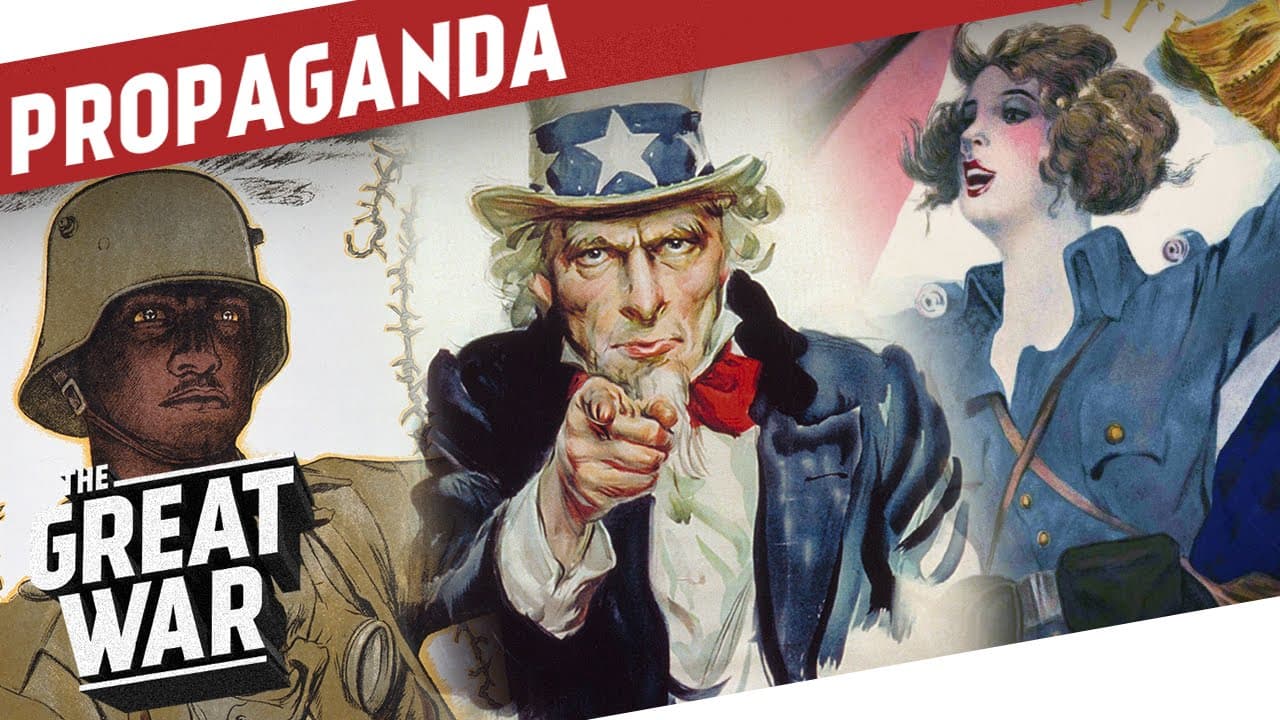
Propaganda During World War 1 - Opening Pandora's Box I THE GREAT WAR Special
TL;DR
WWI propaganda was crucial in shaping public opinion and morale.
Transcript
Propaganda. Specifically wartime propaganda. Never mind what’s actually going on at the front or in the enemy’s homeland, you need to keep up your nation’s morale regardless. You need your people to hate the enemy, and so you put your propaganda machine to work. I’m Indy Neidell; welcome to a Great War special episode about Propaganda and the First... Read More
Key Insights
- Propaganda during World War I was a key tool for maintaining national morale and demonizing the enemy, using mass media to influence public opinion.
- Germany had a well-established propaganda system from the war's start, censoring the press to control public perception and maintain support for the war effort.
- The British propaganda effort, though initially slow, became highly effective, influencing future propaganda strategies in other nations.
- The British used subtle techniques, like employing popular writers, to create the illusion of independent opinion formation among the public.
- The U.S. established the Committee on Public Information to sway public opinion towards supporting the war, using innovative methods like the four-minute men.
- Propaganda often involved dehumanizing the enemy, using animal comparisons and false narratives to create hatred and justify the war.
- The success of propaganda efforts often led to a stark contrast between public perception and reality, contributing to post-war myths and sentiments.
- The manipulation of information during the war highlights the powerful impact propaganda can have on public beliefs and emotions, both in wartime and peacetime.
Install to Summarize YouTube Videos and Get Transcripts
Explore YouTube Video Summarizer or Get YouTube Transcript Extractor
Questions & Answers
Q: How did Germany utilize propaganda during World War I?
Germany established a comprehensive propaganda system at the war's onset, abolishing press freedom and implementing censorship to control public perception. They maintained a central bureau for foreign propaganda, focusing on countering enemy narratives and promoting their own. This effort was so effective that it contributed to post-war myths like the 'stab-in-the-back' myth.
Q: What role did British propaganda play in World War I?
British propaganda, though initially slow to start, became a formidable force, influencing public opinion and morale. The British used subtle techniques, such as employing popular writers and controlling media narratives, to create the illusion of independent opinion formation, effectively swaying both domestic and international perceptions of the war.
Q: What was the purpose of the U.S. Committee on Public Information?
The U.S. Committee on Public Information, led by George Creel, aimed to influence American public opinion in favor of the war effort. It employed innovative methods like the four-minute men, who delivered brief speeches across the nation, and collaborated with illustrators to create iconic war posters, although some of its narratives were later debunked by journalists.
Q: How did propaganda contribute to post-war myths in Germany?
The stark contrast between propaganda and reality in Germany led to a sense of betrayal among the populace when the war was lost. This disillusionment contributed to the 'stab-in-the-back' myth, which falsely suggested that Germany's military defeat was due to internal betrayal rather than battlefield losses, influencing post-war German politics and society.
Q: In what ways did British propaganda influence future propaganda strategies?
British propaganda during World War I set a precedent for future strategies by demonstrating the effectiveness of subtle influence techniques. The use of respected writers and controlled media narratives to shape public opinion became a model for Soviet and Nazi propaganda, showcasing the power of indirect persuasion in shaping societal beliefs.
Q: What were the 'four-minute men' in the U.S. propaganda effort?
The 'four-minute men' were part of the U.S. Committee on Public Information's strategy to sway public opinion. Believing the human attention span was four minutes, these speakers delivered concise speeches at social gatherings nationwide, reaching an estimated 11 million people and effectively spreading pro-war messages across diverse audiences.
Q: How did propaganda dehumanize the enemy during World War I?
Propaganda during World War I often involved dehumanizing the enemy by comparing them to animals or spreading false narratives about their actions. This tactic was used to create hatred and justify the war, making it easier for nations to rally their populations against a perceived barbaric and inhuman adversary.
Q: Why is the study of propaganda important in understanding World War I?
Studying propaganda is crucial for understanding World War I because it reveals how nations manipulated public beliefs and emotions to maintain support for the war. It highlights the powerful impact of media on societal perceptions, demonstrating how easily public opinion can be shaped, a lesson that remains relevant in today's information age.
Summary & Key Takeaways
-
World War I saw the rise of sophisticated propaganda efforts, with Germany and Britain leading the way in shaping public opinion and morale through controlled media narratives.
-
German propaganda efforts were highly organized, involving censorship and a centralized bureau for foreign propaganda, which controlled press narratives and influenced public perception.
-
British propaganda evolved into a powerful tool, using subtle methods and iconic imagery to sway public opinion, setting a precedent for future propaganda strategies in other nations.
Read in Other Languages (beta)
Share This Summary 📚
Summarize YouTube Videos and Get Video Transcripts with 1-Click
Try YouTube Summary with ChatGPT & Claude or YouTube Transcript Generator
Explore More Summaries from The Great War 📚
Summarize YouTube Videos and Get Video Transcripts with 1-Click
Try YouTube Summary with ChatGPT & Claude or YouTube Transcript Generator