How To Know If It's Aliens
TL;DR
Exploring potential evidence for extraterrestrial life and its scientific scrutiny.
Transcript
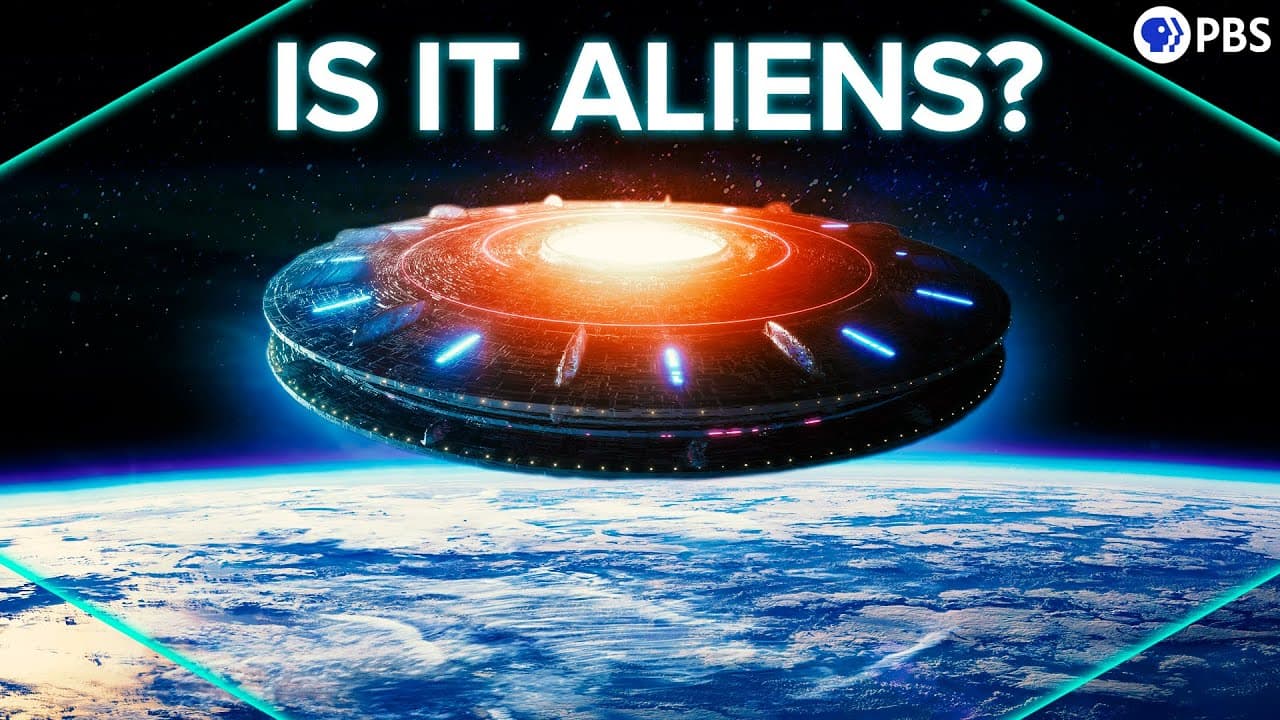
We follow one rule on Space Time: It’s never aliens. But every rule has an exception and this rule is no exception because: It’s never aliens, until it is. So is it aliens yet? 45 years ago, a pair of small Earth spacecraft inserted themselves into orbit around Mars. Each dropped landing craft, which descended to opposite sides of the planet. This ... Read More
Key Insights
- The Viking mission's labeled release experiment initially suggested life on Mars but was later interpreted as a chemical reaction due to the presence of perchlorate.
- The Martian meteorite ALH84001 once thought to contain fossilized bacteria was later explained by abiotic chemical processes.
- Phosphine detected in Venus's atmosphere initially suggested biological activity but was later attributed to data processing errors and non-biological sources.
- The 'Oumuamua object, initially speculated to be an alien artifact, is now thought to be a shard from an extra-solar ice world.
- Tabby's Star's unusual dimming was once thought to be an alien megastructure but is now explained by space dust.
- The WOW signal and a radio signal from Proxima Centauri remain unexplained but are not confirmed as alien communications.
- SETI programs continue to search for extraterrestrial life, emphasizing optimistic skepticism in evaluating potential evidence.
- Planned missions to Mars, Europa, Venus, and the Alpha Centauri system may provide more definitive evidence of extraterrestrial life.
Install to Summarize YouTube Videos and Get Transcripts
Explore YouTube Video Summarizer or Get YouTube Transcript Extractor
Questions & Answers
Q: What was the Viking mission's labeled release experiment?
The Viking mission's labeled release experiment aimed to detect life on Mars by injecting Martian soil samples with a nutrient solution containing radioactive carbon. The idea was that living microbes would metabolize the nutrients and emit radioactive gases. Although initial results were positive, further analysis suggested a chemical reaction rather than biological activity.
Q: Why was the Martian meteorite ALH84001 significant?
The Martian meteorite ALH84001 was significant because it contained elongated mineral structures resembling fossilized bacteria and magnetite, a byproduct of microbial metabolism. Initially thought to be evidence of life on Mars, these features were later explained by abiotic chemical processes, and the possibility of Earth contamination couldn't be ruled out.
Q: What was the controversy surrounding phosphine on Venus?
In 2020, astronomers reported detecting phosphine in Venus's atmosphere, a potential indicator of biological activity. However, subsequent analyses found issues with the original data processing, leading to a significant reduction in the reported phosphine levels. The revised levels could be explained by non-biological processes, casting doubt on the initial claim.
Q: What is the current understanding of 'Oumuamua?
'Oumuamua was initially speculated to be an alien artifact due to its unusual acceleration and lack of a comet tail. However, it is now thought to be a shard from an extra-solar ice world, with its acceleration explained by outgassing of nitrogen-ice, a plausible natural process that fits the observed characteristics.
Q: How has the understanding of Tabby's Star changed?
Tabby's Star exhibited unusual dimming patterns, leading some to speculate about an alien megastructure. Further observations revealed that the dimming was consistent with clouds of space dust rather than an opaque object, suggesting natural explanations such as a tidally disrupted exoplanet or an evaporating exomoon.
Q: What is the significance of the WOW signal?
The WOW signal was a strong radio signal detected by the Big Ear telescope in 1977, with no known natural or human-made source. Despite extensive searches, a similar signal has not been observed again, and it remains one of the most intriguing unexplained radio signals, though not confirmed as alien in origin.
Q: What was the radio signal from Proxima Centauri?
In 2019, a sharp radio signal was detected from Proxima Centauri, our nearest stellar neighbor. The signal's frequency drift suggested a Doppler shift, possibly from a planet. While exciting due to Proxima Centauri's habitable zone planet, the signal's origin is still uncertain, with non-alien explanations being more likely.
Q: Why is optimistic skepticism important in the search for extraterrestrial life?
Optimistic skepticism is crucial because it balances the enthusiasm for discovering extraterrestrial life with the need for rigorous scientific scrutiny. Many past claims have been re-evaluated and attributed to natural phenomena. Scientists advocate for continuing SETI programs and pursuing 'It's Aliens!' hypotheses when warranted, ensuring that evidence is robust before making extraordinary claims.
Summary & Key Takeaways
-
The search for extraterrestrial life is ongoing, with various missions and experiments providing tantalizing yet inconclusive evidence. Past claims of life on Mars and Venus have been re-evaluated and often attributed to chemical processes rather than biological ones.
-
Objects like 'Oumuamua and phenomena such as Tabby's Star have sparked speculation about alien activity, but natural explanations have since been proposed, highlighting the complexity and unpredictability of the universe.
-
While signals like the WOW signal and those from Proxima Centauri remain unexplained, scientists urge cautious optimism and rigorous scrutiny. Future missions may finally provide conclusive evidence of life beyond Earth.
Read in Other Languages (beta)
Share This Summary 📚
Summarize YouTube Videos and Get Video Transcripts with 1-Click
Try YouTube Summary with ChatGPT & Claude or YouTube Transcript Generator
Explore More Summaries from PBS Space Time 📚



Summarize YouTube Videos and Get Video Transcripts with 1-Click
Try YouTube Summary with ChatGPT & Claude or YouTube Transcript Generator