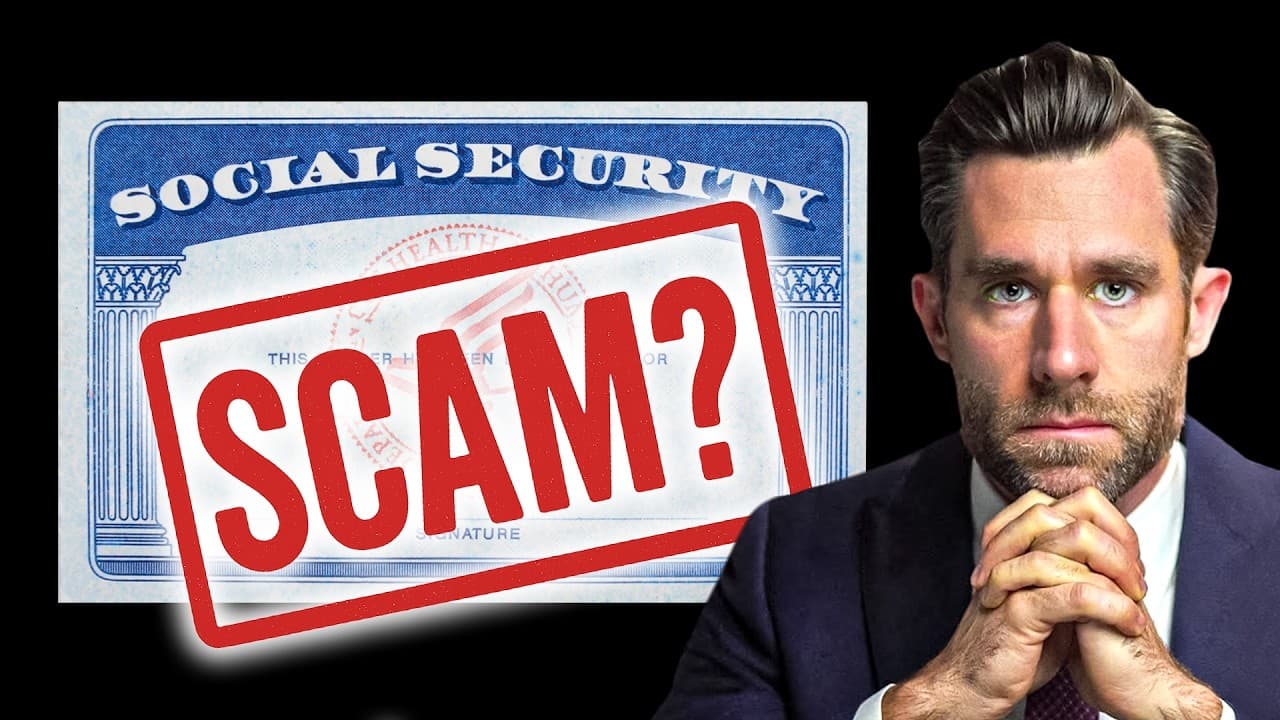
Is Social Security Really a Ponzi Scheme?
TL;DR
Social Security is not a Ponzi scheme, despite claims to the contrary. It is a pay-as-you-go system funded by payroll taxes, providing retirement, disability, and survivor benefits. Criticisms often stem from misunderstandings about its structure and the demographic challenges it faces, but it remains a vital safety net for millions of Americans.
Transcript
Social Security is going bankrupt. Social Security is full of fraud. Social Security is paying out to people who are 150 years old. Social Security is getting gutted. In reality, all of this is probably wrong. Elon Musk and Donald Trump are claiming that Social Security is paying out to dead people and also undead people, and that there are more el... Read More
Key Insights
- Social Security is a pay-as-you-go system funded by payroll taxes from current workers.
- Claims that Social Security is a Ponzi scheme are based on misunderstandings of its structure.
- The program provides essential benefits to retirees, disabled individuals, and survivors.
- Despite criticisms, Social Security has a fraud rate of less than 1% in its payments.
- Demographic changes, such as lower birth rates, pose challenges to Social Security's future.
- The program is not means-tested, meaning everyone who pays in can benefit.
- Social Security's administrative costs are less than 1% of the taxes collected.
- Potential solutions to ensure Social Security's sustainability include raising taxes or retirement age.
Install to Summarize YouTube Videos and Get Transcripts
Explore YouTube Video Summarizer or Get YouTube Transcript Extractor
Questions & Answers
Q: How does Social Security work?
Social Security operates as a pay-as-you-go system, funded by payroll taxes from current workers. These taxes are collected and placed into trust funds, which then pay out benefits to retirees, disabled individuals, and survivors. The system ensures that everyone who contributes can eventually receive benefits, though it is not designed to fully replace income in retirement.
Q: Is Social Security a Ponzi scheme?
No, Social Security is not a Ponzi scheme. While both systems involve payments from new participants to benefit earlier participants, Social Security is transparent about its funding and operations. It relies on sustainable contributions from payroll taxes, unlike Ponzi schemes, which are based on fraudulent promises and unsustainable returns.
Q: What challenges does Social Security face?
Social Security faces challenges from demographic shifts, such as lower birth rates and increasing life expectancies, which strain the balance between contributors and beneficiaries. Additionally, rising healthcare costs and political resistance to tax increases or benefit adjustments complicate efforts to ensure the program's long-term sustainability.
Q: What are the myths about Social Security fraud?
Common myths suggest widespread fraud, such as payments to deceased individuals or centenarians. However, the actual fraud rate is less than 1%, and many claims are based on misunderstandings of data or administrative errors. The Social Security Administration actively works to minimize improper payments and correct inaccuracies.
Q: How is Social Security funded?
Social Security is funded through payroll taxes, where employees contribute 6.2% of their earnings, matched by employers. Self-employed individuals pay the full 12.4%. These funds are collected into trust funds, which are then used to pay current beneficiaries, ensuring a continuous flow of contributions and distributions.
Q: What benefits does Social Security provide?
Social Security provides retirement benefits to individuals who have paid into the system, disability benefits for those unable to work due to health conditions, and survivor benefits for spouses and children of deceased workers. It serves as a financial safety net, supplementing other retirement savings and income sources.
Q: What solutions exist for Social Security's sustainability?
To ensure Social Security's sustainability, potential solutions include raising the retirement age, increasing payroll taxes, or adjusting benefits. Other options involve taxing higher incomes or means-testing benefits. Each solution has political and economic implications, requiring careful consideration to balance public acceptance and financial viability.
Q: Why is Social Security important?
Social Security is crucial for providing financial support to millions of Americans, particularly the elderly, disabled, and survivors of deceased workers. It helps prevent poverty and ensures a basic standard of living, acting as a vital component of the nation's social safety net. Its universal coverage and efficiency contribute to its broad public support.
Summary & Key Takeaways
-
Social Security is a crucial pay-as-you-go system funded by payroll taxes, offering retirement, disability, and survivor benefits. Despite misconceptions, it is not a Ponzi scheme, as it transparently collects and redistributes funds. Demographic shifts and financial sustainability pose challenges, but the program remains vital for millions.
-
Critics often misunderstand Social Security's structure, leading to myths about its operation. The program's fraud rate is remarkably low, and administrative efficiency is high, with less than 1% of collected taxes spent on management. Its universal approach ensures broad public support and participation.
-
Social Security faces challenges due to demographic changes and economic pressures. Solutions like raising the retirement age or increasing contributions could address sustainability concerns. However, these options are politically unpopular, highlighting the complex balance between financial viability and public acceptance.
Read in Other Languages (beta)
Share This Summary 📚
Summarize YouTube Videos and Get Video Transcripts with 1-Click
Try YouTube Summary with ChatGPT & Claude or YouTube Transcript Generator
Explore More Summaries from LegalEagle 📚






Summarize YouTube Videos and Get Video Transcripts with 1-Click
Try YouTube Summary with ChatGPT & Claude or YouTube Transcript Generator