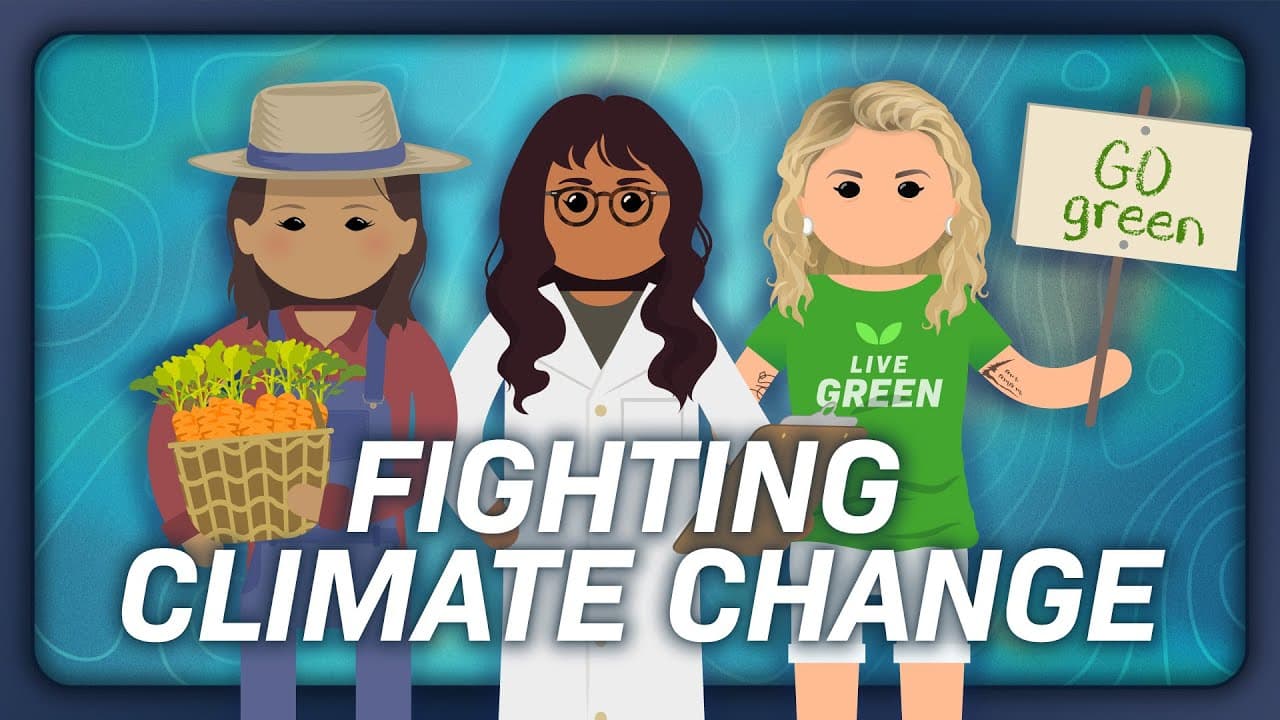
How Can We Respond to Climate Change?: Crash Course Climate & Energy #12
TL;DR
Scientists have concluded that greenhouse gases are causing climate change, and we need to take immediate action to mitigate its effects. The Paris Agreement aims to limit global temperature rise to 1.5 degrees Celsius and achieve net-zero carbon emissions by 2050.
Transcript
scientists have been studying our climate for decades and together we've reached a single inescapable conclusion greenhouse gases are driving up Earth's average temperature and unchecked that's going to make our planet a lot harder to live on climate change has brought and will continue to bring extreme environmental events that will be hard to pre... Read More
Key Insights
- 🫢 Greenhouse gases, primarily from burning fossil fuels, are driving climate change and causing extreme environmental events.
- 😫 The Paris Agreement sets ambitious targets to limit warming to 1.5 degrees Celsius.
- 🎯 Achieving these targets requires significant changes in industries, policies, and technologies.
- 🖐️ Young people are playing a significant role in activism and innovation to combat climate change.
- 😐 Achieving net-zero carbon emissions by 2050 requires advancements in electricity storage, transmission, and affordable carbon-neutral technologies.
- 🫢 Government policies and subsidies can help make carbon-free energy more affordable and less appealing to emit greenhouse gases.
- 😋 Climate change affects various aspects of life, including food security, transportation, and energy consumption.
Install to Summarize YouTube Videos and Get Transcripts
Explore YouTube Video Summarizer or Get YouTube Transcript Extractor
Questions & Answers
Q: What is the goal of the Paris Agreement?
The Paris Agreement aims to limit global temperature rise to 1.5 degrees Celsius and achieve net-zero carbon emissions by 2050 by reducing greenhouse gas emissions and removing them from the atmosphere.
Q: What are the potential consequences of exceeding 1.5 degrees Celsius of warming?
Exceeding 1.5 degrees of warming can lead to severe droughts, water shortages, and ecological damage. Limiting warming to 1.5 degrees offers a better chance for food security and a higher quality of life.
Q: What milestones and changes are necessary to achieve net-zero carbon emissions by 2050?
The roadmap includes milestones such as phasing out fossil fuel boilers by 2025, transitioning to electric vehicles by 2035, and transforming manufacturing processes to low-emission alternatives by 2050.
Q: How can individuals contribute to combating climate change?
Individuals can contribute by making thoughtful purchasing decisions, reducing meat consumption, and advocating for climate-friendly policies. While the impact of individual actions is crucial, systemic changes in major corporations and government policies are also necessary.
Summary & Key Takeaways
-
Climate change caused by greenhouse gases is leading to extreme environmental events and exacerbating existing inequalities.
-
The Paris Agreement seeks to limit global temperature rise to 1.5 degrees Celsius and achieve net-zero carbon emissions by 2050.
-
Achieving this goal requires significant changes in industries, policies, and technologies, and young people are playing a crucial role in driving change.
Read in Other Languages (beta)
Share This Summary 📚
Summarize YouTube Videos and Get Video Transcripts with 1-Click
Try YouTube Summary with ChatGPT & Claude or YouTube Transcript Generator
Explore More Summaries from CrashCourse 📚



Summarize YouTube Videos and Get Video Transcripts with 1-Click
Try YouTube Summary with ChatGPT & Claude or YouTube Transcript Generator