How to Navigate AI Uncertainty in US-China Relations
TL;DR
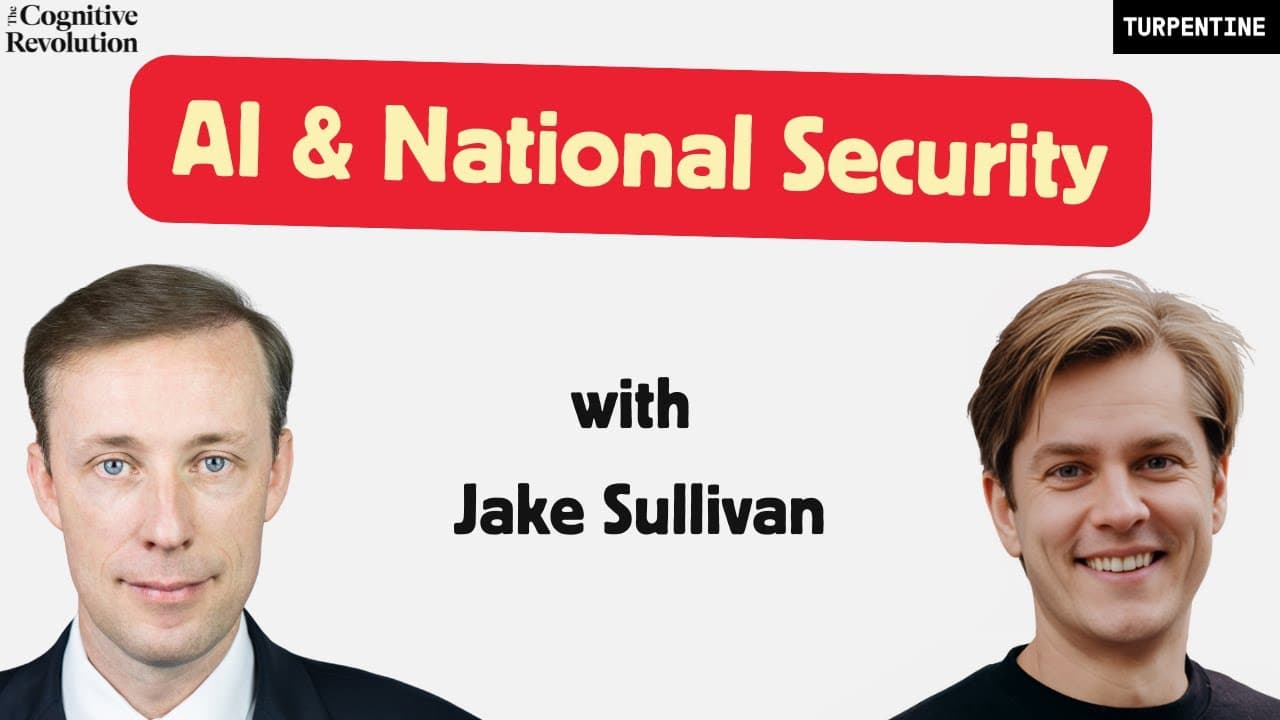
Jake Sullivan discusses the complexities of US AI policy and its geopolitical implications, particularly with China. He emphasizes a balanced approach to AI development, focusing on maximizing benefits while minimizing risks. Sullivan advocates for managed competition with China, highlighting the need for strong diplomacy to prevent conflict while fostering technological advancement.
Transcript
Hello and welcome back to the cognitive revolution. Today my guest is Jake Sullivan, former national security adviser to President Biden and currently the inaugural Kissinger professor of the practice of state craft and world order at the Harvard Kennedy School. This conversation was an exciting opportunity to unpack American AI policy and broader ... Read More
Key Insights
- Jake Sullivan emphasizes the importance of AI in national security, highlighting its transformative potential across various domains.
- Managed competition with China is seen as essential, balancing intense rivalry with diplomatic efforts to prevent conflict.
- Sullivan expresses skepticism about grand bargains with China, viewing competition as a chronic condition that requires ongoing management.
- Current conflicts are providing insights into AI's role in modern warfare, including scale, attritability, and autonomous weapons.
- Sullivan is concerned about the US military's slow adoption of AI due to bureaucracy, while China's military may be better positioned.
- AI is unique as a private sector-driven technology with significant national security implications, challenging traditional government roles.
- Sullivan advocates for the US to maintain its lead in AI to secure national security advantages and prevent adversaries from gaining superiority.
- He stresses the need for concrete policy measures to manage AI risks and opportunities, avoiding premature declarations about strategic dominance.
Install to Summarize YouTube Videos and Get Transcripts
Explore YouTube Video Summarizer or Get YouTube Transcript Extractor
Questions & Answers
Q: How does Jake Sullivan view the role of AI in US national security?
Jake Sullivan sees AI as a transformative technology with profound implications for US national security. He emphasizes its potential to impact various domains, including economic, societal, and military aspects. Sullivan advocates for a balanced approach to AI development, focusing on maximizing its benefits while minimizing associated risks. He highlights the importance of maintaining the US's lead in AI to secure strategic advantages.
Q: What is Jake Sullivan's perspective on US-China competition in AI?
Sullivan advocates for a model of managed competition with China, where intense rivalry is balanced with diplomatic efforts to prevent conflict. He views competition as a chronic condition that cannot be solved with grand bargains or strategic condominiums. Sullivan emphasizes the need for strong diplomatic engagement and concrete policy measures to manage AI risks and opportunities, ensuring the US maintains its strategic advantage.
Q: How does Sullivan assess the US military's adoption of AI?
Sullivan expresses concern over the US military's slow adoption of AI, attributing it to bureaucratic hurdles and cultural resistance within the Pentagon. He contrasts this with China's military, which he believes may be better positioned to rapidly integrate AI capabilities. Sullivan stresses the importance of accelerating AI adoption in the US military to maintain strategic advantages and address modern warfare challenges.
Q: What are Sullivan's views on AI's role in modern warfare?
Sullivan notes that current conflicts provide insights into AI's potential role in modern warfare, including scale, attritability, and the development of autonomous weapons. He highlights the importance of understanding these lessons to inform US military doctrine and strategy. Sullivan emphasizes the need for the US to maintain its lead in AI to secure national security advantages and prevent adversaries from gaining superiority.
Q: How does Sullivan view the private sector's role in AI development?
Sullivan acknowledges AI as a unique technology driven primarily by the private sector, with significant national security implications. He highlights the challenges this poses for traditional government roles in technology development and policy-making. Sullivan emphasizes the need for concrete policy measures to manage AI risks and opportunities, advocating for a collaborative approach between the government and private sector to navigate AI's complexities.
Q: What is Sullivan's stance on grand bargains with China?
Sullivan is skeptical of grand bargains with China, viewing competition as a chronic condition that requires ongoing management rather than a one-time solution. He believes that the US and China must learn to live alongside each other as major powers, balancing intense competition with diplomatic efforts to prevent conflict. Sullivan emphasizes the need for strong diplomatic engagement and concrete policy measures to manage AI risks and opportunities.
Q: How does Sullivan propose to manage AI risks and opportunities?
Sullivan advocates for concrete policy measures to manage AI risks and opportunities, emphasizing the importance of a balanced approach that maximizes benefits while minimizing risks. He stresses the need for strong diplomatic engagement, particularly with China, to prevent conflict and ensure the US maintains its strategic advantage. Sullivan believes that building diplomatic muscles can help navigate the complexities of AI's global impact.
Q: What are Sullivan's concerns about AI's impact on the economy?
Sullivan is concerned about AI's potential impact on the economy, particularly regarding job displacement and the concentration of wealth and power. He emphasizes the need for concrete policy measures to address these challenges and ensure that AI works for the benefit of society as a whole. Sullivan advocates for a balanced approach that maximizes AI's economic opportunities while managing associated risks.
Summary & Key Takeaways
-
Jake Sullivan discusses the strategic importance of AI in US national security and its implications for competition with China. He advocates for a balanced approach, focusing on maximizing benefits and minimizing risks while maintaining strong diplomatic ties with China to prevent conflict. Sullivan is skeptical of grand bargains, viewing competition as a chronic condition that requires ongoing management.
-
Sullivan highlights the role of AI in modern warfare, noting current conflicts provide glimpses into its future applications. He expresses concern over the US military's slow adoption of AI due to bureaucratic hurdles, contrasting with China's potential for rapid integration. He stresses the importance of the US maintaining its lead in AI to secure national security advantages.
-
AI is described as a unique private sector-driven technology with profound national security implications. Sullivan emphasizes the need for concrete policy measures to manage AI risks and opportunities, advocating for a managed competition model with China. He believes that building diplomatic muscles can help navigate the complexities of AI's global impact.
Read in Other Languages (beta)
Share This Summary 📚
Summarize YouTube Videos and Get Video Transcripts with 1-Click
Try YouTube Summary with ChatGPT & Claude or YouTube Transcript Generator
Explore More Summaries from Cognitive Revolution "How AI Changes Everything" 📚



Summarize YouTube Videos and Get Video Transcripts with 1-Click
Try YouTube Summary with ChatGPT & Claude or YouTube Transcript Generator