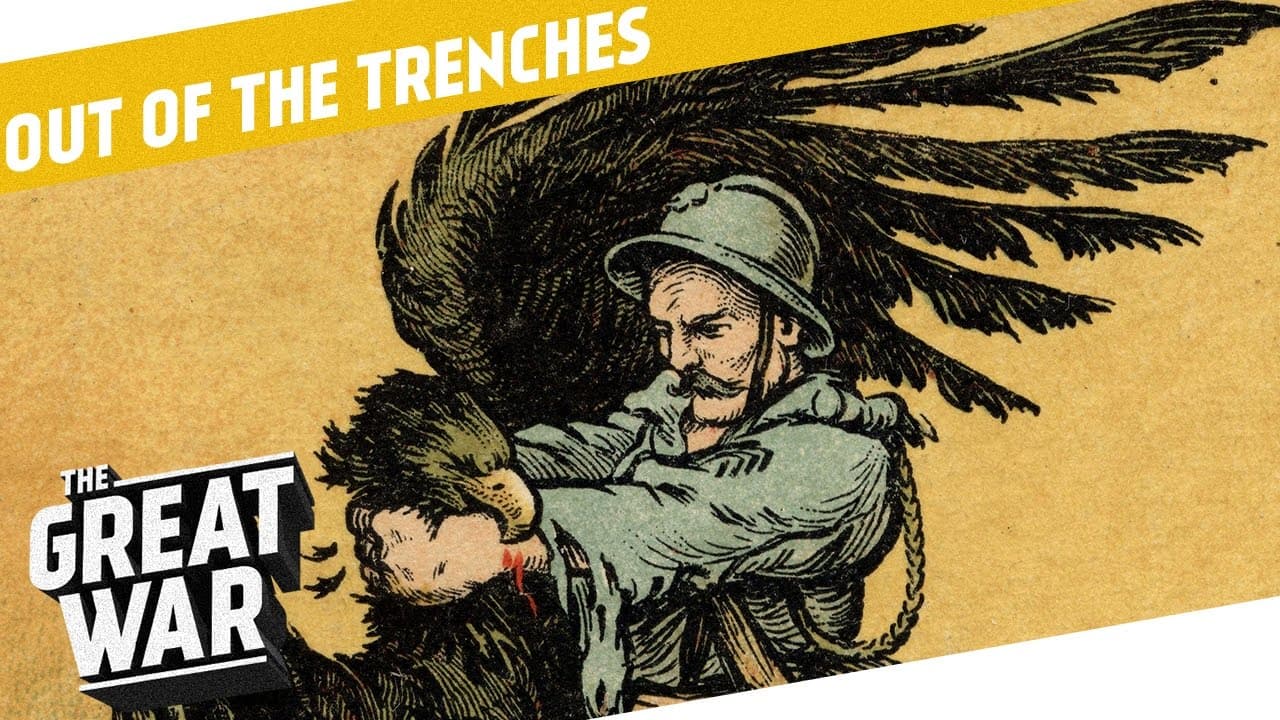
Race To The Sea - Propaganda Changes I OUT OF THE TRENCHES
TL;DR
Explores Western Front dynamics and WWI propaganda strategies.
Transcript
hi I'm Indie nidel and this is another exciting episode of out of the trenches where I sit here in the chair of wisdom and answer all of your questions about World War I and here are some questions from our patreon supporters uh Matt tantillo writes phenomenal work you guys are doing thanks and thanks for letting us contribute to what will be a gre... Read More
Key Insights
- The 'Race to the Sea' in 1914 was a strategic maneuver by both the Allies and Germans to outflank each other, ending at the Belgian coast and establishing extensive trench lines.
- Propaganda during World War I involved shaming men into enlisting, spreading disinformation about the war's progress, and vilifying enemy actions to maintain public support.
- The Russian army faced significant logistical challenges in the Carpathians due to poor infrastructure, similar to those experienced by the Austro-Hungarian forces.
- The Austro-Hungarian soldiers trapped in the fortress of Przemyśl endured dire conditions, surviving on minimal resources like horse meat due to encirclement by Russian forces.
- The British Pathé film archives serve as a rich source of historical footage, offering a diverse array of videos from different eras, enhancing historical content production.
- The Austro-Hungarian army struggled with reinforcing and resupplying in the Carpathians, highlighting the critical role of infrastructure in wartime logistics.
- Efforts to involve neutral countries in the war included propaganda campaigns aimed at influencing public opinion and political decisions.
- The challenges of mountain warfare and winter conditions were mitigated for the Russians by their better preparation for such environments compared to their adversaries.
Install to Summarize YouTube Videos and Get Transcripts
Explore YouTube Video Summarizer or Get YouTube Transcript Extractor
Questions & Answers
Q: What was the 'Race to the Sea'?
The 'Race to the Sea' was a strategic maneuver during World War I where the Allies and Germans attempted to outflank each other by extending their trench lines northward. This series of maneuvers culminated at the Belgian coast, resulting in a continuous line of trenches from the sea to Switzerland, effectively preventing further flanking attempts.
Q: How was propaganda used during World War I?
Propaganda during World War I was used extensively to maintain public support and morale. Strategies included shaming men into enlisting by questioning their masculinity, spreading disinformation about the progress of the war, and depicting enemy actions in a negative light to justify the ongoing conflict. These efforts aimed to sustain the war effort and influence public opinion.
Q: What logistical challenges did the Russian army face in the Carpathians?
The Russian army, like the Austro-Hungarians, faced significant logistical challenges in the Carpathians due to the region's poor infrastructure. As they advanced deeper into the mountains, they encountered difficulties in resupplying and reinforcing their troops. Despite being better equipped for winter and mountain warfare, the logistical nightmare of the Carpathians was a major obstacle.
Q: How did the Austro-Hungarian soldiers survive the siege at Przemyśl?
Austro-Hungarian soldiers trapped in the fortress of Przemyśl during the Russian siege survived under extremely harsh conditions. With limited resources, they resorted to eating horse meat and any available food fillers. The fortress was overcrowded and planes could provide minimal assistance, but resupplying was virtually impossible due to the encirclement.
Q: Where does the historical footage in the videos come from?
The historical footage used in the videos comes from the British Pathé film archives. This extensive collection offers a wide range of historical videos, providing valuable visual content for educational and storytelling purposes. The archives are an excellent resource for exploring historical events and eras through film.
Q: What role did infrastructure play in the Carpathian campaign?
Infrastructure played a critical role in the Carpathian campaign, as both the Austro-Hungarian and Russian armies faced significant challenges due to the region's poor railway and supply networks. The lack of adequate infrastructure hindered the movement of troops and supplies, complicating military operations and affecting the overall effectiveness of the campaigns in this mountainous region.
Q: How did countries attempt to involve neutral nations in the war?
Countries involved in World War I used propaganda to try to sway neutral nations to join the conflict. Efforts included campaigns to influence public opinion and political leaders, highlighting the moral and strategic reasons for joining the war. These campaigns aimed to expand alliances and strengthen military positions by gaining new allies.
Q: What advantages did the Russians have in mountain warfare?
The Russians had certain advantages in mountain warfare during World War I, primarily due to their better preparation for winter and mountainous conditions compared to their adversaries. This preparedness allowed them to operate more effectively in the challenging terrain of the Carpathians, although logistical challenges remained a significant issue for both sides.
Summary & Key Takeaways
-
Indy Neidell discusses the strategic dynamics of the Western Front during World War I, focusing on the 'Race to the Sea' and its implications for trench warfare. He also addresses the role of propaganda in maintaining morale and enlisting support for the war effort across different nations.
-
The episode highlights the logistical challenges faced by both the Austro-Hungarian and Russian armies in the Carpathians, emphasizing how poor infrastructure affected their ability to resupply and reinforce troops. The dire conditions at the fortress of Przemyśl are also examined.
-
Propaganda strategies during World War I included disinformation, shaming tactics, and efforts to involve neutral countries. The episode also provides insights into the use of historical footage from the British Pathé archives, enriching the storytelling of past events.
Read in Other Languages (beta)
Share This Summary 📚
Summarize YouTube Videos and Get Video Transcripts with 1-Click
Try YouTube Summary with ChatGPT & Claude or YouTube Transcript Generator
Explore More Summaries from The Great War 📚
Summarize YouTube Videos and Get Video Transcripts with 1-Click
Try YouTube Summary with ChatGPT & Claude or YouTube Transcript Generator